
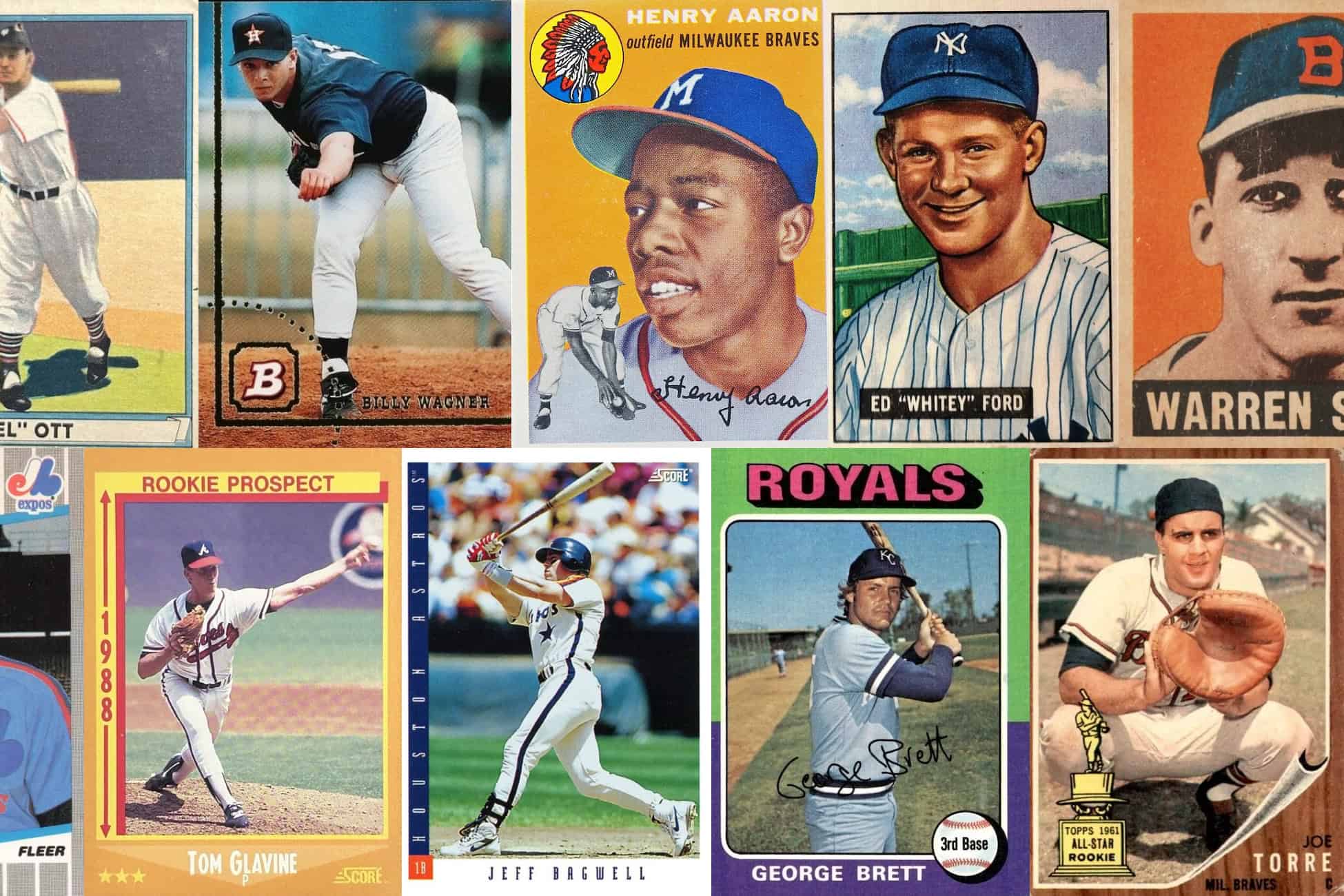
Open any pack of baseball cards and most of what you pull will be base cards. They don’t sparkle like a refractor or carry a serial number, but they form the backbone of every set ever made. Base cards are the standard, numbered cards that make up a product’s main checklist, usually one card per player in a shared design.
For most of hobby history, base cards were the entire hobby. Kids in the 1950s and collectors in the 1980s chased the same goal: a complete run of every player, from card number one to the end of the checklist. Inserts, parallels and pack-pulled autographs arrived much later. Today those chase cards grab plenty of attention, yet the base set remains the foundation that everything else builds on.
Understanding base cards helps you make smarter choices at every level of collecting. Some of the most valuable cards in existence are base cards, and some of the most rewarding projects in the hobby start with a simple stack of commons. This guide covers where base cards came from, how companies make and price them, which ones became legends, and how to build a collection or complete a set of your own.
Base Cards vs. Inserts, Parallels and Short Prints
A base card is the standard version of a card in a set’s main checklist. It follows the set’s common design, carries a card number and appears in packs more often than anything else. A flagship release like Topps Series 1 includes hundreds of base cards, with one standard card for each player or subject. Additional series (Topps has Series 1, Series 2 and Update) can duplicate players but also feature new ones.
Inserts are separate subsets with their own designs and numbering. They usually follow a theme, such as rising stars, record breakers or historical moments, and fall at stated odds per pack.
Parallels share the exact photo and layout of a base card but change something visible, like border color, foil finish or a printed serial number. A gold parallel numbered to the current year still mirrors its base card, but collectors treat it as a different item.
Short prints and image variations sit in between. They often share a base card’s number but turn up far less often, sometimes with a different photo. Some collectors count them as part of the base set, while others build without them. Knowing these terms helps you read checklists, price cards accurately and decide what a complete set means for you.
A Brief History of Base Cards
The tobacco and gum eras
For roughly the first century of the hobby, nearly every baseball card was a base card. Tobacco companies tucked small cards into cigarette packs in the late 1800s, and the famous T206 set followed from 1909 to 1911. These early sets had no inserts at all. Collectors simply tried to find every player (although set-building was not really a thing yet).
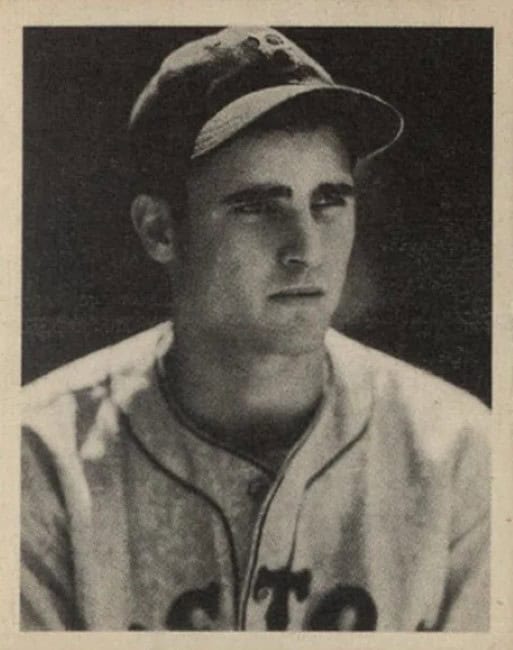
Gum companies took over in the 1930s. Goudey’s 1933 set and the Play Ball issues of 1939 to 1941 gave kids colorful cards alongside a slab of gum. Bowman then led the postwar market before Topps arrived in 1951. The 1952 Topps set, with 407 cards, created the template that flagship sets still follow: a player photo on front, statistics on back and a numbered checklist.
The modern base era
Topps led the market through the 1960s and 1970s, and its annual set became a ritual for young fans. Fleer and Donruss joined the field in 1981, and Upper Deck debuted in 1989 with premium card stock and crisp photography. Each company competed on the quality of its base set, since that was the main product.
Inserts gradually changed the picture. A few early examples existed, but the 1990s brought serial-numbered inserts, parallels and eventually pack-pulled autographs and relics. Even so, the base set kept its central role. It still defines each product’s design, checklist and identity, and it remains the first thing collectors see when a new release hits shelves.
Manufacturing, Scarcity and Pricing
How base cards are made
Manufacturers print base cards on large sheets, with dozens of different cards arranged in a grid. Machines cut the sheets into single cards, and collation equipment sorts them into packs. Because the base set fills most of each pack, companies produce base cards in far greater numbers than any insert or parallel. Companies rarely share exact print runs, so collectors use grading population reports and market supply to judge scarcity.
Are base cards scarce?
Age is the biggest factor. Kids in the 1950s and 1960s flipped, traded and clipped their cards to bicycle spokes, so far fewer survive in sharp condition. High-number series from that era often reached stores late in the summer in smaller quantities. The 1952 Topps high numbers remain a classic example.
Condition creates its own scarcity. Sets with dark borders, like 1971 Topps, show every chip and scratch. High-grade copies stay rare even when plenty of raw cards exist.
The late 1980s and early 1990s brought the opposite situation. Companies printed huge quantities during that stretch, often called the junk wax era. As a result, most base cards from those years stay affordable and easy to find, which makes them perfect for new set builders.
How base cards are priced
Most modern base cards of everyday players sell for very little, often in bulk lots. Prices climb for stars, rookies, high-grade vintage and famous errors. Grading plays a big role too. A common card in a top grade can sell for many times the price of a raw copy, especially from older sets where gem-quality examples are hard to find.
Famous Base Cards Every Collector Should Know
Rookie cards and icons
Rookie cards are the most celebrated base cards in the hobby. A player’s first card in a major flagship set usually draws the most demand. Even the T206 Honus Wagner, the most famous card of all, is simply one base card in a set of more than 500.
The 1952 Topps Mickey Mantle isn’t technically his rookie card, since his true rookie appeared in 1951 Bowman. Still, it remains the most iconic postwar card ever made, and both are base cards.
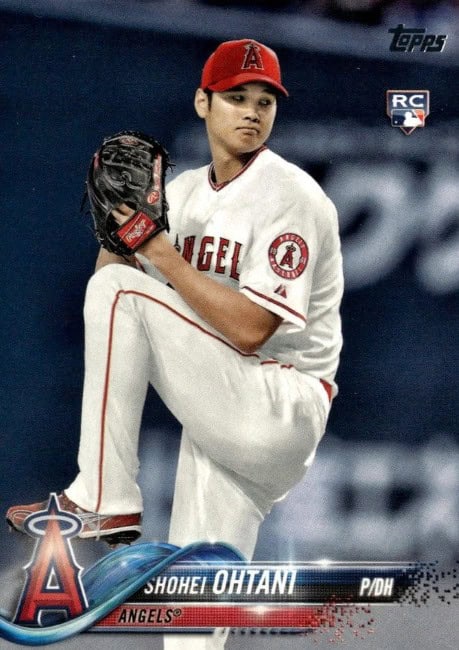
Later eras produced their own legends. The 1989 Upper Deck Ken Griffey Jr., card #1 in the set, helped launch the premium card market. The 1982 Topps Traded Cal Ripken Jr., 1984 Donruss Don Mattingly and 1985 Topps Mark McGwire all became collection staples. More recently, flagship rookies of stars like Shohei Ohtani show that base rookie cards still drive the market.
Errors and oddities
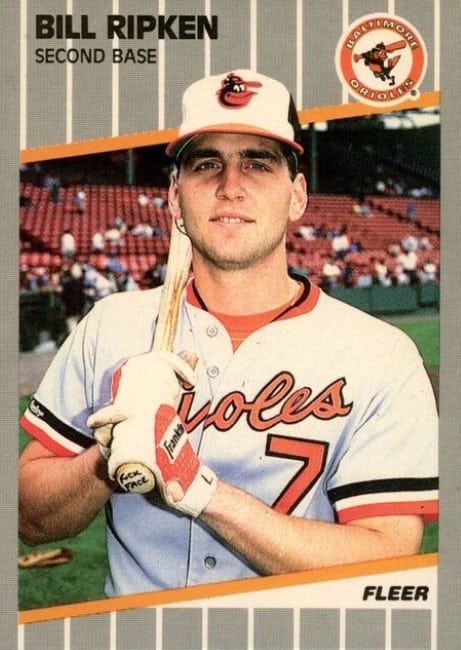
Some base cards became famous for their mistakes. The 1989 Fleer Billy Ripken card showed an expletive written on the knob of his bat. Fleer hurried to fix it, and several versions now exist, including scribbled, whited-out and blacked-out variations. Many collectors enjoy chasing the full run of versions.
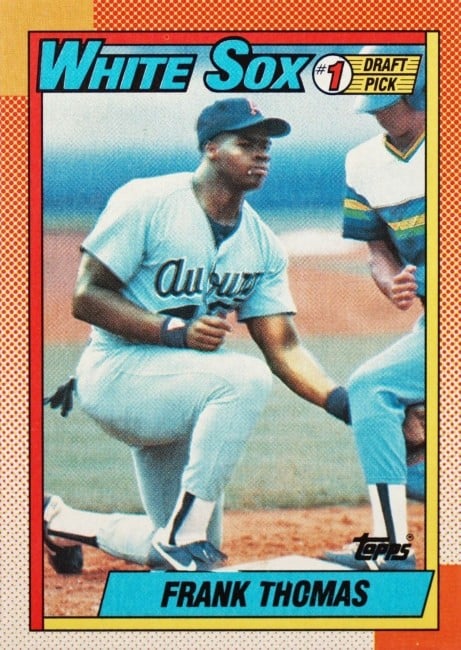
The 1990 Topps Frank Thomas “No Name on Front” error is another favorite. A small number of copies left the press without his name on the front, turning a standard rookie into a prized error. Stories like these show that base cards can surprise even experienced collectors, and they make checking your commons worthwhile.
Who Collects Base Cards?

Base cards appeal to a wider range of collectors than any other card type. Different groups value them for different reasons, and many collectors fit into more than one group.
Team and player collectors
Team collectors build a full roster from each year’s set, known as a team set. A Cubs fan might pull every Cubs base card from flagship each season. Player collectors chase every card of a single favorite player, often calling it their PC, or personal collection. For them, each year’s base card is a must-have and usually the most affordable piece of the collection.
Set builders
Set builders aim to own every card in a checklist, from number one to the last card. Some focus on a single year, while others pursue a long run of flagship sets across decades. Set registry programs at grading companies let collectors showcase graded sets and compare progress with fellow builders.
Autograph hunters
Base cards make excellent canvases for signatures. Fans bring them to spring training, ballpark rail signings and card shows. Others mail cards to players and hope for a signed return, a method known as through the mail, or TTM. An inexpensive base card becomes a one-of-a-kind keepsake once a player signs it.
New and casual collectors
Base cards also offer the easiest way into the hobby. Kids and new collectors can open packs, sort players and learn the game’s rosters without spending much. Many lifelong collectors trace their passion back to a shoebox full of commons. I have fond memories of my own childhood, sorting through early 90s cards and creating the best lineups and pitching staffs I could.
How to Collect Base Cards
Choose a focus
Start by picking a direction. You might build the current flagship set, collect your hometown team or chase vintage cards of Hall of Famers. A clear focus keeps spending under control and makes each new addition feel meaningful.
Know where to find them
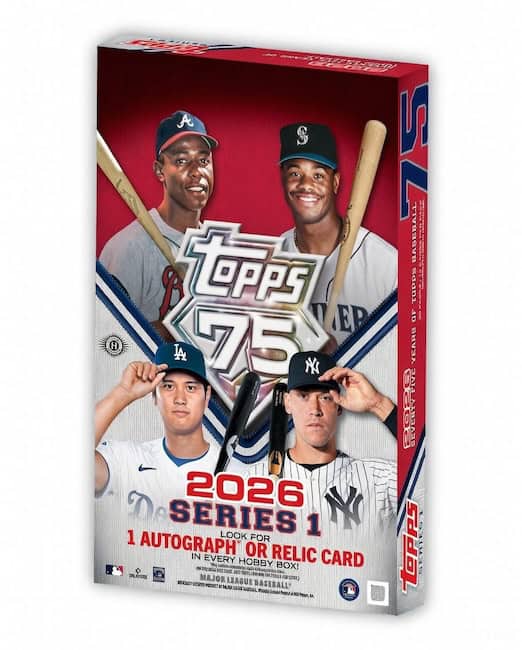
Retail and hobby packs remain the most fun way to collect base cards, and every box delivers plenty of them. Local card shops often keep dime and quarter boxes full of commons. Card shows offer large selections of vintage base cards in every condition.
Decide on condition
Choose early whether you want raw cards, graded cards or a mix. Many set builders collect raw cards in near mint condition and grade only key stars and rookies. Vintage collectors often accept lower grades to keep costs reasonable. Before buying, check centering, corners, edges and surface, since these four areas drive a card’s grade.
Trade with other collectors
Trading remains a core part of the hobby’s spirit. Collector groups, card shows and online communities make it easy to swap duplicates for the cards you need. Most collectors happily trade base cards because everyone ends up with extras, and a good trade partner can become a lasting hobby friend.
How to Assemble a Complete Base Set
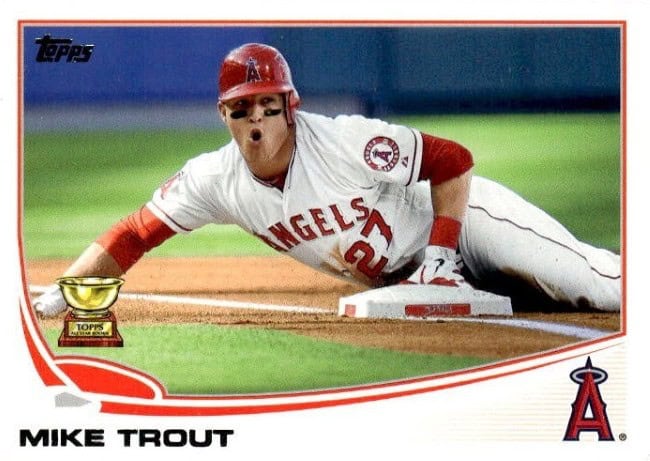
Completing a set ranks among the most satisfying goals in the hobby. A little organization goes a long way, and these steps work for both modern and vintage sets.
- Get the checklist. Find the full checklist for the set, including card numbers and any variations. Decide whether short prints and image variations count toward your goal.
- Pick your method. You can rip packs, buy a hand-collated set or combine both. Opening a hobby box is the fun part, and buying singles often finishes the job more cheaply. Some flagship releases also come as complete factory sets.
- Sort as you go. Put cards in numerical order after each opening. Keep duplicates in a separate box so trade material is always ready. Card storage companies make sorting tools to speed up the process.
- Track your needs. Keep a want list on paper, in a spreadsheet or in a collection app. Update it after every pack, purchase or trade.
- Fill the gaps. Use trades, card shop bins, shows and online singles to chase the final cards. Team lots can knock out several needs at once.
- Upgrade over time. Swap off-center or worn copies for sharper ones as you find them.
- Display the finished set. Nine-pocket pages in a binder let you flip through the whole set in order.
Vintage sets take more patience but deliver a special reward. Start with commons, which cost less, and save the stars and high numbers for last. Many collectors buy a starter lot that covers a large share of the checklist and then build from there. Every final card you add feels like a small victory.
Storing and Protecting Base Cards
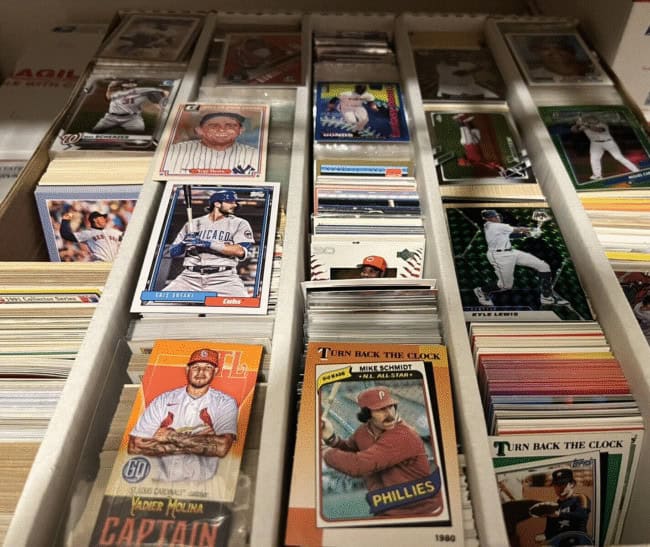
Good storage keeps base cards looking sharp for decades. Bulk commons fit neatly in long storage boxes, sorted by set and card number. Penny sleeves and top loaders protect stars, rookies and anything with real value. Binders with nine-pocket pages work well for complete sets, as long as you choose acid-free, PVC-free pages.
Keep your collection in a cool, dry spot away from direct sunlight. Heat and humidity can warp cards, and sunlight fades colors over time. Skip the rubber bands, which dent edges and corners. A little care now protects both the value and the enjoyment of your base cards for years to come.
Why Base Cards Still Matter
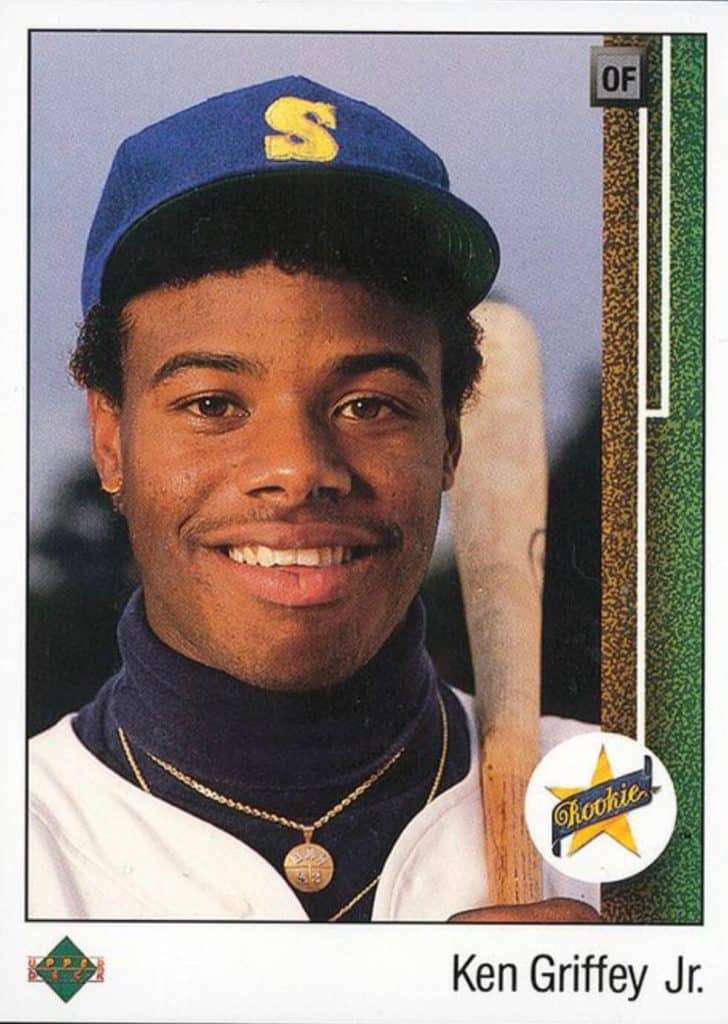
Base cards are the heart of baseball card collecting. They carried the hobby for most of its history, they define the look of every set, and they include many of the most valuable cards ever printed. From the 1952 Mantle to the 1989 Upper Deck Griffey rookie, base cards tell the story of the game one season at a time.
For collectors, base cards offer something for every budget and every style. Team collectors, player collectors, set builders and autograph hunters all rely on them. They make great trade material, perfect autograph canvases and a welcoming entry point for new fans.
Whether you’re sorting a fresh hobby box or hunting the last card for a vintage set, base cards reward patience and curiosity. Pick a focus, stay organized and enjoy the chase. The base set is where the hobby started, and it remains one of the best places to build a collection you’ll love.