
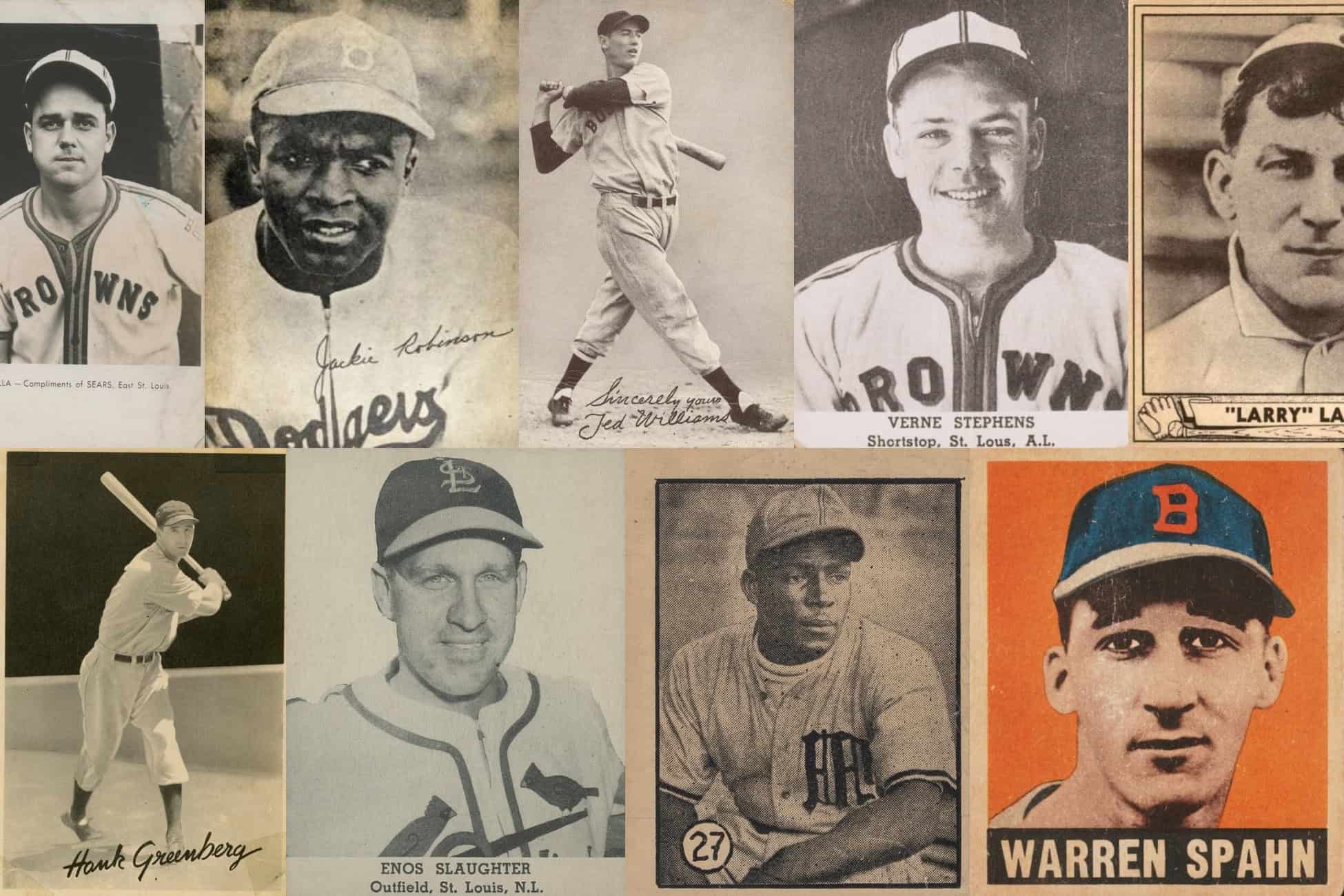
Picture a collector with a simple goal: one baseball card from every year of the hobby’s history. The early decades go smoothly. There are tobacco cards, caramel cards and the colorful gum cards of the 1930s. Then the 1940s arrive, and the trail suddenly goes cold. Vintage collectors can find at least one set from nearly every year back to the Civil War era, right up until World War II.
That gap is one of the most fascinating chapters in the hobby. From 1942 through 1947, the big national gum card releases stopped. Paper, gum and manpower all went to the war effort, and the steady flow of new cards dried up almost overnight.
But “almost” is the key word. The war came close to wiping out a whole generation of cards, yet a handful of issues made it through. WWII baseball cards include carnival novelties, arcade vending cards and bread-loaf inserts. They rank among the strangest and most interesting cards a collector can chase today, and the story behind them is just as fun as the cards themselves.
The Last Cards Before the War
Gum, Inc. and Play Ball
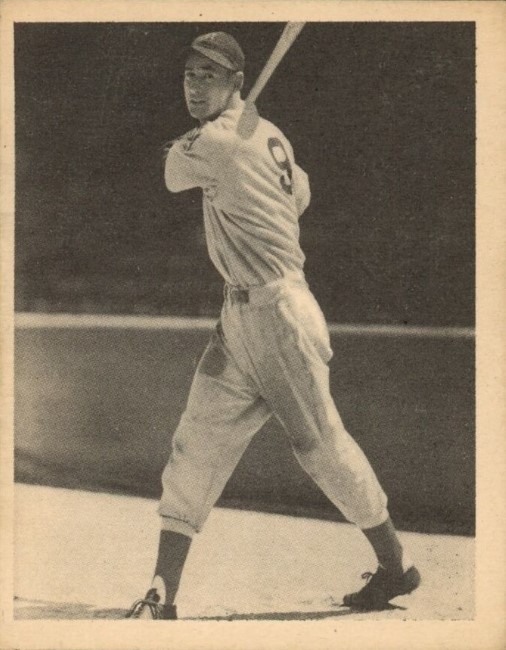
In the late 1930s, Gum, Inc. of Philadelphia ruled the card aisle with its Play Ball brand. The company released Play Ball sets in 1939, 1940 and 1941. Each one built on the last, and the 1941 edition added color to the classic photo design. It became the third and final Play Ball release before the war halted card production and sharply cut gum output.
The star of the 1941 set is Ted Williams. His card comes from the same season he hit .406, a mark no major leaguer has matched since. That connection gives the card a special place in any vintage collection. The set also features Joe DiMaggio, who put together his famous 56-game hitting streak that summer. Collectors also prize the Pee Wee Reese rookie card from the same set.
One Last Push
Here is an odd detail many collectors miss. The final series of the 1941 set, cards #49 through #72, was reportedly printed in early 1942 alongside the first 48 cards. Gum, Inc. apparently wanted cards on store shelves as long as possible while the war effort claimed gum and paper supplies.
In a sense, the 1941 Play Ball set served as a farewell to an entire era. Collectors today treat it as the closing bookend of the prewar gum card years. Anyone who owns a few cards from this set holds the last snapshot of baseball before Pearl Harbor changed everything.
What Caused Baseball Cards to Disappear?
Paper Shortages
The most common explanation starts with paper. The War Production Board rationed paper and paperboard so the military could use it for packaging, maps, manuals and countless other needs. The shortage reached well beyond the card aisle. Some teams even stopped producing scorecards for fans because paper was so scarce. With ballparks cutting back on printed programs, card makers had little hope of getting the stock they needed.
Gum and Sugar Rationing
Bubble gum cards had a second problem: the gum itself. Rationing limited sugar, latex and other key ingredients. A company that could not make gum had little reason to print cards to go with it. Once rationing ended after the war, gum production bounced back quickly because those ingredients became available again.
Other Factors
Historians keep an open mind about the full story. One researcher notes that collectors often cite the paper shortage, but its exact role remains unclear. Other forces likely played a part. Many of the game’s biggest stars left for military service, so rosters changed constantly. Companies also shifted their energy toward wartime contracts and new priorities.
Gum Companies Joined the Effort
Rather than shutting down, gum makers found new ways to stay busy. Gum, Inc. released a 1942 “War Gum” set filled with patriotic military scenes. Meanwhile, a young company called Topps shipped huge quantities of gum to American troops. That work helped Topps build a strong foothold in the gum business by 1946. The company would later become one of the most important names in the hobby.
Baseball on the Home Front
The Green Light Letter
The cards stopped, but the games did not. In January 1942, Commissioner Kenesaw Mountain Landis asked President Franklin D. Roosevelt whether baseball should continue during the war. Roosevelt answered with what fans now call the Green Light Letter. He wrote that baseball would be good for the country, since hardworking Americans needed a chance to relax. The season went on, even as new cards vanished from stores.
Fill-In Players Take the Field
With hundreds of major leaguers in uniform, teams filled their rosters with older veterans, teenagers and players who had left the game years earlier. Fifteen-year-old pitcher Joe Nuxhall took the mound for the Cincinnati Reds in 1944. Pete Gray, a one-armed outfielder, played for the St. Louis Browns in 1945. The Browns themselves captured their only American League pennant in 1944.
Women stepped into the spotlight too. Chewing gum magnate Philip K. Wrigley launched the All-American Girls Professional Baseball League in 1943. That gum connection makes the league a fun footnote for card collectors. The league went on to play for more than a decade and later inspired the hit film A League of Their Own.
A Gap Within the Gap
Here is an interesting twist. Because so few cards came out, many wartime players never appeared on a card at all. Their stories live on in box scores and newspaper clippings rather than in collections. That makes the few wartime issues that do exist even more special as historical records.
Year by Year Through the Gap
1942: A Quiet Year
The year 1942 came close to having no new baseball cards at all. The last Play Ball series was still trickling into stores, but no major company launched a fresh baseball set. For young fans, it marked the start of a long wait.
1943: The M.P. & Co. Set
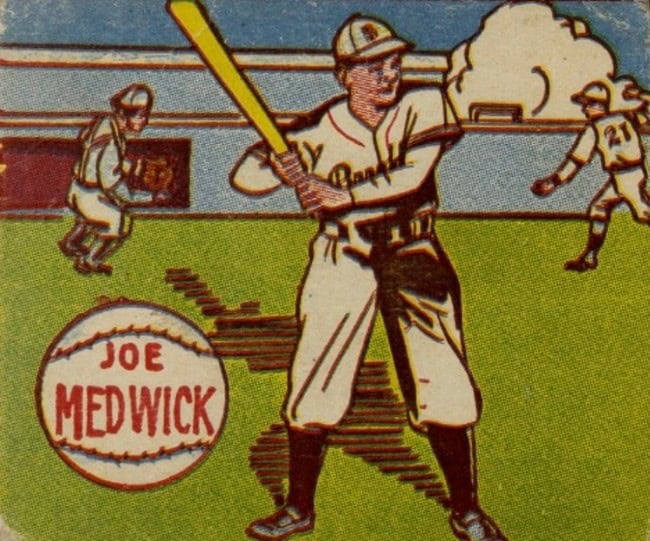
The 1943 M.P. & Co. set stands out as arguably the only national single-season baseball card set released during the war. Its backstory is wonderful. The initials stood for Michael Pressner, whose New York City firm made novelty and carnival supplies. The cards feature simple drawn portraits of stars like Ted Williams, Joe DiMaggio and Mel Ott.
The set even comes with a fun error. Ted Williams’s 1943 M.P. & Co. card lists the wrong middle name. Little quirks like this give the set a homemade charm that collectors love.
1939-1946: Exhibit Cards Keep Going
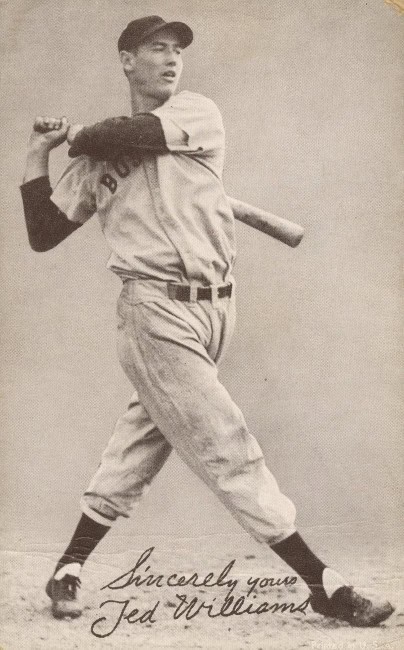
While most companies stopped issuing cards, the Exhibit Supply Company of Chicago kept going. Exhibit cards came from arcade vending machines rather than gum packs. Fans dropped a penny into a machine and received a thick, postcard-sized card with a black-and-white photo. Because Exhibits never stopped, they offer collectors a continuous thread through the war years. Many designs stayed in circulation for several years, so collectors often study small details to pin down when a card was printed.
1947: Bread Replaces Gum
By 1947, cards started to return, but gum still sat on the sidelines. A few regional, food-based sets appeared instead. Tip Top Bread and Homogenized Bond Bread both inserted cards with their loaves. Exhibit cards also continued with their 1947-1948 run. These issues bridged the gap until the gum companies came back.
1947: Jackie Robinson’s First Cards Came in a Loaf of Bread
A Bold Choice by Bond Bread
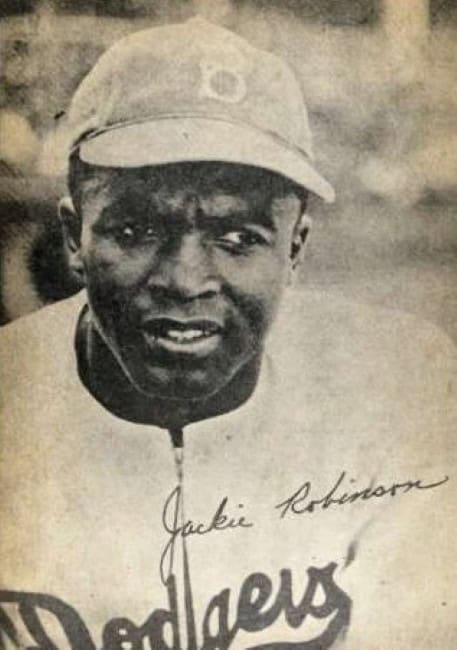
The 1947 season brought one of the most important moments in baseball history. Jackie Robinson broke the major league color barrier with the Brooklyn Dodgers. That same year, Bond Bread produced the first cards to feature Robinson. The company made this bold move before integration had won broad acceptance across the country.
The Bond Bread Robinson cards show him in a variety of action poses and portraits. They give collectors a direct link to his historic rookie season. For many fans, these cards rank among the most meaningful items in the entire hobby. Robinson capped that first season by winning the very first Rookie of the Year award, which adds even more weight to his 1947 issues.
Not a Stick of Gum
One SABR writer pointed out a fascinating detail about Robinson’s 1947 cards. They came with bread, slacks and even cigarettes, but not a single stick of gum. That simple fact captures the whole era perfectly. Gum companies had not yet returned to full strength, so other businesses stepped in to fill the space.
The result is a delightful mix of oddball issues tied to a legendary player. Collectors who chase Robinson’s earliest cards end up exploring a corner of the hobby full of regional brands and creative promotions. Each card tells a piece of a much bigger story about baseball and American life in the postwar years.
The Comeback: 1948
Bowman Arrives
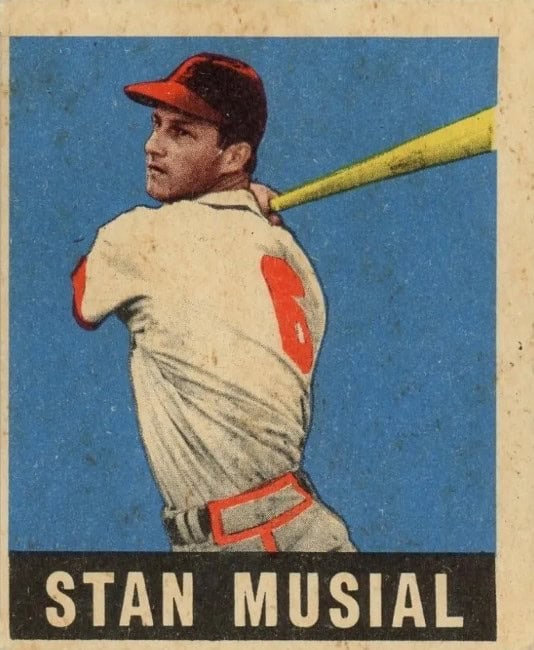
Gum, Inc. made its return under a new name. The company resurfaced as the Bowman Gum Company, and during the 1948 season it issued a small set of black-and-white cards. The 1948 Bowman set looks modest next to modern releases, but it carries enormous weight. It includes rookie cards of future Hall of Famers such as Yogi Berra, Stan Musial and Warren Spahn, and it signaled that gum cards were finally back.
Bowman grew quickly from there. The company expanded to a 240-card set in 1949 and added color tints to its photos. Fans who had waited years for new cards suddenly had plenty to chase.
Leaf Adds Color
Leaf also jumped into the market with its 1948 set. These cards featured bright color artwork and a striking Jackie Robinson card. They arrived just as the hobby returned from its six-year wartime break. The Leaf set gave fans something they had not seen in years: a full-color national release.
The Next Chapter
The comeback set the stage for an exciting new rivalry. Bowman and Topps soon battled for player contracts and store shelves in the early 1950s. Collectors know this period as the Bubble Gum Card War, and it shaped the hobby for decades to come. Competition pushed both companies to improve their designs, sign more players and print bigger sets. Kids who had grown up during the war years suddenly enjoyed more card choices than ever before. That golden stretch of the early 1950s deserves a story of its own.
The Ripple Effects Collectors Still Feel
Missing Rookie Cards
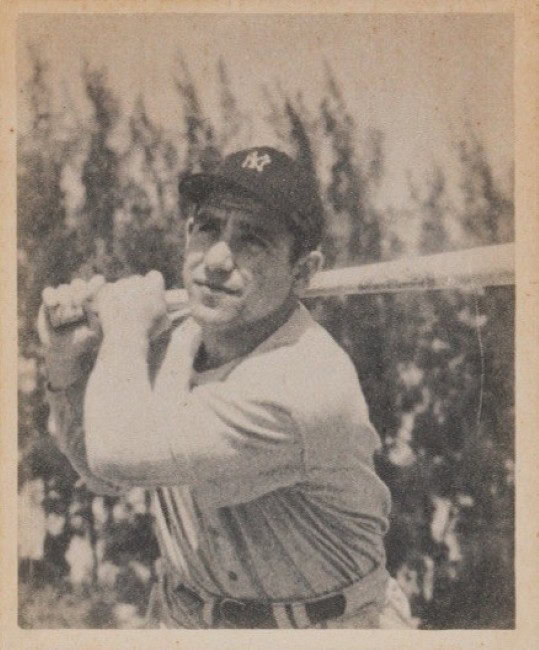
The wartime gap left a lasting mark on player checklists. Yogi Berra offers the clearest example. He had no rookie card during his actual rookie season in 1947. His first mainstream card came a year later in the 1948 Bowman set. Several other players from that era also lack cards from their first seasons, which makes their earliest issues even more interesting to track down.
Gaps That Match the Stat Lines
Many of the game’s biggest stars spent prime years in military service. Ted Williams, Joe DiMaggio, Bob Feller and Hank Greenberg all missed multiple seasons while serving their country. Their card runs show the same gaps you see in their career stats. A collector who lines up a Williams run will notice the jump from 1941 Play Ball to the postwar issues. Those missing years tell a powerful story about sacrifice and service. Feller even returned from the Navy and threw a no-hitter in 1946, proving his skills had stayed sharp.
Why Scarcity Drives Demand
Scarcity gives wartime issues a special appeal. With so few baseball cards produced between 1942 and 1947, every surviving example carries extra historical weight. Low print runs, thin stock and regional distribution all limit the supply. Collectors who value history as much as condition find these cards especially rewarding to own. Even a well-loved example with soft corners can make a great centerpiece, because the story behind it matters as much as the grade.
How to Collect the Lost Years Today
A Gap-Filler Checklist
Filling the war years in a collection makes a rewarding project. Start with these key issues:
- 1943 M.P. & Co. – the standout national release from the war years
- Exhibit cards from 1939-1946 – arcade cards that never stopped
- 1947 Bond Bread – home of the first Jackie Robinson cards
- 1947 Tip Top Bread – a black and white regional food issue
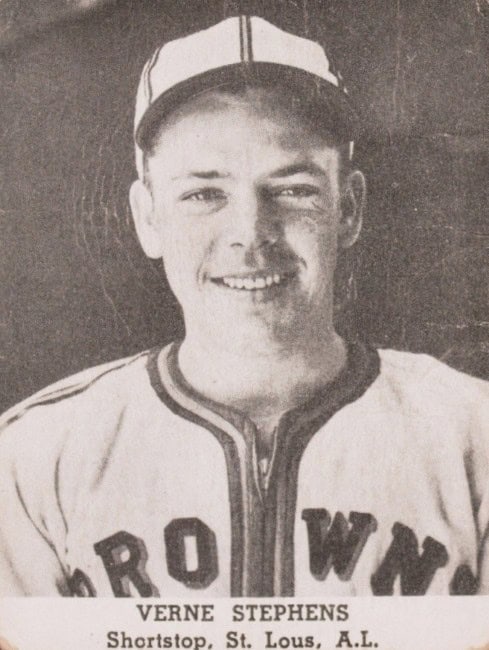
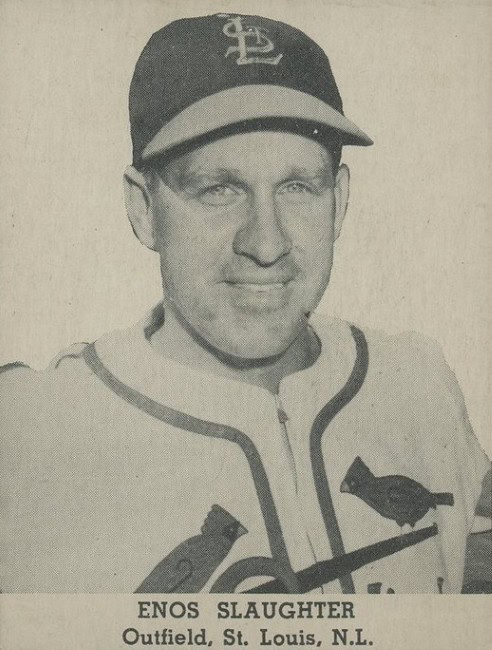
- 1947 St. Louis Sears – another regional issue, with surprisingly good photography
Building on a Budget
You do not need a huge budget to explore this era. Exhibit cards of solid veteran players often sell for reasonable prices, especially in lower grades. Commons from the 1941 Play Ball and 1948 Bowman sets also make friendly entry points. Start with one card from each year, then add stars as your collection grows.
Watch for Reprints and Fakes
Popular vintage cards attract reprints, so careful buying matters. Compare the size, stock and printing of any card against a known original. Reprints often look too bright, too glossy or slightly off in size. Buy from trusted sellers, and consider professionally graded copies for high-value cards like Robinson or Williams. Our guide to spotting fake cards from online marketplaces offers more helpful tips.
Conclusion
The “lost years” of baseball cards are not really empty. They are full of carnival novelties, arcade cards and bread-loaf inserts. Each one shows how much people wanted baseball cards, even when there was no gum to sell them with.
For collectors, WWII baseball cards offer a chance to own a piece of history that few others chase. The 1941 Play Ball set marks the end of the prewar era. The 1943 M.P. & Co. set, Exhibit cards and 1947 bread issues carry the hobby through the war. Then Bowman and Leaf bring it roaring back in 1948. Along the way, Jackie Robinson’s first cards arrive in a loaf of bread, and stars like Yogi Berra wait a year for their rookie cards. Each of these moments adds a layer to the story a collection can tell.
Whether you want a single Exhibit card or a full run of wartime issues, this era rewards curiosity. These cards connect you to the players who served, the fans who waited and the companies that kept the hobby alive. Few corners of collecting tell a richer story.