
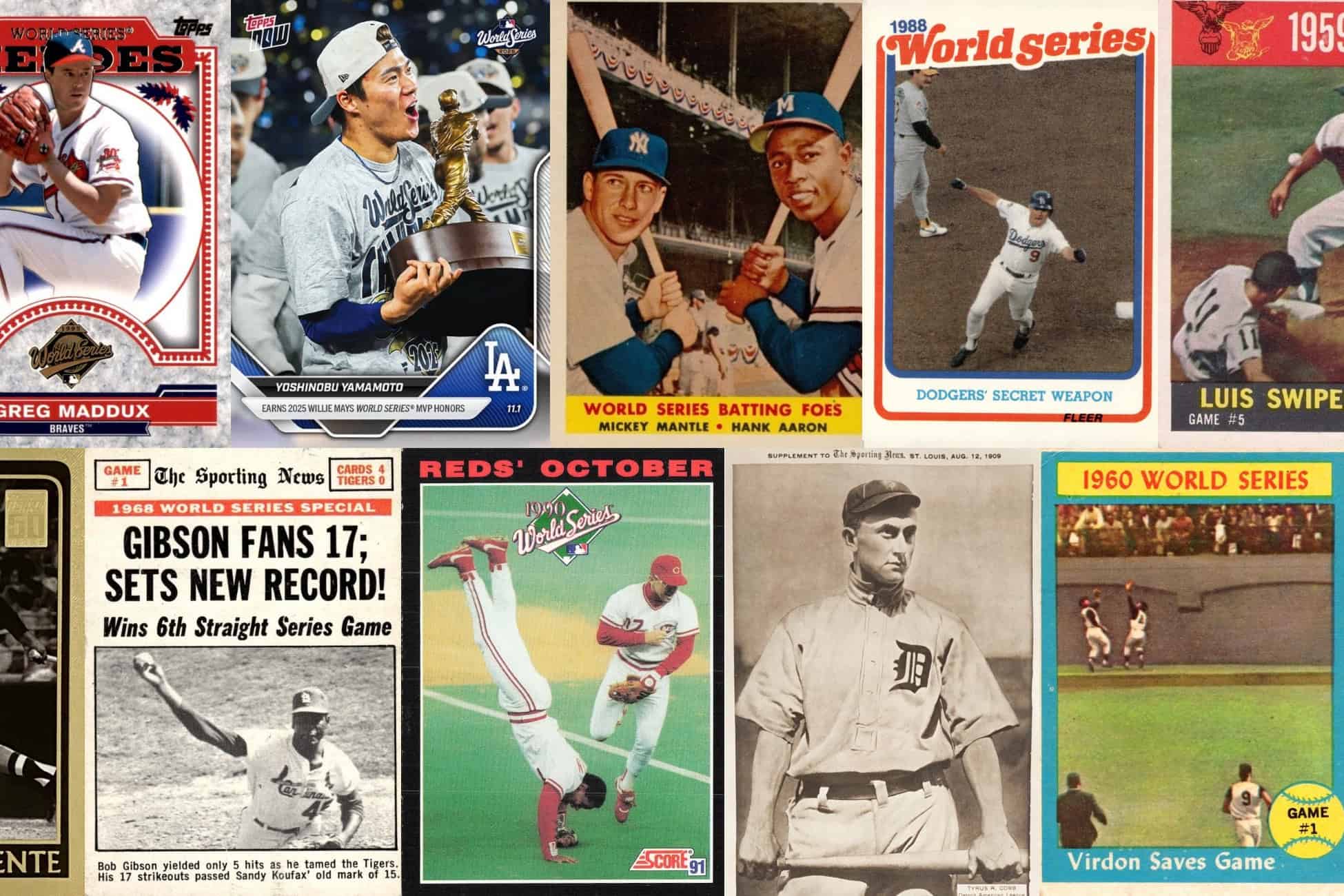
Every October, baseball fans turn their attention to the Fall Classic. Collectors do the same, and they have plenty of history to explore. World Series cards tell the story of the sport’s biggest stage, one memorable moment at a time. They capture walk-off home runs, record-setting strikeouts, and champagne-soaked celebrations.
The path to the modern World Series card took decades. Early fans relied on postcards and photographs to remember the championship. Later, card makers began honoring Series heroes through player cards. Topps finally launched a dedicated World Series subset in 1960, and that tradition shaped the hobby for the next two decades. Today, collectors can buy cards of a big Series moment within a day of the final out.
This guide walks through each era of World Series cards. You will learn which sets started the tradition, how the cards changed over time, and which issues deserve a spot on your want list. Whether you collect vintage, modern, or a little of both, the Fall Classic offers a rewarding theme to chase.
Early Representations: Postcards and Photos (1903-1910s)
The First World Series
The modern World Series began in 1903, when the Boston Americans defeated the Pittsburgh Pirates. No series took place in 1904, but the event returned in 1905 and has continued ever since. In those early years, the card industry looked very different. Tobacco and candy companies had not yet launched the large card sets that collectors know today. As a result, fans found other ways to remember the championship.
Postcards Captured the Action
Picture postcards filled much of that gap. Publishers produced postcards tied to several early World Series, and many survive today. Collectors can find postcards from the 1906 Series, when the Chicago White Sox upset the crosstown Cubs. Others celebrate the Cubs’ 1907 title over the Detroit Tigers. Some publishers even printed playful designs in advance, ready for sale no matter which team won.
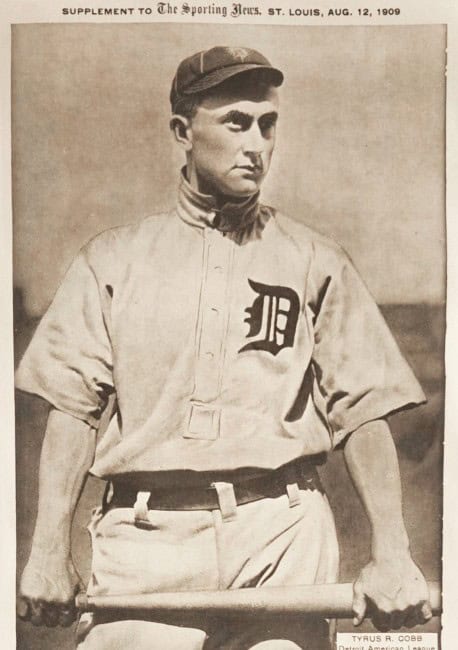
The most famous example comes from the 1909 World Series. That year, Honus Wagner’s Pirates beat Ty Cobb’s Tigers in seven games. A 1910 postcard, known to collectors as PC796, shows the two legends shaking hands during the Series. Both men later joined the Hall of Fame’s first class in 1936. Many collectors consider this postcard one of the most desirable early baseball images of any kind.
These postcards did not come in packs, and they do not look like standard cards. Still, they represent the hobby’s first real attempt to preserve World Series moments. For collectors who love history, they make a fascinating starting point.
Pre-War Player Cards of World Series Heroes (1903-1941)
During the pre-war years, no manufacturer produced a dedicated World Series subset. Instead, collectors connect these cards to the Fall Classic through the players who starred in it.
The 1903 E107 Breisch-Williams set offers a great example. It arrived the same year as the first World Series and includes Cy Young, who pitched for the champion Boston club. The E107 Young ranks among the rarest cards of the era, and examples rarely appear at auction.
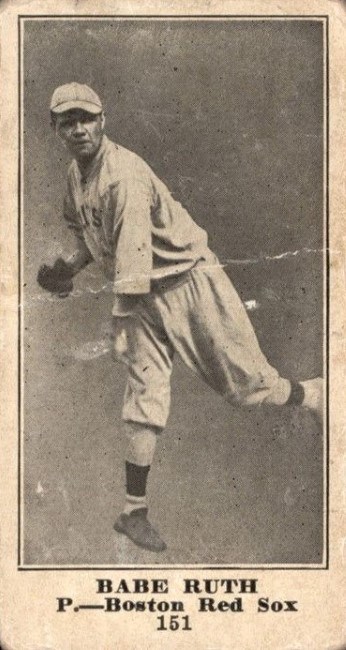
The tobacco boom that followed gave collectors many more options. Wagner and Cobb, the stars of the 1909 Series, both appear in the famous T206 set. Babe Ruth’s earliest cards, the 1916 M101-4 and M101-5 issues, came out while he pitched for the champion Red Sox. In the 1930s, Goudey and Play Ball cards featured many stars of that decade’s Series.
Many collectors enjoy building “virtual” World Series rosters from these sets. They gather cards of the key players from a single Series, such as the 1909 Pirates and Tigers. This approach turns a general pre-war collection into a focused, story-driven project.
Post-War Steps Toward a Subset (1946-1959)
After World War II, Bowman and Topps brought new energy to the hobby. Collectors could build team sets of championship clubs, especially the Yankees teams that dominated the era. However, cards dedicated to the Series itself took longer to arrive.
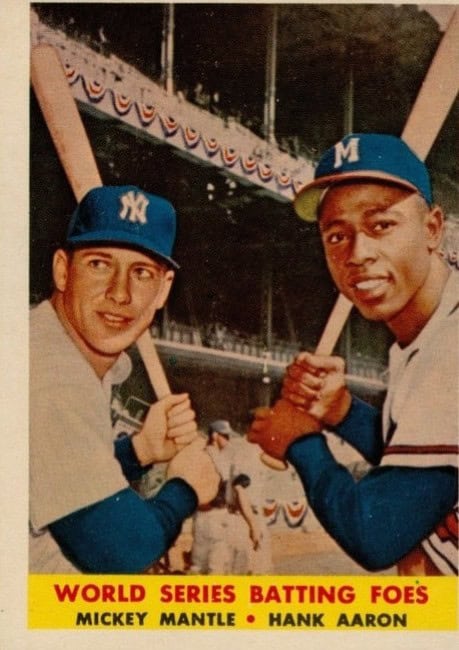
Topps took its first step in 1958 with card #418, “World Series Batting Foes.” The card pairs Mickey Mantle and Hank Aaron, two stars from the 1957 Series. That fall, Aaron’s Milwaukee Braves defeated the Yankees in seven games. The card remains popular because it puts two all-time greats side by side.
In 1959, Topps added a “Baseball Thrills” subset that highlighted memorable moments from the game’s history. Card #467, “Aaron Clubs World Series Homer,” celebrated the Braves’ 1957 title. Hobby historians often point to this subset as a test run for what came next. It showed that collectors enjoyed cards built around a single moment rather than a single player.
The Topps World Series Subset Era (1960-1981)
1960: The First True Subset
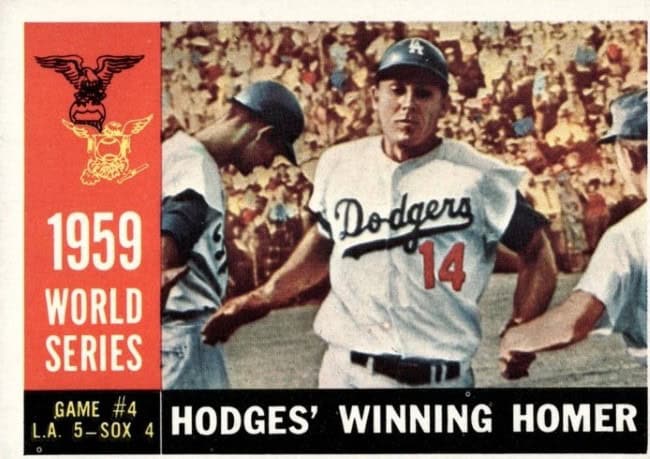
The 1960 Topps set introduced the first dedicated World Series subset in baseball card history. Cards #385-391 recap the 1959 Series, when the Los Angeles Dodgers beat the Chicago White Sox. Topps gave one card to each of the six games and added a seventh card summarizing the Series.
Highlights include #385, “Neal Steals Second,” which shows Game 1 action at Comiskey Park. Card #388 features “Hodges’ Winning Homer” from Game 4. Card #389, “Luis Swipes Base,” shows Luis Aparicio and Maury Wills together. These cards gave young collectors something rare for the era: real game action.
Building the Tradition in the 1960s
Topps expanded the idea in 1961 with an eight-card subset covering the 1960 Series. Card #312 captures Bill Mazeroski’s legendary Game 7 home run against the Yankees. Card #313, “The Winners Celebrate,” wraps up the Pirates’ title. The Mazeroski card ranks among the most beloved World Series cards ever made.
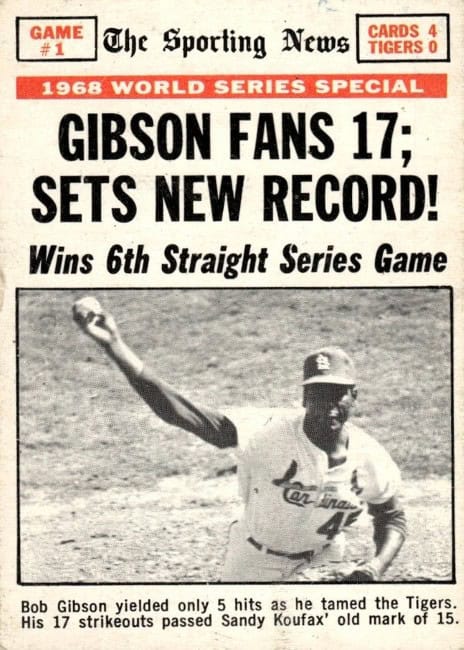
Topps included World Series cards in every flagship set of the decade except 1966. When the subset returned in 1967, Topps switched to black-and-white photos. Photo quality also improved over the decade, with noticeably sharper images starting in 1963. The 1969 set includes a standout card titled “Gibson Fans 17,” honoring Bob Gibson’s record-setting Game 1 performance in 1968.
The 1970s: Sharper Photos and New Approaches
The 1970s brought clearer photography and plenty of experimentation. The 1970 set includes a “World Champions” card honoring the Miracle Mets of 1969. The 1971 set features a fan-favorite Game 5 card of Brooks Robinson (#331), whose glove work starred in the 1970 Series. In 1972, Pirates catcher Manny Sanguillen appears on several cards from the Pittsburgh title run.
Later in the decade, Topps scaled the subset back. It condensed the Reds’ 1976 sweep of the Yankees into three cards and skipped the subset entirely in 1979. In 1981, Topps issued cards #403 and #404 to recap the Phillies’ 1980 championship. Those two cards closed out the classic subset era.
Fleer and Laughlin Bring History to Life (1967-1980)
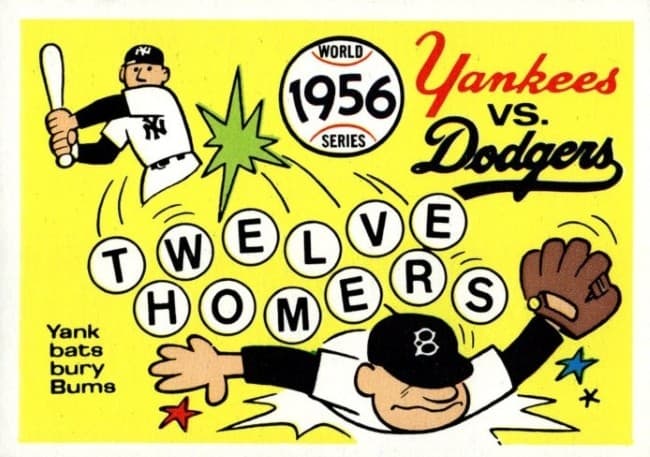
While Topps covered the most recent Series, artist Robert G. Laughlin looked backward. In 1967, he created and privately marketed a black-and-white set of cartoon-style cards recapping past World Series. Collectors still prize these cards as a charming piece of hobby history.
Fleer partnered with Laughlin in 1970 to issue a full-color version. The 1970 Fleer World Series set includes 66 cards, one for each Series from 1903 through 1969. The horizontal cards feature Laughlin’s lively artwork on the front and a short essay on the back. Collectors can spot the 1970 issue by its blue printing on the back and the Series year inside a baseball on the front.
Fleer followed up in 1971 with a 68-card set featuring new drawings. Those cards use black printing on the back, which makes them easy to tell apart. The checklists read like a history book, with cards highlighting names such as Christy Mathewson, Babe Ruth, Lou Gehrig, and Mel Ott.
In 1980, Fleer revisited the idea once more. That set covered the Series from 1940 through 1979, and each card back carried a team logo sticker. Today, these Laughlin-era issues offer an affordable way to own a card for nearly every early Series.
Transition Years (1980s-2000s)
After 1981, World Series cards disappeared from the Topps flagship set for many years. The theme did not vanish, though. Collectors simply found it in new places.
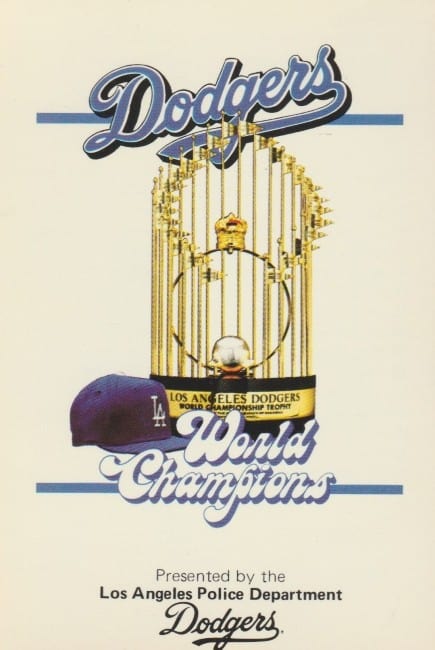
Regional and oddball issues filled some of the gap. The 1982 Los Angeles Police Department Dodgers set included a card celebrating the team’s 1981 title over the Yankees. Many collectors consider it one of the best cards from that Series. Topps also featured World Series moments in its sticker albums during several years of the 1980s.
In the 2000s, Topps often placed World Series coverage in its Update product. For example, collectors seeking cards from the 2005 Series can turn to the 2006 Topps Update and Highlights set. This pattern taught collectors to check several products each year when hunting for Fall Classic cards.
Modern World Series Cards (2010s-Present)
Topps Now and Real-Time Collecting
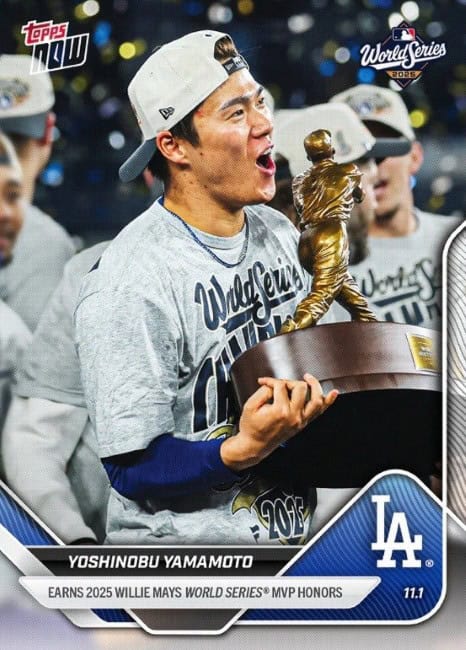
Topps Now changed World Series collecting forever. After testing print-on-demand cards during the 2015 Series, Topps launched the full program in 2016. Each card stays on sale for a limited window, usually 24 hours. Topps then prints only as many cards as fans order, so collector demand sets the print run.
The 2016 Series showed the program’s appeal. Topps Now card #656A captured Dexter Fowler’s leadoff home run in Game 7, a first in Series history. Topps also offers champions team sets through the program. In 2025, Topps released a 15-card set honoring the Dodgers’ seven-game win over the Toronto Blue Jays. That title made the Dodgers the first back-to-back champions since the Yankees of 1998-2000.
Inserts, Relics, and Heritage
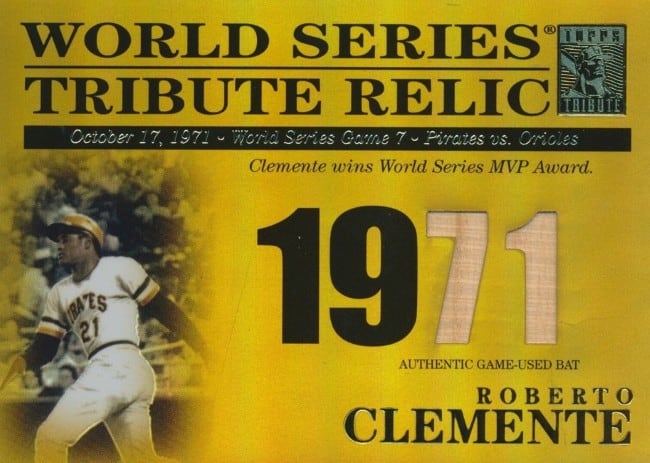
Modern products also offer many World Series inserts. Collectors can chase World Series Heroes cards, champion relic cards, and autographed inserts. Topps Heritage adds another fun twist. It reproduces classic vintage designs, often including World Series game cards that echo the subsets of the 1960s and 1970s.
Key World Series Cards Every Collector Should Know
World Series cards span nearly seven decades of hobby history, but a handful of issues stand above the rest. Some earned their place by starting a tradition. Others capture moments that fans still talk about every October. Together, they trace the journey from Topps’ first experiments in the late 1950s to the real-time cards collectors buy today.
The list below highlights seven essential World Series cards and sets. It includes legendary names like Mickey Mantle, Hank Aaron, and Bob Gibson, along with the charming artwork of the Fleer and Laughlin era. Whether you are starting a Fall Classic collection or adding to an existing one, these cards make an excellent foundation.
- 1958 Topps #418 “World Series Batting Foes” – Mantle and Aaron together, and Topps’ first World Series-themed card.
- 1959 Topps #467 “Aaron Clubs World Series Homer” – A key card from the “Baseball Thrills” subset.
- 1960 Topps #385-391 – The first true World Series subset in hobby history.
- 1961 Topps #312 – Bill Mazeroski’s Series-winning home run.
- 1969 Topps #162 “Gibson Fans 17” – Bob Gibson’s record-setting Game 1 performance.
- 1970 Fleer World Series set – Laughlin’s artwork covering every Series from 1903 through 1969.
- 2016 Topps Now #656A – Dexter Fowler’s historic Game 7 leadoff home run.
Conclusion
The history of World Series cards mirrors the growth of the hobby itself. Early fans saved postcards to remember Wagner, Cobb, and the first championships. Pre-war collectors celebrated Series heroes through their player cards. Topps then turned the Fall Classic into a dedicated subset in 1960, and Fleer and Laughlin brought baseball’s championship history to life with color and humor.
Today, collectors enjoy more World Series options than ever. Champions box sets, Topps Now cards, inserts, and Heritage tributes let fans celebrate every October in real time. At the same time, the vintage subsets remain accessible, and many classic cards fit comfortably into a modest budget.
Whatever your collecting style, the World Series offers a theme packed with history and excitement. Start with a team or a decade you love, and build from there. Each card you add captures a moment that fans have celebrated for generations.