

Every collection starts the same way. You pull a few cards from a pack, tuck them into a shoebox, and promise yourself you will organize them later. Then the collection grows. Suddenly you have stacks of toploaders on the dresser, slabs in a desk drawer, and team sets scattered across three different closets. At some point, every collector faces the same dilemma: I need baseball card storage!
The standard answers are familiar to most of us. Monster boxes, cardboard-free plastic bins, and nine-pocket binder pages all do a fine job. But storage can be so much more than a functional afterthought. The right solution can protect your cards, make them easier to find, and turn your collection into something you enjoy looking at every day.
This guide explores creative storage ideas that go beyond the basics. Some are borrowed from libraries, some come from other hobbies, and one might even keep your siblings out of your vintage stars. Each option keeps safety front and center, so your cards stay in great shape while your storage gets a little more interesting.
Card Catalog & Apothecary Cabinets
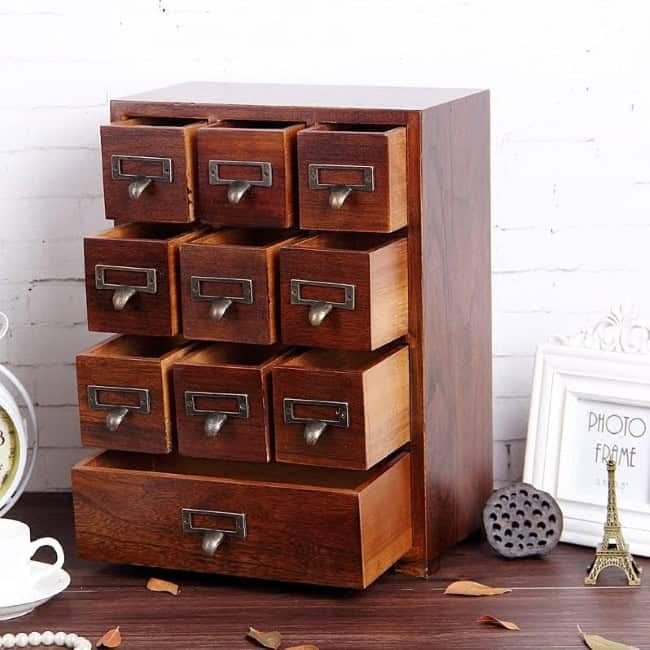
Few storage ideas feel as natural for collectors as the library card catalog. These wooden cabinets once held millions of index cards in public libraries. Their long, narrow drawers seem almost designed for sports cards. Apothecary cabinets hold a similar mystique, having once for the home for pharmacists and traveling medicine salesmen.
Why Card Catalogs & Apothecary Cabinets Work So Well
Card catalog drawers typically hold 3×5 index cards standing on their long edge. A standard baseball card measures 2.5 by 3.5 inches, so sleeved cards fit with room to spare. Toploaders measure 3 by 4 inches, and many drawers accept them when you stand them on the long side. Always measure your drawers before you load them, since sizes vary between makers.
Apothecary cabinets have similar dimensions, although they vary. Make sure to measure and allow a little extra room for your cards before committing to a heavy piece of furniture like this.
The real magic of these baseball card storage solutions lies in organization. Each drawer becomes its own category. You can assign drawers by team, by player, by year, or by set. A small label holder on the front of each drawer makes it easy to find exactly what you want. Many collectors love the feeling of sliding open a drawer marked “1987 Topps” and flipping through it like a librarian.
Finding and Preparing a Cabinet
Original library catalogs turn up at estate sales, school surplus auctions, and antique shops. Several furniture makers also produce new versions in smaller sizes, which work great for apartments and home offices.
A little preparation keeps your cards safe. Wipe out each drawer and let it air out before use. Keep every card in a penny sleeve or toploader so it never touches bare wood. If an older cabinet has a strong odor, give it extra time to ventilate. Team bags add another layer of protection for your favorite cards.
The result is a piece of furniture that doubles as a conversation starter. Guests rarely expect a library cabinet full of baseball cards, and that surprise is half the fun.
Binders for Graded Cards and Toploaders
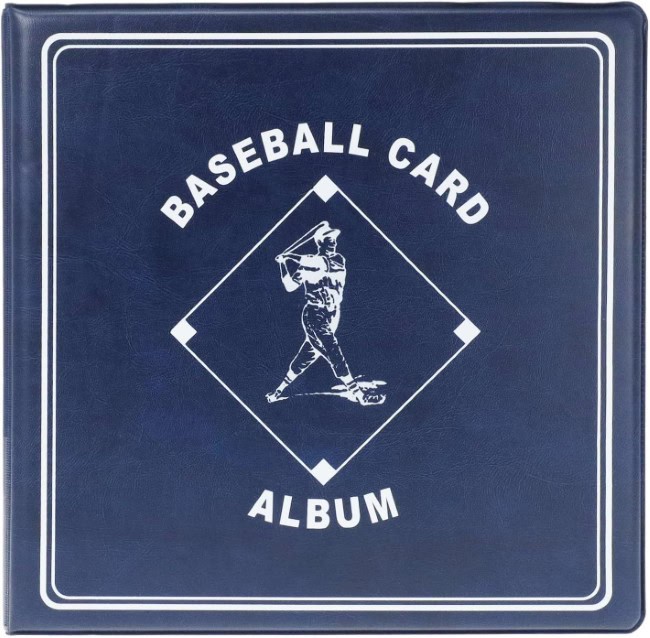
Most collectors know binders as homes for raw cards in nine-pocket pages. However, a newer generation of binders handles bulkier items. Specialty binders now accept toploaders and even graded slabs, which opens up exciting display possibilities.
Toploader Binders
Toploader binders use oversized pockets that fit a standard 3×4 toploader. Most pages hold four or six toploaders each. This setup gives your best raw cards double protection: the rigid toploader shields the card, and the binder page holds everything in place.
These binders shine for player collections and rookie card runs. You can flip through a whole career in order without digging through a stack. Many collectors also like the clean, uniform look of a page full of matching toploaders.
Graded Card Binders
Slab binders take the concept further. These heavy-duty albums feature thick pockets sized for the popular grading company holders. Many include zippered closures, padded covers, and reinforced spines to support the extra weight.
A graded card binder transforms a pile of slabs into a portfolio. Instead of stacking slabs in a box, you can present them page by page. They work wonderfully for card shows, trade nights, or simply showing a friend your collection.
Tips for Binder Success
Store binders upright on a shelf, much like books. Lying them flat under heavy objects can stress the pages. Choose binders with D-rings, which help pages lie flat and turn smoothly. Look for pages labeled PVC-free and archival safe. Finally, resist the urge to overfill. A binder with a little breathing room protects your cards and lasts longer.
Deck Boxes
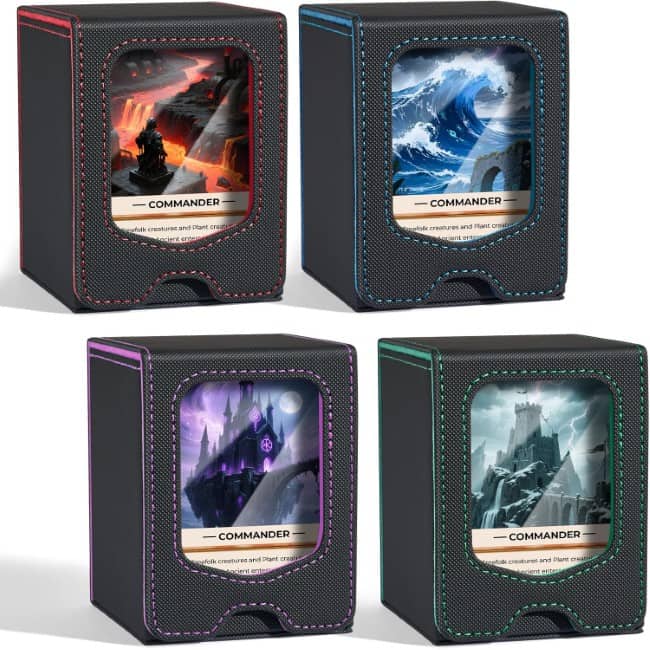
Trading card game (TCG) players have relied on deck boxes for decades. These compact containers hold a full playing deck and travel easily. Baseball card collectors have started to discover their charms as well.
What Makes Deck Boxes Useful
A typical deck box holds between 80 and 100 sleeved cards. Some larger models hold even more, and some include a separate tray for extras. They come in sturdy plastic, faux leather, and even wood. Many feature magnetic lids that snap shut securely.
Their size makes them perfect for focused collections. A single deck box might hold an entire team set, a player run, or a stack of trade bait. Since they close tightly, cards stay put even if the box tumbles out of a backpack. They’re also good for transporting a small amount of cards to a trading card at your local card shop, or a card show.
They also work beautifully for set building. Label each box with a set name and checklist number range. As you track down missing cards, you simply drop them into the right box. Stacked on a shelf, a row of colorful deck boxes looks tidy and inviting.
Collectors with young family members love deck boxes, too. Kids can manage their own small collections without risking a large, heavy storage box. It is a great way to share the hobby with the next generation.
For best results, keep cards in penny sleeves before placing them inside. Choose a box size that matches your sleeves so cards do not slide around. A snug fit keeps corners sharp and edges clean.
Puzzle Boxes Only You Can Open
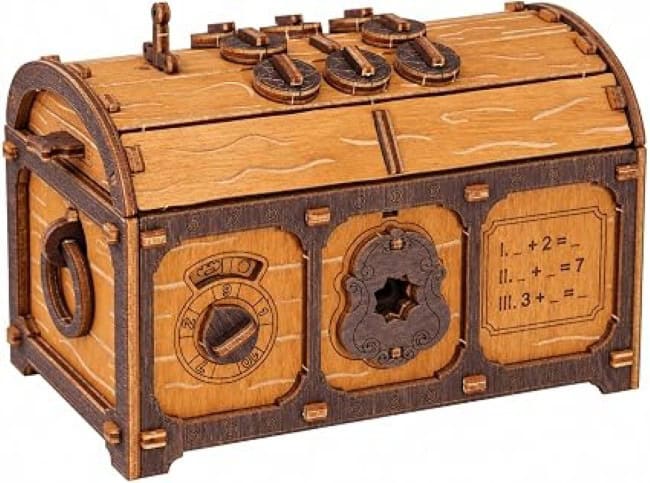
Sometimes storage should feel a little special. A puzzle box adds mystery and fun to your most treasured cards. These clever containers open only when you know the secret sequence of moves.
The Tradition of Puzzle Boxes
Japanese craftsmen have built secret boxes for well over a century. These beautiful wooden creations hide their openings behind sliding panels. Some require just a few moves, while others need dozens of precise steps. Modern puzzle makers around the world continue the tradition with endless creative designs.
A puzzle box suits a small group of cards that carry deep personal meaning. Think of a rookie card from your favorite childhood player, an autograph you collected in person, or a card your grandfather gave you. Opening the box becomes a little ceremony each time.
Choosing the Right Puzzle Box
Size matters most. Measure the interior before you buy, and make sure your cards fit in toploaders or one-touch magnetic holders. A box built for jewelry may hold only a handful of cards, and that is perfectly fine.
Consider the difficulty level as well. A box with five or ten moves keeps casual snoopers out without frustrating you. Write down the solution and store it somewhere safe. You never want to lock yourself out of your own collection.
Keeping Cards Safe Inside
Wood looks gorgeous, but your cards should never sit directly against it. Always use a protective holder inside the box. A soft cloth lining or foam insert adds extra cushioning. Keep the box in a room with steady temperature and humidity, away from sunlight.
Many puzzle makers accept custom orders, too. Some collectors commission boxes with team colors or engraved names. The result is part storage, part art piece, and fully unique to you.
Foam-Lined Hard Cases
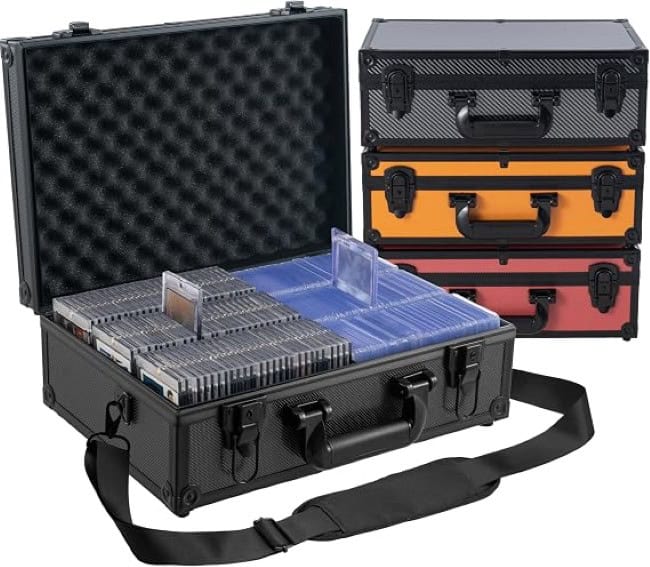
Photographers and musicians trust hard-shell equipment cases with their most delicate gear. These rugged cases offer the same protection to graded cards and high-value singles.
How They Protect Your Collection
Most hard equipment cases feature thick plastic shells, latching lids, and rubber gaskets. Many models resist water and dust. Inside, you will usually find pick-and-pluck foam made of small pre-cut cubes. You simply pull out cubes to create custom pockets for each item.
For collectors, this means you can cut slots shaped exactly like your slabs. Each graded card sits snugly in its own cradle, standing upright like files in a drawer. Nothing shifts, scratches, or rattles during travel.
Best Uses for Collectors
These cases excel when your cards leave the house. They make submission trips, card shows, and long drives worry free. A medium-sized case can hold dozens of slabs in neat rows.
They also work well for long-term home storage. Many cases accept padlocks for added security. A compact case slides easily into a closet or under a bed. If you add a small silica gel packet, you gain extra peace of mind on humidity. Some cases are also fire resistant.
Look for cases sized to fit your current slab count with room to grow. Plan your foam layout before you start pulling cubes, since removed pieces are hard to replace neatly. Many manufacturers sell replacement foam if you ever want to redesign your layout.
Military Surplus Ammo Cans
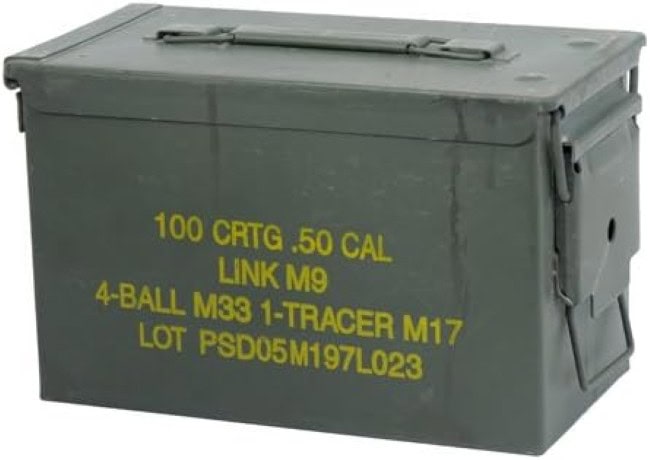
Ammo cans might be the most surprising entry on this list, but they make remarkably good card storage. These metal boxes were built to keep their contents dry and secure under tough conditions.
Why Collectors Love Them
The key feature is the rubber gasket inside the lid. When you clamp the latch closed, the can forms a tight seal against moisture and dust. Many outdoor enthusiasts use them to protect electronics, documents, and camping supplies.
Ammo cans also stack beautifully. Their rectangular shape and flat lids allow you to build sturdy towers in a closet or basement. The carrying handle on top makes them easy to move. Plus, they offer a fun, rugged look that many collectors enjoy displaying.
Setting Up Your Ammo Can
Common sizes hold rows of sleeved cards, toploaders, or even a small number of slabs. Some collectors line the bottom with foam or a short storage box that fits inside. This setup keeps cards upright and organized.
Check the gasket before you buy. A soft, flexible gasket seals well. Clean the interior with a dry cloth and let it air out fully before loading. Toss in a silica gel packet to absorb any trapped humidity.
You can find ammo cans at surplus stores, outdoor retailers, and hardware stores. New reproductions work just as well as originals. A fresh coat of paint or a custom label lets you match cans to teams or eras, adding personality to your storage area.
Photo Keeper Cases
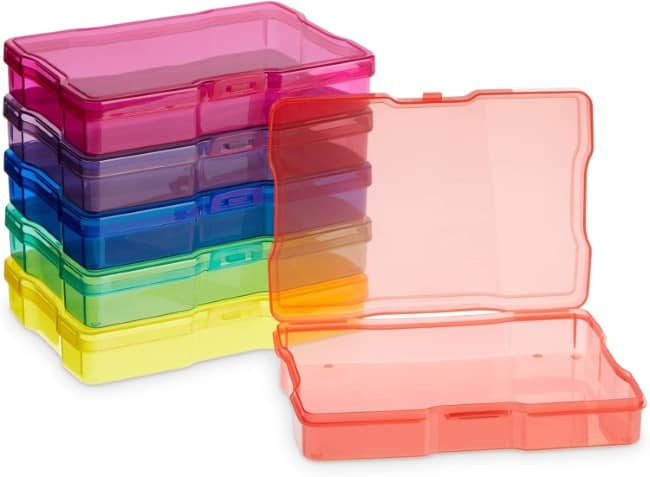
Craft and photography fans have used photo keeper cases for years. These clear plastic carriers hold a set of small inner boxes inside a larger case with a handle. Card collectors have embraced them as a flexible storage system. They also double as storage for photos and larger cards.
How the System Works
A typical photo keeper case contains 12 to 16 inner boxes, each sized for 4×6 photos. Those inner boxes fit sleeved cards and toploaders comfortably. Each small box holds a stack of cards, and the whole case latches shut.
This modular design creates endless organizing options. You could assign one inner box per team and fit an entire league in a single case. Set builders can split a large checklist across several boxes. Player collectors can sort by year or card type.
Advantages Over Traditional Boxes
The clear plastic lets you see exactly what sits inside without opening anything. Labels on each inner box speed up searching even more. When you want to look through one team, you pull out just that box instead of digging through a long row.
Photo keeper cases also travel well. The latching handle makes them easy to carry to shows or a friend’s house. They stack neatly on shelves and fit inside most closets.
Look for cases labeled acid free and photo safe. Make sure the latches feel secure and the inner boxes close firmly. With a few cases on hand, you can build a colorful, portable library of your entire collection.
Padding Repurposed Containers
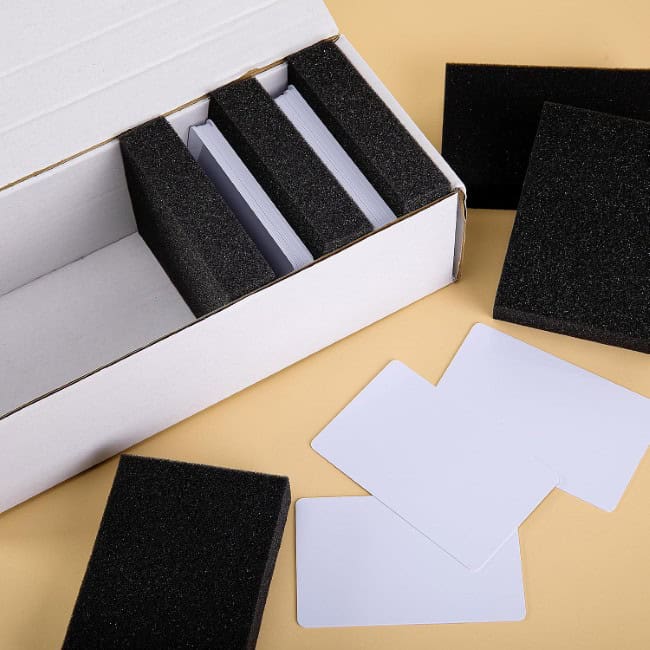
Repurposed containers rarely fit cards perfectly right out of the box. A little custom padding keeps everything snug, so cards stay upright and avoid sliding around.
Choose the Right Filler
Foam makes the best filler for most projects. Closed-cell polyethylene foam stays stable for years and cuts cleanly with a sharp utility knife. You can shape it into spacers, cradles, or custom slots for slabs. Soft pick-and-pluck foam works well for graded cards, since the slab keeps the card itself protected. For long-term storage of raw cards, polyethylene foam is the better pick.
Avoid the urge to cut new wood to make dividers or spacers. Fresh wood can release compounds and hold moisture over time. Acid-free board, archival box dividers, and even empty toploaders make easy, safe alternatives.
Try the Box-Within-a-Box Approach
Another clever option leaves the original container untouched. Simply place a small archival storage box inside your ammo can, card catalog drawer, or puzzle box. The inner box handles organization, while the outer container adds style and protection. This approach also makes rearranging your collection quick and easy.
Smart Habits for Any Storage Solution
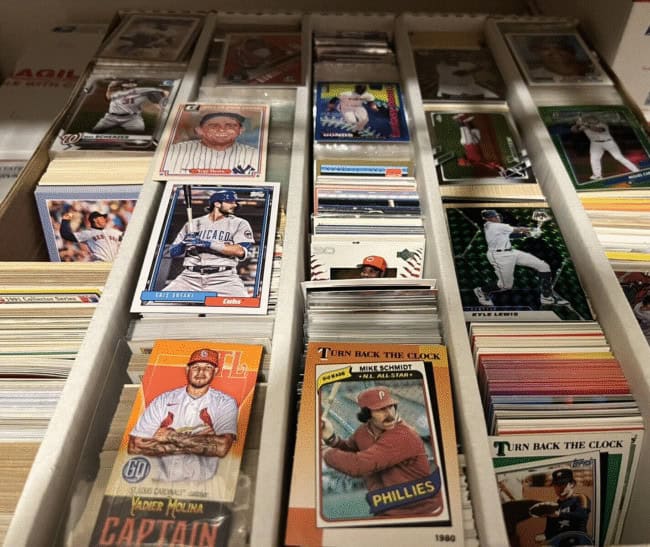
No matter which creative option you choose, a few simple habits keep your cards in top condition. Start by sleeving every card before it goes into a toploader, box, or binder. That thin layer of plastic guards against scratches and fingerprints. Your padding should then hold the holders, not the cards themselves.
Climate makes a big difference, too. Store your collection in a living space with steady temperature and moderate humidity. Attics and garages swing too much between seasons. Keep containers away from windows as well, since sunlight fades colors over time. For sealed containers like ammo cans and equipment cases, a small silica gel packet absorbs extra moisture.
Organization habits protect your cards just as much. Clear labels help you find what you need quickly, which means less handling. Give cards a little breathing room rather than packing them tight, so corners stay sharp. Finally, open your containers every few months for a quick check. These habits take just minutes, and they keep your cards looking great for years.
Conclusion
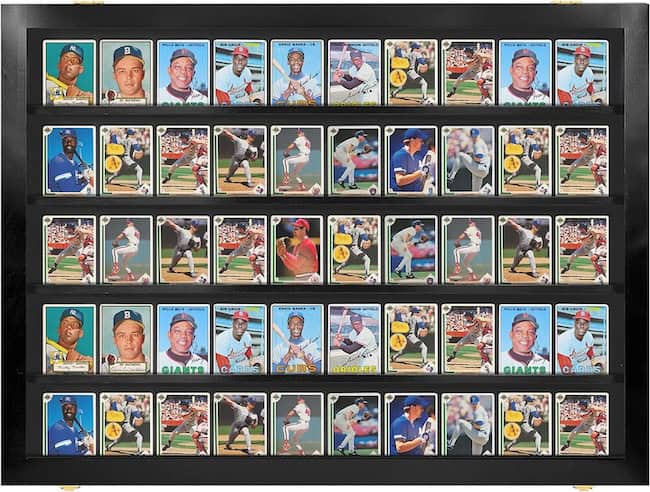
Storage does not have to be the least exciting part of collecting. A card catalog brings classic library charm to your shelves. Toploader and slab binders turn your best cards into an easy-to-browse portfolio. Deck boxes keep focused sets and trade stock compact and portable. A puzzle box adds a touch of mystery to your most meaningful cards.
The newer ideas offer something special as well. Foam-lined equipment cases give your slabs travel-ready protection. Ammo cans provide sealed, stackable storage with plenty of rugged style. Photo keeper cases create a modular, portable system that suits nearly any organizing approach. Custom solutions might even be necessary for certain collections: Over- and under-sized cards like 1925 Exhibits, 1909-1911 T206 and Topps Big don’t fit in standard binders or boxes.
The best storage solution reflects how you enjoy the hobby. Some collectors love to display, some love to travel to shows, and some simply want everything safe and easy to find. Mix and match these ideas to fit your collection, follow a few smart habits, and you will enjoy your cards more every time you reach for them.