
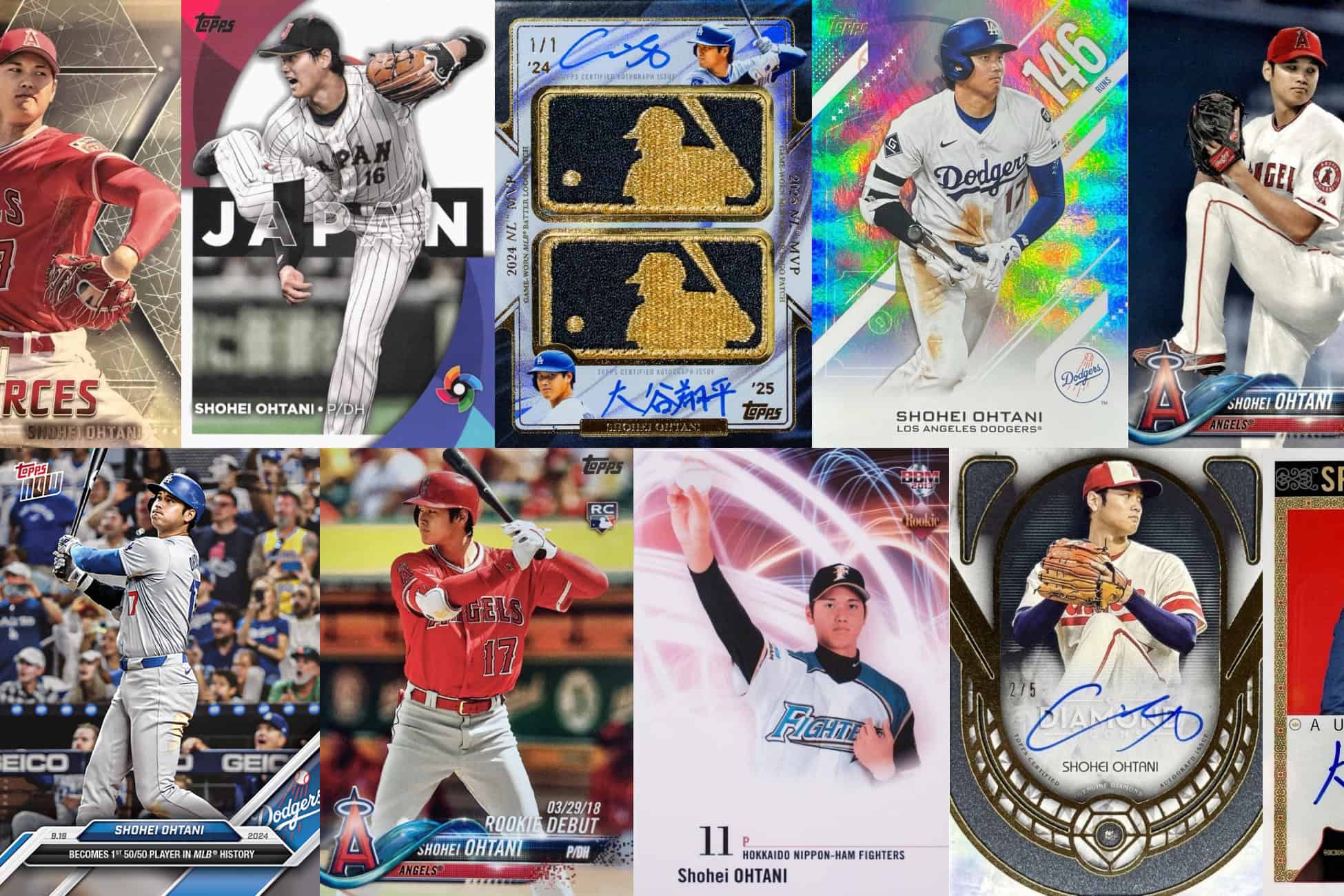

Shohei Ohtani is unlike anything baseball has seen in over a century, and the hobby has responded accordingly. As a two-way star who pitches and hits at an elite level, Ohtani has captured the attention of collectors. To many, we are now watching a modern-day Babe Ruth comparison play out in real time. That crossover appeal, combined with his move from Japan’s NPB to MLB’s Angels and Dodgers, has created a rich and varied card history. Collectors are scrambling to get the best Shohei Ohtani cards – but where to start?
Ohtani cards span three distinct chapters of his career: His early days in Japan, his rookie MLB seasons, and his current run with the Dodgers, all of which offer collectors different entry points depending on budget and interest. This guide walks through five standout Ohtani cards that highlight the different eras and formats collectors gravitate toward. Whether you are a longtime hobbyist or someone just getting into Ohtani collecting, these cards represent the benchmarks worth knowing.
2013 BBM Shohei Ohtani Rookie Edition #42 (Pitching)
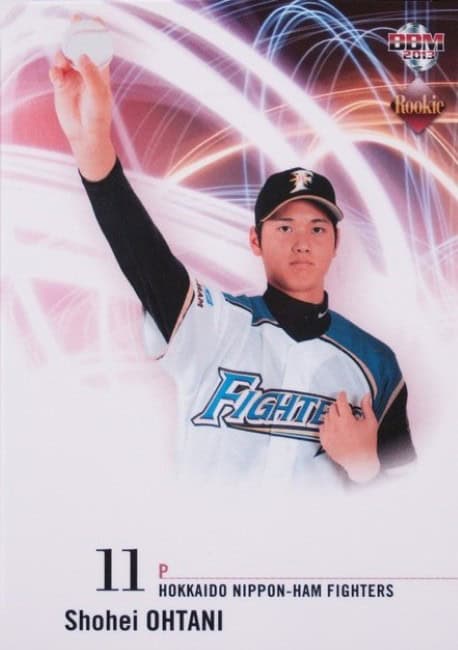
Before Ohtani ever set foot on an American mound, he was already a national sensation in Japan playing for the Hokkaido Nippon-Ham Fighters. His early cards were produced by BBM, Japan’s primary trading card manufacturer. These issues capture a side of his career that many American collectors overlook.
Ohtani’s BBM rookie card documents his rare two-way ability from the very start, which Topps and Bowman later imitated. The card design reflects BBM’s typical clean, photo-forward style. They show Ohtani in his Fighters uniform during his teenage debut season. For collectors interested in the full arc of his career, this card is where the legend actually began.
These Japanese-issue cards have grown in popularity as more American collectors research Ohtani’s full story. Sourcing them can require working with international sellers or specialty dealers. That adds a layer of authenticity and effort that many collectors find rewarding. Because BBM print runs and distribution differ significantly from American manufacturers, availability can be less predictable. However, grading services have seen rising submission numbers for these early Ohtani issues.
Value: Because of the rarity of the card, prices vary widely. In high grades, the cards can sell between $500-$5,000 according to PSA. However, finding them – not affording them – is often the hardest part of this chase.
2018 Topps Series 2 Shohei Ohtani #700 (RC)
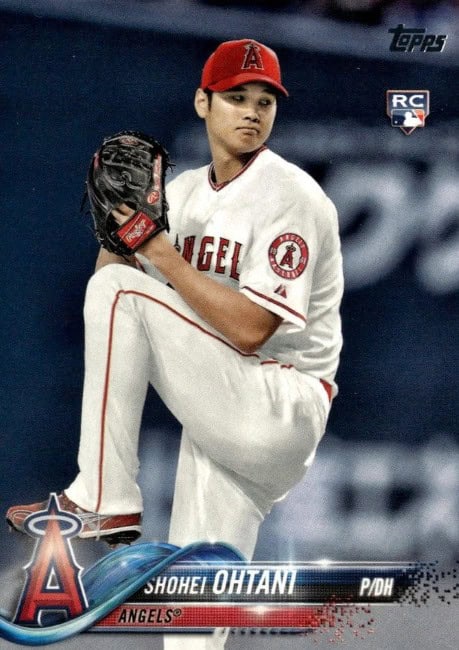
When Ohtani signed with the Angels ahead of the 2018 season, Topps moved quickly to capture the moment. His 2018 Topps flagship cards became an instant hobby sensation. It’s one of the most requested Ohtani cards among collectors today. This release cemented Ohtani’s status as a must-have name the moment he arrived stateside.
Rookie cards typically anchor a player’s long-term card value, and Ohtani is no exception. Because he debuted with so much fanfare, and because his performance has only grown more historic since, the 2018 Topps issue is often treated as a starting point for anyone building an Ohtani collection.
Value: Shohei Ohtani’s most sought-after card can cost from $900 and up in higher grades, according to PSA.
2025 Topps Chrome MVP Award Gold Shohei Ohtani Logoman Autograph (1/1)
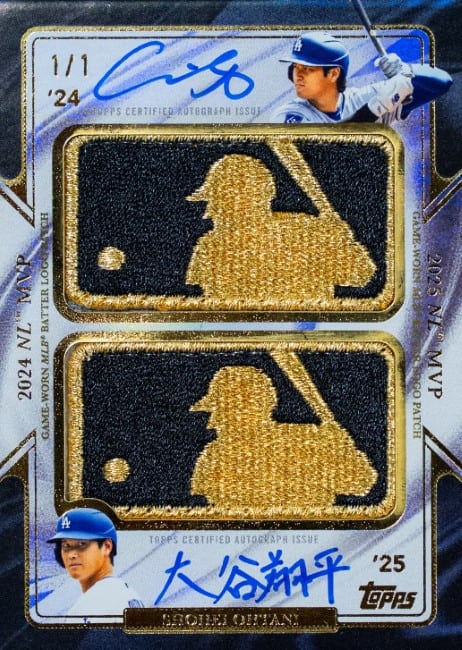
Some cards define rarity. The 2025 Topps Chrome MVP Award Gold MLB Logoman Autograph sits at the very top of that category. As a true one-of-one, this card pairs Ohtani’s signature with the official MLB Logoman patch. It’s a piece considered the rarest memorabilia swatch in the modern hobby. Topps reserves the Logoman patch for only its most significant single-card releases, and attaching it to an MVP Award Gold parallel of Ohtani turned this into one of the most exclusive cards ever produced of an active player.
The design leans into the gold-foil aesthetic that Topps uses to mark its highest-tier parallels. That gives the card a distinct, trophy-like presence that matches its MVP Award theme. Because it’s a 1/1, there is no print run, no population report, and no second chance for a collector who misses out. Cards like this rarely enter the market at all. When they do, they tend to attract attention well beyond the usual sports card audience.
Value: The hype on this card became reality in December 2025, when the card sold for $3 million. It became, at the time, the most expensive Shohei Ohtani card ever sold. It’s also one of the highest publicly reported sales in modern card history. The sale reinforces how far demand for true one-of-one memorabilia cards has climbed in recent years.
2024 Topps Series 2 Shohei Ohtani #500
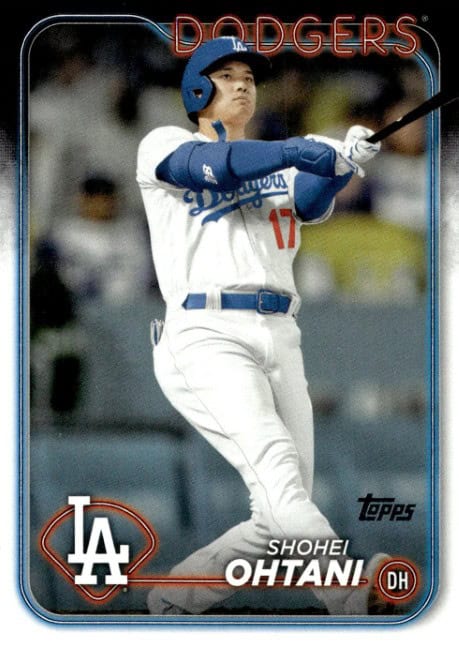
When Ohtani signed with the Los Angeles Dodgers ahead of the 2024 season, the hobby world turned its attention to one simple question: which card would be the first to show him in Dodger blue. Topps Now released several early cards with an airbrushed Dodgers uniform, but the Topps Series 2 flagship had the first real card of Ohtani in Dodger Blue.
Card #500 follows the traditional Topps flagship design, favoring a clean, straightforward look over any specialty treatment. That simplicity carries real weight here. The card’s significance comes entirely from timing and placement rather than an elaborate design concept. Just as his 2018 Angels rookie cards marked the start of his MLB story, this card marks the beginning of a new chapter. It pairs a generational talent with one of baseball’s most iconic franchises for the first time.
Because 2024 Topps is a flagship product, card #500 was produced in large enough quantities that any collector who wants one can get it. That accessibility has made it a popular pickup for collectors who want an affordable way to mark the moment. Parallels and numbered versions of the card add additional chase options.
Value: Shohei Ohtani’s first Dodger base card is affordable, for an ungraded price of $3-$5. The 2024 Topps Ohtani in PSA 10 condition costs around $150.
2024 Topps Now 50/50 Club Shohei Ohtani #722
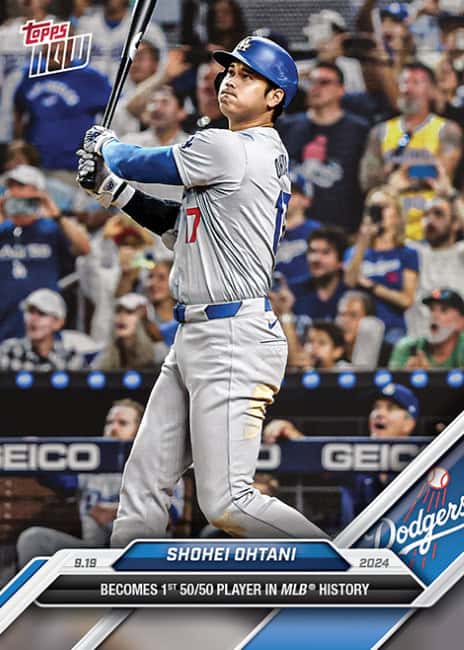
Few single-game achievements in baseball history have generated the kind of collector frenzy that Ohtani’s 50/50 season produced, and Topps Now was there to capture it in real time. On September 19, 2024, Ohtani became the first player ever to reach 50 home runs and 50 stolen bases in a single season, doing so in dramatic fashion with a three-home-run, two-steal performance against the Miami Marlins. Topps Now released a card commemorating the milestone within days, giving collectors a chance to own a date-stamped piece of a moment that had never happened before in the sport’s long history.
What sets Topps Now cards apart from traditional flagship releases is the format itself. Rather than being planned months in advance, these cards are produced and printed only after a specific game or milestone occurs, with print runs typically open for a short 24-hour purchase window before closing permanently. That structure means the final print run for the 50/50 card was determined entirely by collector demand in the moment, and given the historic nature of what Ohtani accomplished, interest was immediate and intense.
The card’s design keeps the focus on the achievement itself, often referencing the specific stat line and date alongside an action image from the milestone game. For collectors, that immediacy is part of the appeal, since the card functions less like a typical rookie or insert card and more like a printed news bulletin marking a moment that reshaped the record books. Few cards in recent memory have tied a specific number, date, and achievement together so directly, which has made this release a popular choice for collectors who want a card that tells a complete story on its own.
Value: Topps Now is a print on-demand service, and Topps printed a staggering 653,737 copies of this card. Even so, it sells for around $10 in ungraded condition, with PSA 9 or PSA 10 selling between $50-$150.
Tips for Building an Ohtani Collection
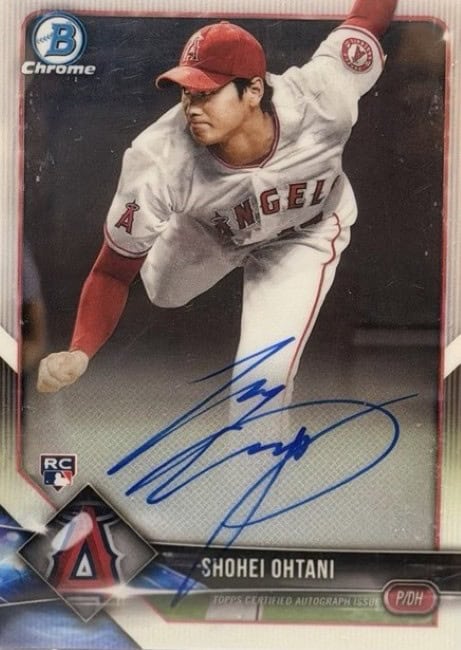
Collectors approaching Ohtani for the first time often benefit from a clear strategy, especially given how wide his card catalog has become across three distinct career phases. A few starting points can help guide those early decisions.
- Decide whether you want to focus on one era, such as his Angels rookie years or his current Dodgers run, or build across his full career including his Japanese cards
- Set a budget for autographed and short print cards separately from base and parallel cards, since price gaps between them can be significant
- Consider grading key cards through a reputable service, particularly rookie cards and short prints, since condition plays a major role in long-term value
- Stay patient with international cards like his BBM issues, since sourcing and shipping timelines often differ from domestic purchases
These guidelines are not rules so much as starting points, and many collectors find their own approach evolves as they learn more about Ohtani’s card history.
Final Thoughts on Collecting Shohei Ohtani
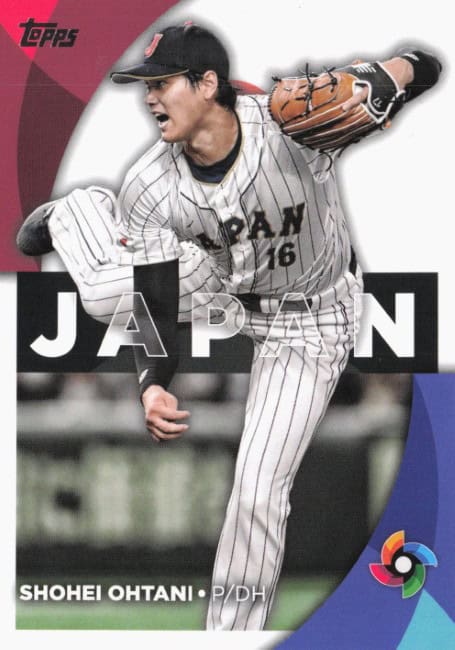
Shohei Ohtani has given the hobby something rare: a player whose card history genuinely spans continents, formats, and eras of stardom. From his early days with the Hokkaido Nippon-Ham Fighters to his headline-making rookie season with the Angels and his current run with the Dodgers, each phase of his career has produced cards worth understanding on their own terms.
For collectors just starting out, the good news is that there is no single correct entry point. A 2018 Bowman Chrome rookie card, a BBM issue from his Japanese playing days, a Precious Metal Gems short print, a 2021 All-Star Rookie card, or an early Dodgers issue can each serve as a meaningful anchor for a broader collection. What matters most is choosing cards that connect to the parts of his story that resonate with you.
As Ohtani continues to add to his legacy, it is likely that new cards will regularly join the conversation about his most significant issues. Staying engaged with his career, both on the field and in the hobby, is part of what makes collecting his cards so rewarding right now.