
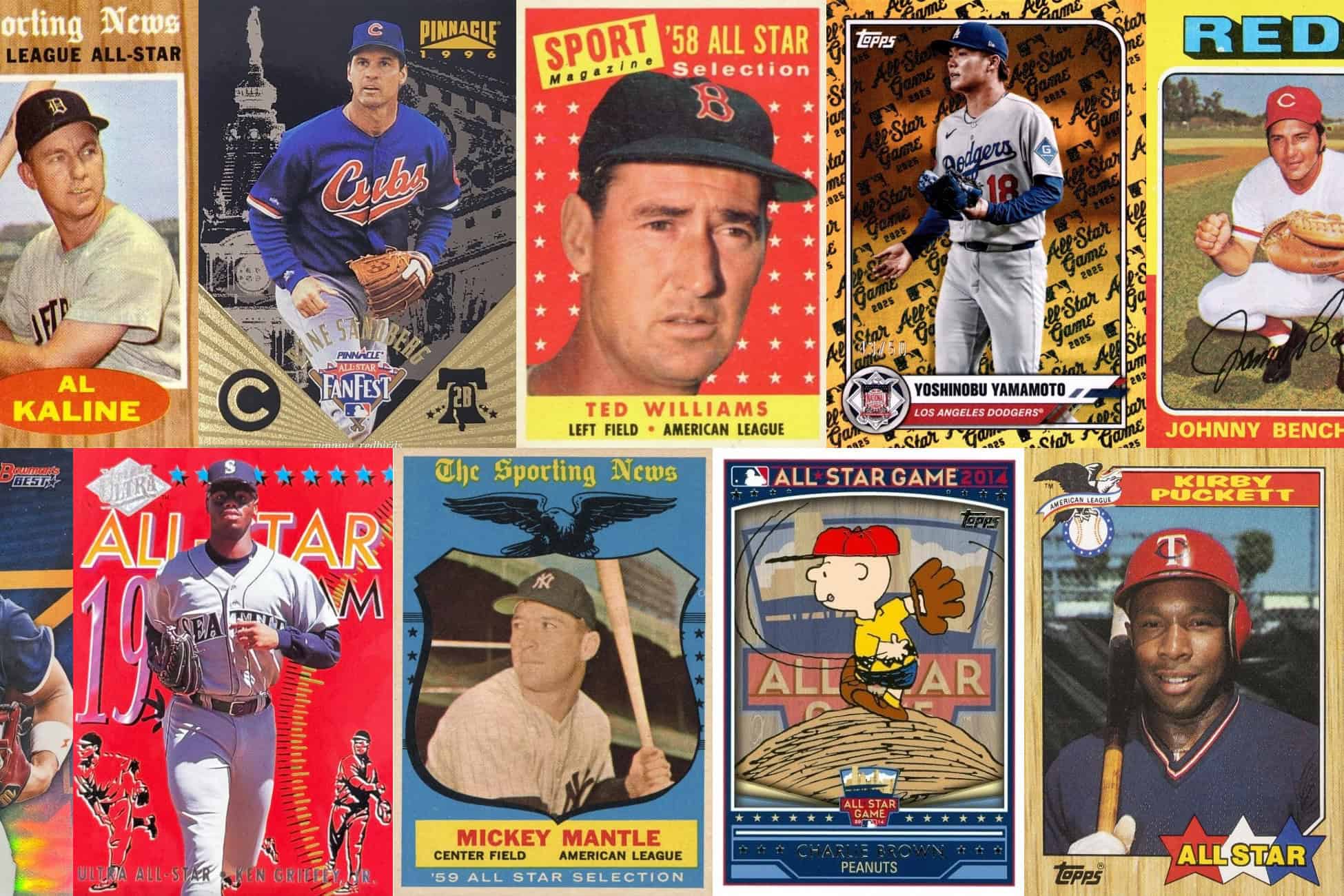
Every summer, baseball’s brightest stars share one field for a single night, and that spotlight has inspired decades of memorable trading cards. All-Star cards hold a special place in the hobby because they capture more than a player’s season stats. They mark a specific honor, a specific moment, and often a specific piece of game history that fans can hold in their hands.
For collectors, chasing All-Star cards offers a fun way to build a collection around a theme rather than a single team or player. Some fans track every All-Star card a favorite player ever appeared on. Others focus on a particular era of design, from the painted portraits of the 1950s to the jersey relics of today. Either approach rewards patience and offers plenty of variety along the way.
This guide covers the history of the All-Star Game itself, then walks through how manufacturers have honored that history on cardstock, from the earliest sets through the relic and specialty cards collectors chase today.
History of the All-Star Game
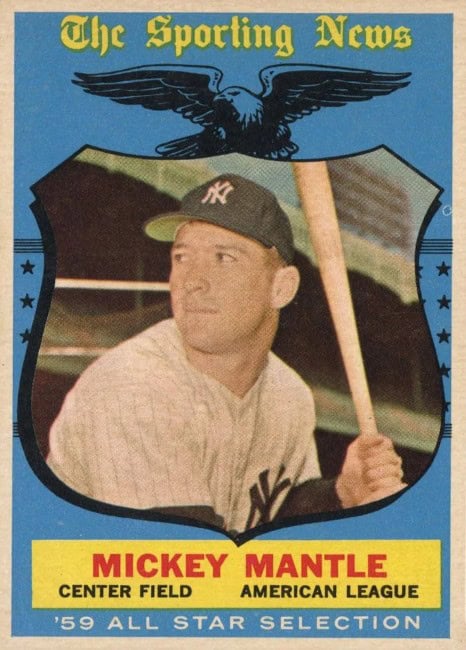
The All-Star Game started in 1933 as a one-time exhibition tied to the Century of Progress World’s Fair in Chicago. Fans responded so warmly that league officials decided to make it an annual event, and the tradition has continued with only a handful of interruptions since then.
The format has shifted over the years in ways that shaped how the event felt to fans. During the 1960s, two All-Star Games were played in a single season for several years, partly to generate additional funds for player pensions. That experiment eventually ended, and the game settled back into its familiar single midsummer showcase.
The event has also grown well beyond the game itself. The Home Run Derby debuted as a television spectacle in 1985 and quickly became one of the most anticipated nights of the season. Fan voting for starters, the addition of the Final Vote, and the rise of All-Star Week festivities have all added new layers to what was once a simple exhibition game.
This growth matters for collectors because it explains why manufacturers have always found ways to celebrate the event. As the All-Star Game became a bigger cultural moment, card companies had every reason to create products that let fans hold on to a piece of it.
All-Star Game Cards from the Pre-1980s Era
Long before dedicated insert sets existed, card companies found simple ways to spotlight the game’s honorees, and those early efforts remain some of the most beloved cards in the hobby today.
Topps Sets the Standard
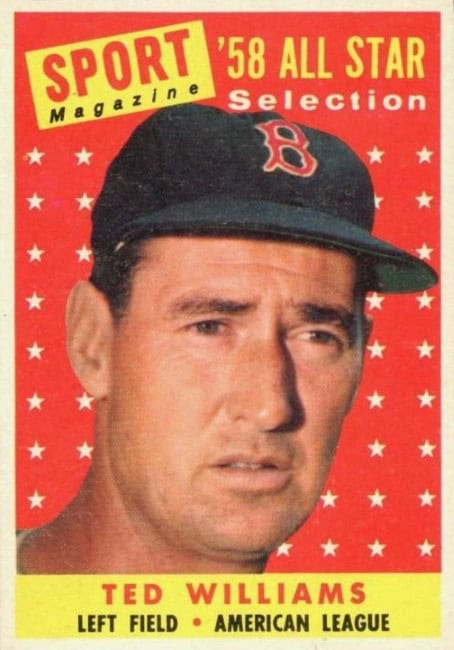
Topps introduced its first true All-Star subset in 1958, featuring painted portraits of the prior season’s American League and National League selections. These cards used bold color illustrations rather than photographs, which gave them a distinct look compared to standard base cards. A 1958 Topps All-Star card featuring Ted Williams remains a favorite among vintage collectors, both for the artwork and for the historical snapshot it offers of that era’s roster.
Topps continued producing All-Star subsets through the 1960s, giving collectors a yearly chance to own cards honoring legends like Willie Mays and Hank Aaron during their All-Star seasons. The artwork style shifted gradually as photography techniques improved, but the tradition of a dedicated subset carried on.
How These Cards Reached Collectors
These early All-Star cards typically arrived mixed into standard wax packs rather than sold as a separate product. Collectors at the time did not think of them as a distinct category the way modern collectors often do. That casual treatment means high grade examples can be tough to find today, since these cards were traded and handled just like any other card in a kid’s collection. Many hobbyists consider a run of vintage Topps All-Star selections to be a strong foundation for any themed collection.
All-Star Cards from the 1980s Onward
The 1980s reshaped the hobby in major ways, and All-Star cards evolved right along with everything else. Photography sharpened, competition increased, and the sheer number of products on shelves multiplied quickly.
New Manufacturers, New Designs
Topps shifted its All-Star subset from painted artwork to action photography during this decade, giving collectors a more realistic look at their favorite players. Donruss and Fleer both entered the market in 1981 and brought fresh design ideas to the category. Each company developed its own approach to honoring All-Star selections, which pushed everyone toward sharper photography, bolder borders, and more creative layouts.
Ichiro Suzuki’s rookie season in 2001 offers a good example of how these subsets could capture a big story. His All-Star selection that year appeared across several products, including a Topps Update All-Star Rookie card that collectors still seek out today because it ties his historic debut season to his first All-Star nod.
The Insert Era Takes Over
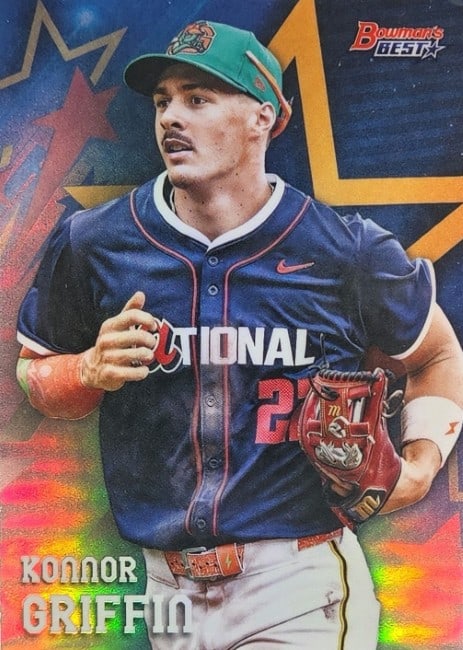
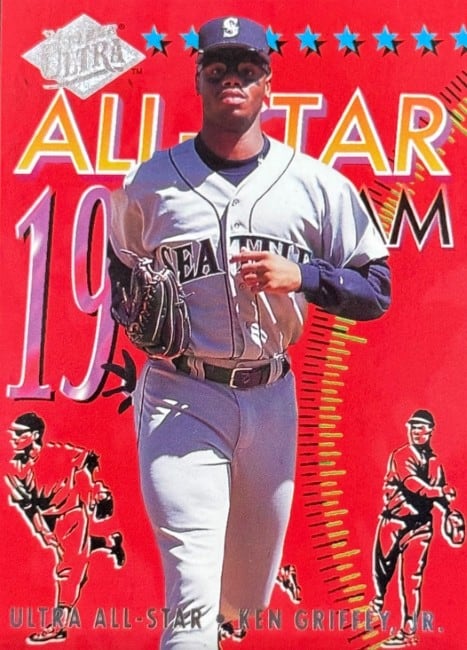
The 1990s introduced an explosion of parallel sets and insert cards, and All-Star cards fit naturally into this new landscape. Upper Deck and Score both created dedicated All-Star subsets featuring cleaner photography and design touches that separated them from standard base cards. Sets began distinguishing between the players chosen by fan voting and the pitchers and reserves selected separately, giving collectors a fuller view of each roster.
By the early 2000s, small design details like foil stamping and All-Star Game logos had become standard, setting the stage for the specialty products that would soon dominate this part of the hobby.
Relic Cards and Other Specialty All-Star Cards
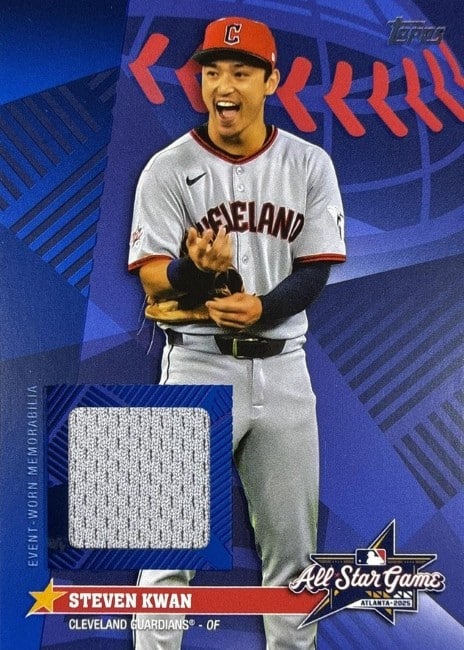
Relic cards changed the hobby dramatically when they arrived in the late 1990s, and All-Star products embraced the trend almost immediately. These cards include a small piece of game-used material, often a swatch of jersey or a fragment of a bat, built directly into the card.
Game-Used Material Meets the Midsummer Classic
All-Star relic cards carry extra appeal because the material often comes from the All-Star Game or Home Run Derby itself, tying the physical card to a specific on-field moment. Donruss produced a well-known set of these cards called All-Star Stitches, which featured jersey swatches from that year’s honorees and became a favorite chase item for collectors building around the event. A relic card connected to a specific derby swing or All-Star at bat tells a story that a standard photo card simply cannot match.
Other manufacturers followed a similar path. Upper Deck released All-Star Game jersey cards throughout the 2000s, often paired with low print runs that made them harder to find. Fleer also experimented with patch cards tied to the event, occasionally combining materials from multiple players on a single card for an extra layer of rarity.
Autographs and Modern Parallels
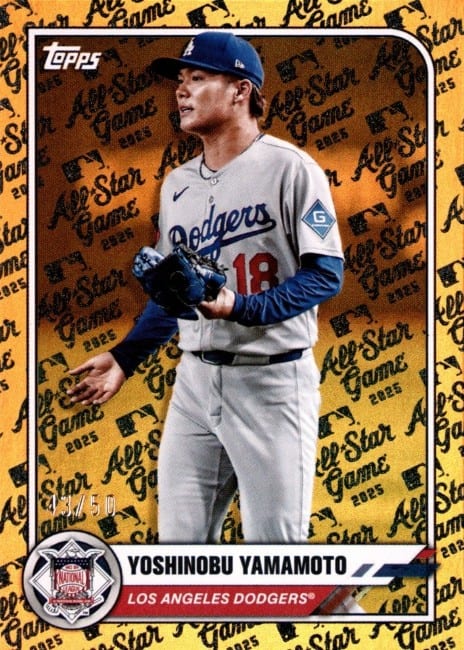
Autographed All-Star cards have become another popular category, especially when a rookie’s first All-Star selection lines up with a strong debut season. Refractor parallels, which shift color under different lighting, have also found a natural home in All-Star products thanks to their eye-catching look. These premium cards tend to carry higher price tags, but they reward collectors with a scarcity and personal connection that a base card cannot offer.
For newer collectors, specialty All-Star cards often serve as an exciting entry point. They combine star power, a specific game moment, and sometimes a physical piece of history, all in a single card.
Final Thoughts on Building an All-Star Collection
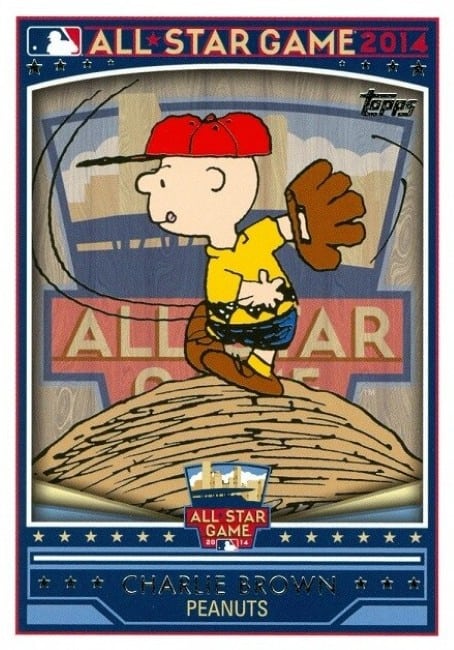
All-Star cards offer a rewarding way to explore baseball history through the lens of the sport’s biggest showcase event. From the painted portraits of 1958 Topps to the jersey relics found in sets like Donruss All-Star Stitches, these cards trace both the growth of the All-Star Game and the evolution of the hobby itself.
Collectors interested in this category have plenty of directions to explore. Some may want to track down every All-Star card belonging to a favorite player, like an Ichiro rookie season All-Star card, while others might prefer chasing modern relics or autographs from recent Midsummer Classics. Either path offers a satisfying mix of history, variety, and the thrill of the chase.
As new All-Star Games are played each year, fresh cards will continue joining this long tradition, giving collectors even more reasons to keep building their collections for summers to come.