
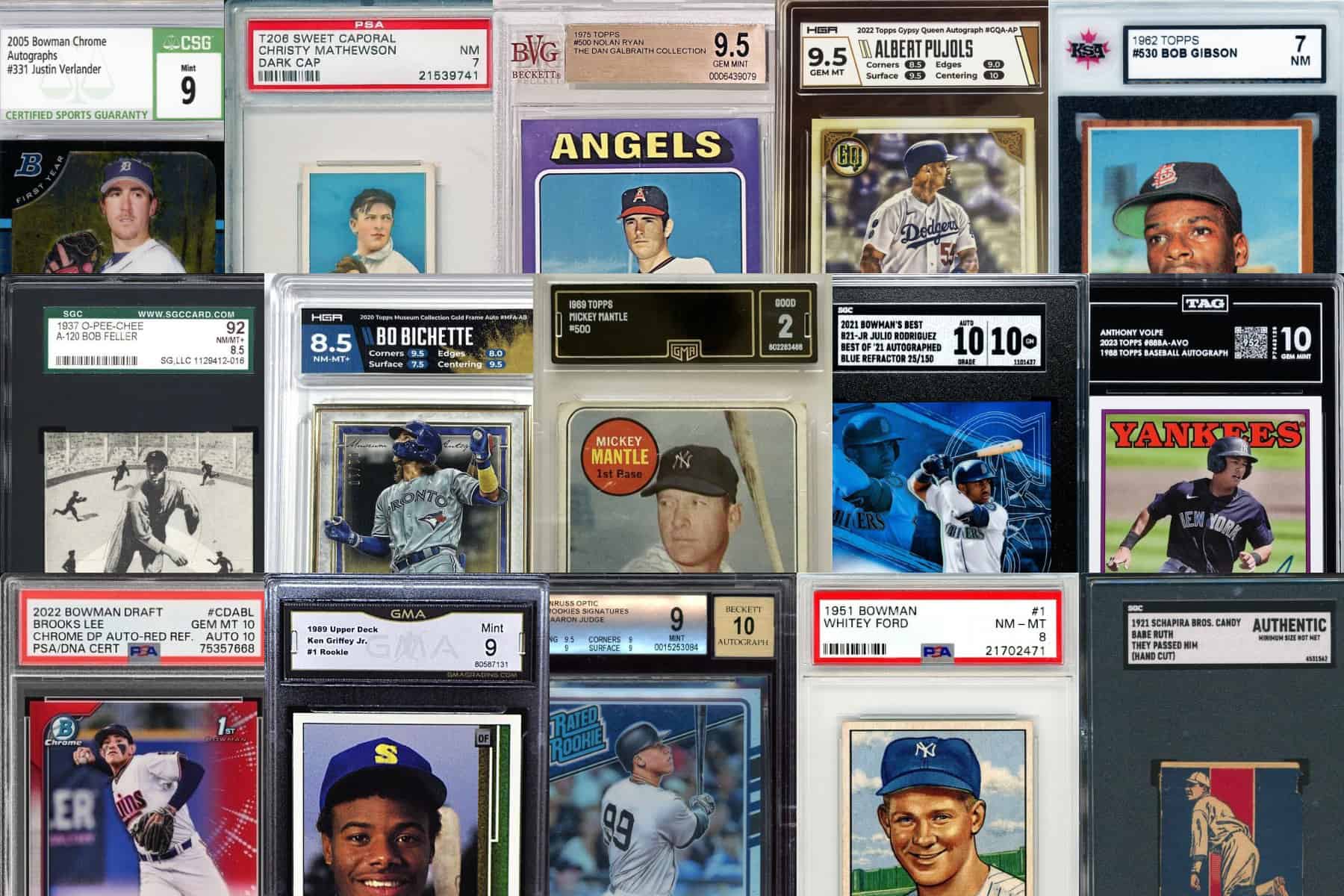

The decision to send a baseball card to a professional grading service is one of the most consequential choices a collector can make. In the modern hobby, the difference between a raw card and a slabbed one can represent thousands of dollars in market value. However, the process is not as simple as putting every shiny rookie card into a mailer. It requires a disciplined approach, a keen eye for physical condition, and an understanding of market psychology.
A successful grading strategy balances the preservation of history with the cold reality of financial logistics. As the hobby evolves, the criteria for what makes a card worth the grading fee continue to shift. This guide will explore how to navigate these decisions. We will look at the risks of the grading room and the long-term benefits of encapsulation. Whether you are a flipper or a lifelong curator, understanding these variables is essential for any serious collector.
Mathematical Risk of Grading

The most daunting aspect of grading is the gamble on the final numerical score. Every collector hopes for a Gem Mint 10, but the reality is often more sobering. When you submit a card, you are betting that the increase in value will outweigh the grading fee, shipping costs, and insurance. If a card returns as a PSA 8 when the market only rewards a 9 or 10, you may find yourself in a deficit.
This risk vs. reward calculation is the foundation of professional collecting. A card that looks perfect to the naked eye can have surface scratches or centering issues visible only under 10x magnification. If the grading fee is 25 dollars and the card in an 8 holder only sells for 15 dollars, you have effectively lost money to have your card protected. You must study the pop reports and current sales data to ensure the floor of the grade still provides value.
Why Collectors Grade Cards
Protecting Physical Assets
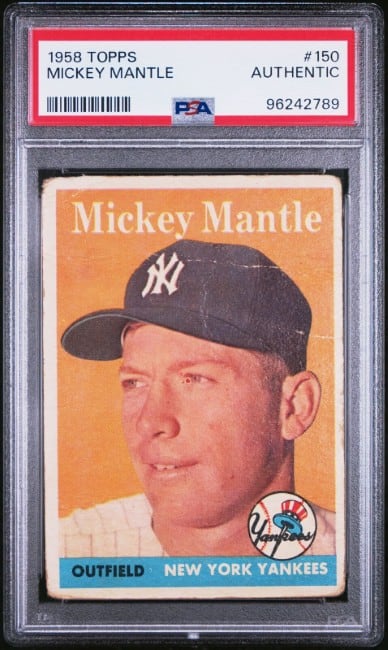
Beyond the financial speculation, grading serves a vital functional purpose: physical protection. Standard top-loaders and penny sleeves offer basic defense, but they do not seal the card from environmental factors. High-quality grading slabs are sonically welded to create a sturdy, tamper-evident plastic housing. This prevents the card from moving, chipping, or suffering from corner wear over years of handling.
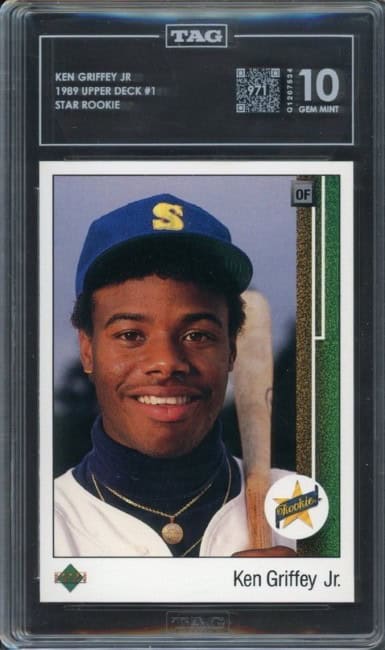
Environmental degradation is a silent enemy of the baseball card. Humidity, UV light, and accidental drops can turn a pristine asset into a damaged relic in seconds. By grading your cards, you lock the condition in place. This archival-quality housing ensures that the Ken Griffey Jr. rookie you pulled today looks exactly the same in thirty years. It is an insurance policy against the entropy of the physical world.
The Inherent Value of Authentication

A primary reason the market pays a premium for graded cards is the guarantee of authenticity. In an era where high-end fakes and trimmed cards are increasingly sophisticated, the third-party opinion provides peace of mind. A graded slab acts as a neutral certificate of authenticity that stays with the card forever. This removes the “he said, she said” friction often found in raw card transactions.
Grading also standardizes the language of the hobby. Instead of debating whether a card is “Near Mint” or “Excellent,” the hobby uses a universal 1-10 scale. This clarity allows for more efficient markets and helps buyers feel confident when purchasing sight-unseen online. When a card is slabbed by a reputable company, the value of that card is no longer a matter of opinion. It becomes a verified fact backed by an industry leader.
Grading for Future Value
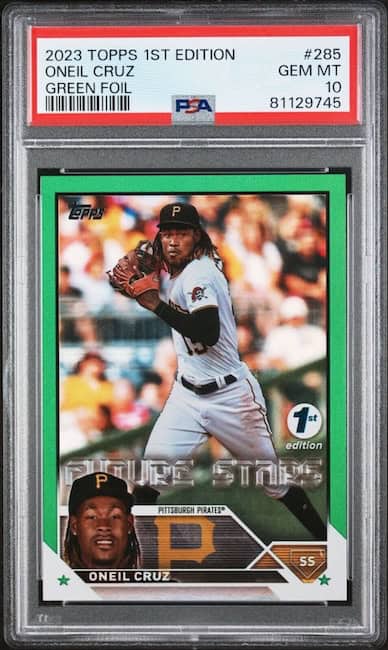
Strategic collectors often grade cards they intend to hold for the long term. This is particularly true for young prospects or legendary players whose markets are still developing. By grading a card early in its lifecycle, you capture its best possible condition before any accidents can happen. This forward-thinking approach treats baseball cards like a sophisticated asset class similar to fine art or vintage coins.
Future value is often tied to the “Population Report.” This is a public database showing how many copies of a specific card exist in each grade. If you own one of the few existing 10s of a specific player, your leverage increases as that player’s career progresses. Grading allows you to stake your claim in the top tier of the market early. This ensures that you are positioned to profit if the player eventually enters the Hall of Fame.
Preparing Assets for the Market
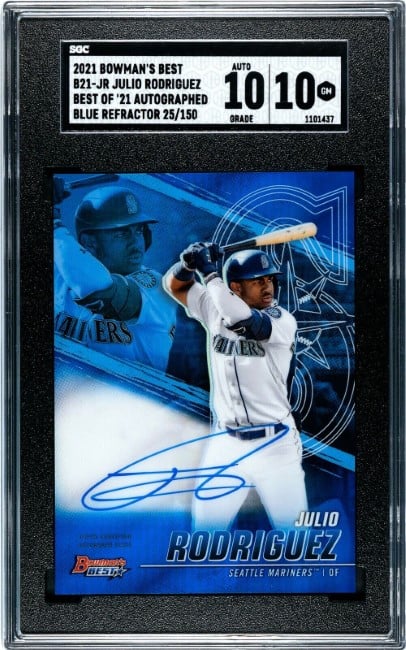
If your primary goal is to sell your cards, grading is almost always a requirement for high-value items. Most serious investors refuse to buy raw cards over a certain price point because the risk of alteration or hidden damage is too high. A graded card is much more liquid than a raw one. It can be listed on major auction houses or eBay with a clear, searchable title that attracts global bidders.
The “liquid” nature of graded cards cannot be overstated. Because the grade is fixed, buyers can make snap decisions based on the label alone. You will find that graded cards often sell faster and for higher multiples than their raw counterparts. When you decide to exit a position or thin out your collection, the slab acts as a professional resume for your card. It tells the buyer exactly what they are getting without any surprises.
Grading for a Personal Collection
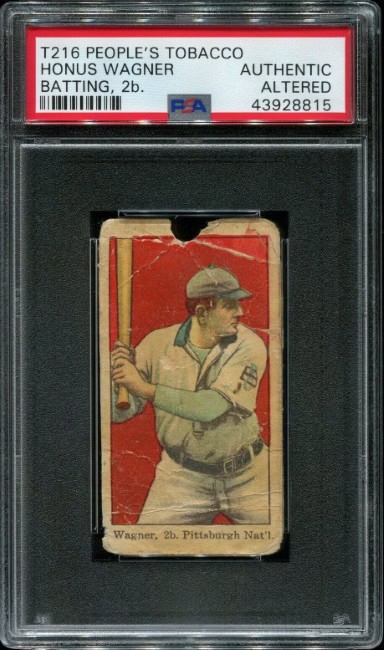
Not every card needs to be a financial investment. Many collectors choose to grade cards for their Personal Collection (PC) simply because they enjoy the aesthetic. There is a psychological satisfaction in seeing your favorite players housed in matching, stackable holders. It turns a chaotic box of cards into a professional-looking library. In this case, the grade on the flip is often less important than the presentation.
When grading for a PC, you have the freedom to choose the company that best fits your style. Some collectors prefer the classic look of PSA, while others like the tuxedo-style borders of SGC or the detailed subgrades of Beckett. You might even choose a company like TAG for its transparent, data-driven grading reports. When the card is meant for your shelf, the “correct” company is whichever one makes you enjoy your collection more.
How to Decide What to Grade
Analyzing Card Centering and Edges
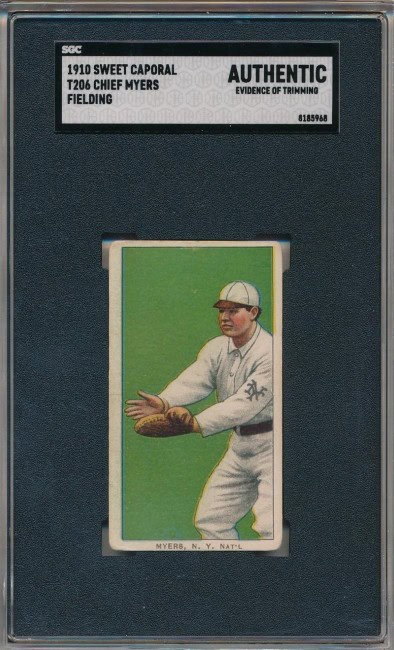
Before you spend money on grading fees, you must perform a rigorous pre-inspection. The most common reason for a disappointing grade is poor centering. Most grading companies look for a 60/40 ratio or better on the front to award a high grade. You should use a centering tool or a digital overlay to check the borders of your card. If the image is noticeably shifted to one side, it may not be a candidate for a top-tier slab.
Next, you must examine the edges and corners. Use a bright desk lamp to look for “white” on the corners, which indicates the paper layers are separating. Run your eye along the edges to check for any dings or roughness from the factory cutting process. Even a small imperfection that is invisible at a distance can drop a grade from a 10 to an 8. Being honest about these flaws will save you hundreds of dollars in unnecessary fees.
Detecting Surface Issues and Refractor Lines
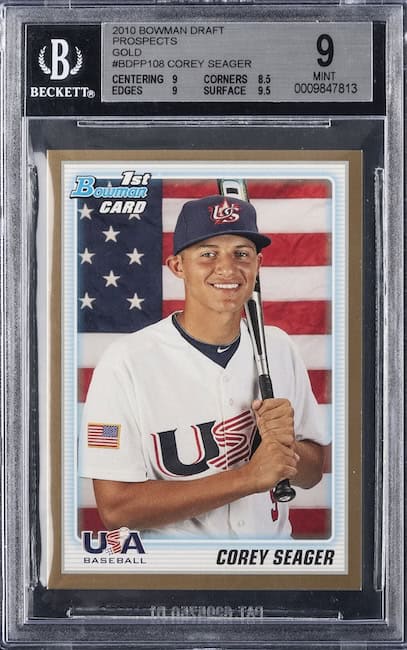
Surface flaws are the most difficult imperfections to catch but are often the most penalizing. You should tilt your cards under a strong light source to look for print lines, dimples, or scratches. For modern chrome cards, “refractor lines” can be a common manufacturing defect that ruins the chance of a Gem Mint grade. Fingerprints can also be an issue, though these can often be safely removed with a microfiber cloth before submission.
If you find a card with a significant surface dimple, it is usually best to keep it raw. Grading companies are notoriously harsh on surface damage because it interrupts the visual appeal of the card. A card with perfect corners and centering can still receive a 6 or 7 if there is a deep scratch on the player’s face. Developing the social science of “grading the grader” involves knowing which flaws a specific company is currently focusing on.
The Strategy of Bulk Submissions
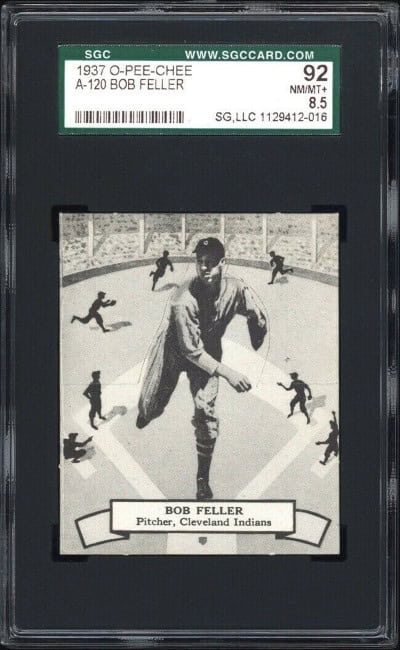
One way to mitigate the cost of grading is through bulk submission tiers. Most companies offer a lower price per card if you send in a large quantity at once. This is an excellent strategy for modern cards where the individual value might be lower, but the volume is high. By lowering your cost basis per slab, you reduce the risk of a “bad” grade hurting your overall bottom line.
- Gather at least 20 to 50 cards to qualify for bulk rates.
- Sort cards by player or set to make the submission form easier to fill out.
- Use a consistent shipping method with full insurance to protect the package.
- Factor in the turnaround time, as bulk orders often take several months to return.
Understanding Grading Before You Submit a Card
Grading Labels
The information on the grading label, or “flip,” is just as important as the plastic itself. This label provides the player name, year, set, and any specific variations or parallels. It also includes a unique certification number that can be looked up in the company’s database. This digital footprint is what allows buyers to verify the card’s history and ensure the slab has not been compromised.
Some companies also offer “subgrades” on the label. These are four individual scores for Centering, Corners, Edges, and Surface. This provides a granular look at why a card received its final grade. While some collectors find this cluttered, others find it provides a more scientific justification for the value. Understanding how to read these labels is a key skill for any collector looking to trade or sell in the secondary market.
Population Reports
Population reports are the most powerful tool in the grader’s arsenal. These reports show the total number of copies of a card that have been graded by a specific company. If a card has a “low pop” in a high grade, its value can skyrocket due to scarcity. Conversely, if there are thousands of PSA 10s for a specific rookie, the price may stay flat regardless of how well the player performs on the field.
You should always check the pop report before deciding to grade. If you see that 90% of submitted copies of a card return as a 10, then a 10 is the expected standard and may not carry a huge premium. If only 5% of copies return as a 10, you have found a “condition-sensitive” card. In those cases, even a 9 might be worth a significant amount of money. This data-driven approach removes the guesswork from your submission strategy.
When Not to Grade
Perhaps the most important skill in the hobby is knowing when not to grade. Just because a card is an “insert” or a “short print” does not mean it belongs in a slab. You must consider the total addressable market for that specific card. If the card is of a player with a limited fan base, you may never find a buyer willing to pay the premium required to cover the grading cost.
Keep a “raw” collection for cards that are sentimental but not financially viable for grading. There is nothing wrong with keeping a card in a binder or a one-touch magnetic holder. By being selective, you ensure that your graded collection represents the best of the best. This discipline keeps your hobby budget healthy and ensures that your “hits” are truly impactful when they return from the grading service.
What’s Next in Card Grading
The Evolution of Digital Grading
The industry is currently seeing a shift toward AI-driven and digital grading. Traditional grading relies on the human eye, which can be subjective and prone to variation. New companies are using high-resolution scanners and algorithms to measure centering and surface flaws to the micron. This scientific approach aims to remove human bias and provide a perfectly repeatable score every single time.
While many collectors still prefer the “prestige” of the human-graded legacy companies, the rise of digital grading is changing the social science of the hobby. It provides a level of transparency that was previously impossible. You can often see a digital map of your card’s flaws, showing exactly why it missed a higher grade. As this technology improves, it may become the standard for how all baseball cards are evaluated.
Navigating the Economics of the Hobby
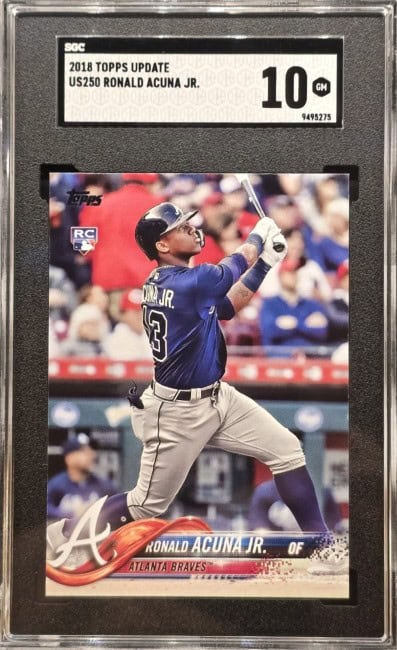
The baseball card market functions much like a stock market, with prices fluctuating based on performance, news, and supply. Grading is the mechanism that turns a physical commodity into a liquid asset. By understanding the economics of grading, you can better navigate the ups and downs of the season. A well-timed grading submission for a rising star can result in a massive return on investment if the cards return just as the player hits the national spotlight.
However, you must also be aware of “grading fatigue.” During market peaks, turnaround times can stretch to a year, and fees can rise significantly. You must stay informed about the current state of the industry to avoid overpaying for slow service. Successful collectors treat their grading submissions as a business, tracking costs and expected returns with precision. This professional mindset is what separates the casual hobbyist from the elite collector.
Making the Final Decision
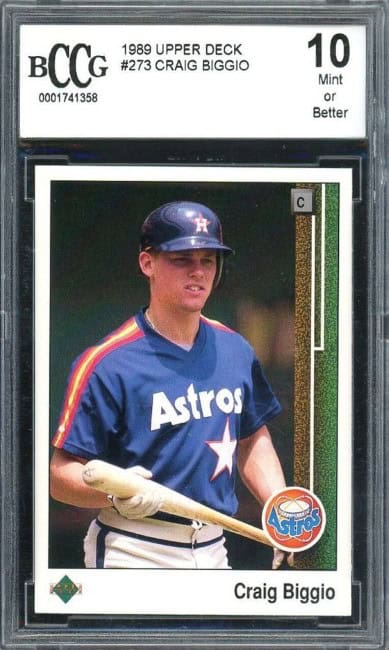
When you are staring at a stack of cards on your desk, the final decision comes down to your personal goals. Are you looking to flip for a quick profit, or are you building a legacy to pass down to your children? If you want to sell, let the data and the math guide your hand. If you are collecting for joy, let your personal taste be the primary factor. There is no single “right” way to collect, but there are smarter ways to spend your money.
Take your time with the inspection process. Use the tools available to you, from magnification loops to online price guides. Grading is a permanent decision that costs real money, so it should never be rushed. Once you find that perfect candidate and send it off, the anticipation of the return is one of the greatest thrills in the hobby. When that box finally arrives and you see those pristine slabs, you will know that the effort was worth it.
Conclusion
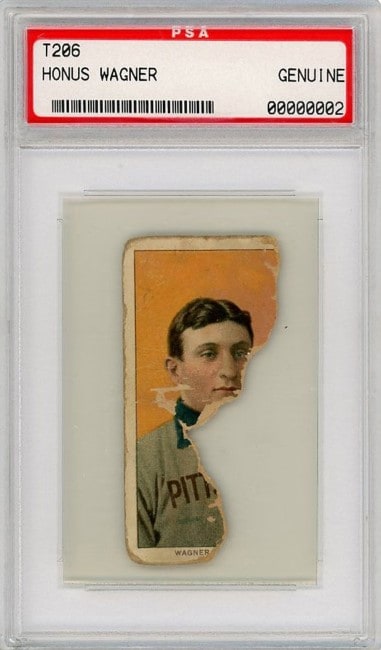
The world of baseball card grading is a blend of art and science. It requires an eye for detail and a mind for market trends. By focusing on protection, authentication, and strategic value, you can transform your collection into a formidable portfolio of assets. Remember to stay positive and enjoy the process, as the hunt for the next Gem Mint 10 is what keeps us all coming back to the hobby.
As you move forward, keep a log of your grading results to see how your “eye” improves over time. You will eventually start to see patterns in what gets a 10 and what gets a 9. This experience is the most valuable asset of all. Whether you are holding a vintage mantle or a modern superstar, a graded slab is a celebration of the game we love. Happy collecting, and may all your submissions return as tens.
