
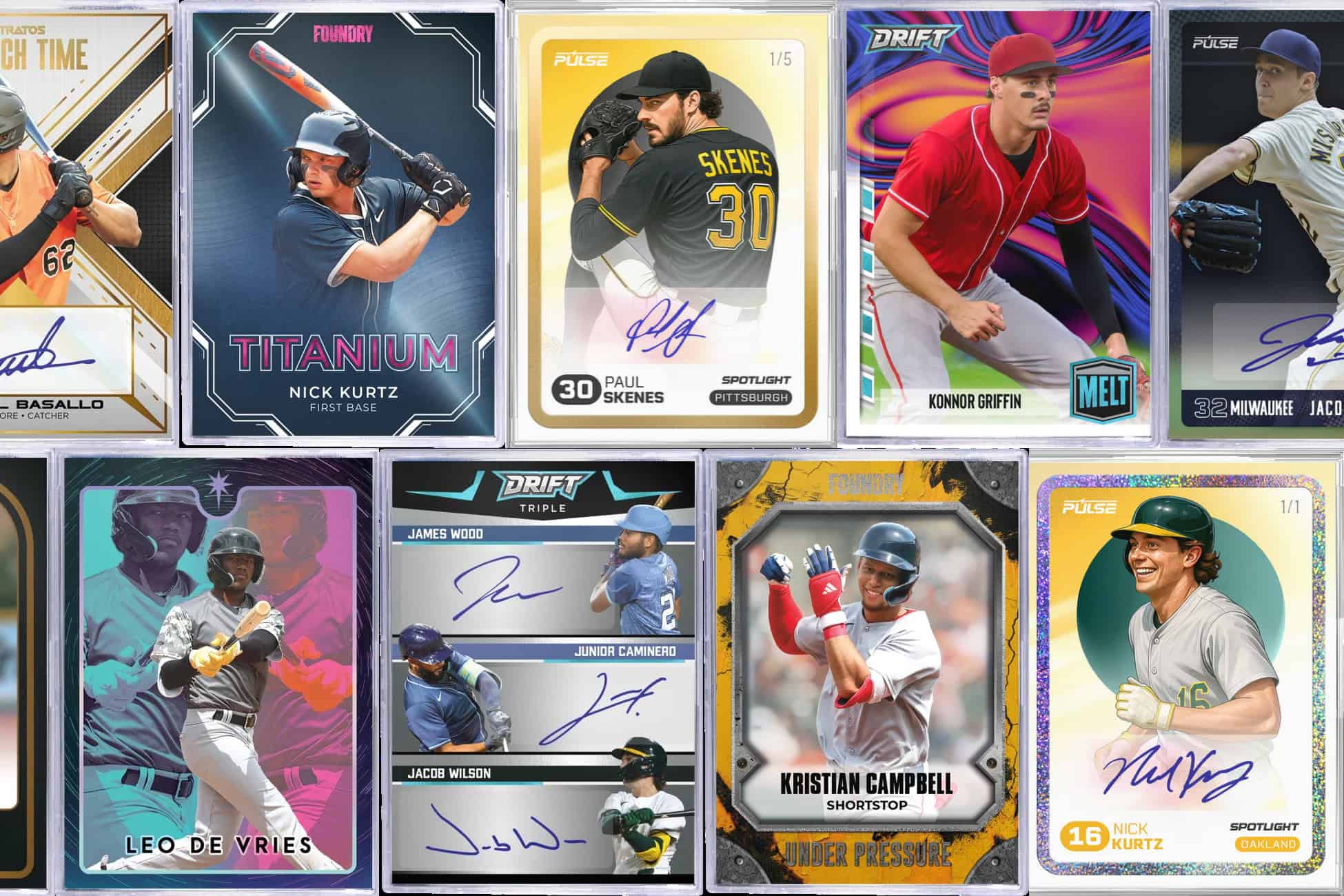

If you’ve been browsing the card aisle at your local hobby shop lately, you may have spotted a relatively new name on the shelf: Pulse. With bold designs, autograph-heavy boxes, and a collector-first philosophy, Pulse Baseball cards have made a genuine splash since their debut in 2024. For collectors who are curious but not quite sure what to make of a brand-new manufacturer, this guide covers everything you need to know.
Pulse Trading Cards’ stated mission is to offer high-quality autograph cards to collectors at a competitive price. The brand operates independently of the major sports leagues and players’ associations, which shapes everything from its checklist to its price point. Whether you are a prospect hunter, a box breaker, or someone who simply wants great autographs without breaking the bank, Pulse has positioned itself as a real option worth considering.
Understanding what Pulse is, how it works, and what collectors are saying about it can help you decide whether it belongs in your collection. Let’s break it down.
The Origins of Pulse Trading Cards
Entrepreneur Noah Zalta founded Pulse Trading Cards near the end of 2023. He also serves as CEO of NRZ Entertainment, a ticket distribution company, and Pro Athletes Direct, a sports marketing and fan engagement company. That background in the sports industry turned out to be a significant advantage when it came time to sign athletes.
Zalta has said that he felt the hobby needed a fresh alternative that was collector-friendly and focused, and he built Pulse with that in mind. It is a sentiment that resonates with a lot of collectors who feel that value and accessibility can sometimes take a back seat in the modern hobby.
The company’s first release in 2024 was Pulse Baseball, followed by Pulse Premiere Football. Since that initial launch, Pulse has expanded quickly, rolling out multiple named product lines across both sports and continuing to grow its athlete partnerships.
Design and Aesthetics
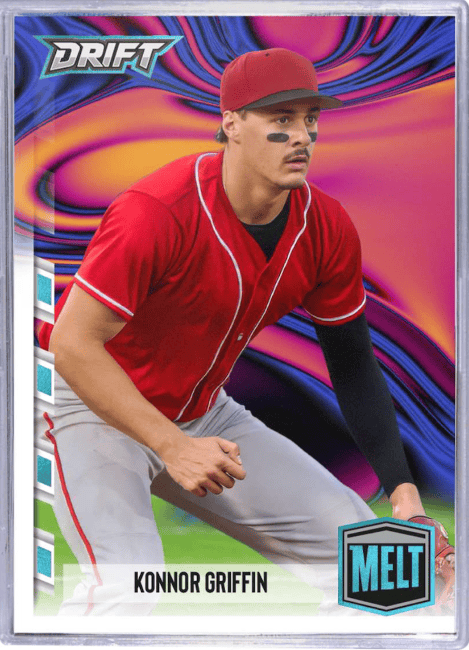
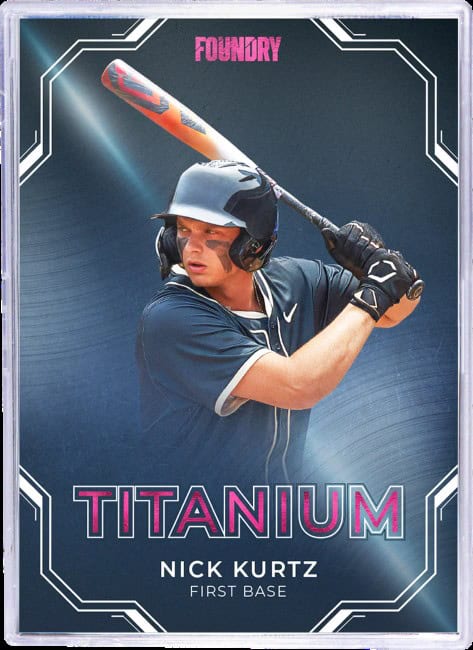
One of the first things collectors notice about Pulse baseball cards is the look. The brand leans into bold, modern visuals – think vibrant color palettes, foil accents, and clean layouts that feel fresh on the shelf. Pulse uses high-quality foil and premium cardstock, along with advanced printing techniques, to bring each card to life.
Each product line carries its own distinct visual identity. Releases like Stratos, Lumin, Meridian, and Drift all have their own design languages while still feeling cohesive as part of the Pulse family. The 2025 Pulse Drift Baseball release, for example, is described as packed with vibrant designs and serious chase energy.
Parallels and Presentation
Pulse cards also feature a parallel system that will feel familiar to collectors who have worked with other modern brands. Cards come in tiered parallels – typically numbered versions in Blue, Red, Green, Purple, Silver, Gold, White, and Black – with print runs that get increasingly scarce as you move up the ladder. The Black parallel is a one-of-one, making it the ultimate chase card in any given set. Every numbered card ships encased in a plastic snap case, giving the product a premium, display-ready feel right out of the box.
What Comes Inside a Pulse Box

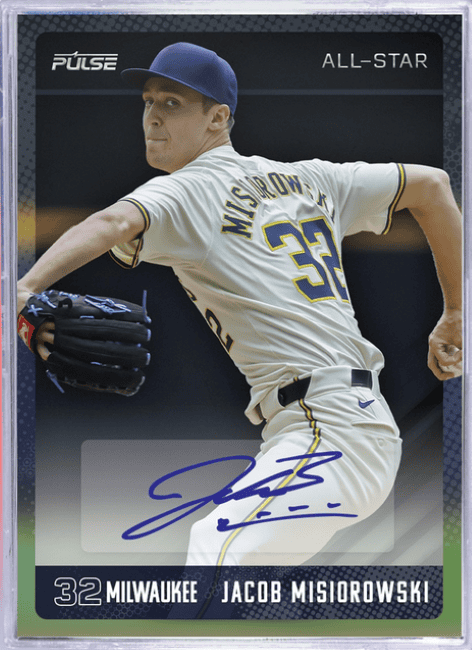
The autograph is front and center in every Pulse product, and that is not an accident. Pulse is dedicated to prioritizing autographs directly on-card rather than sticker autographs, though they acknowledge this will not always be possible 100% of the time. For collectors who care about card quality, on-card signatures are generally considered the gold standard, and Pulse has made them a priority.
Autographs
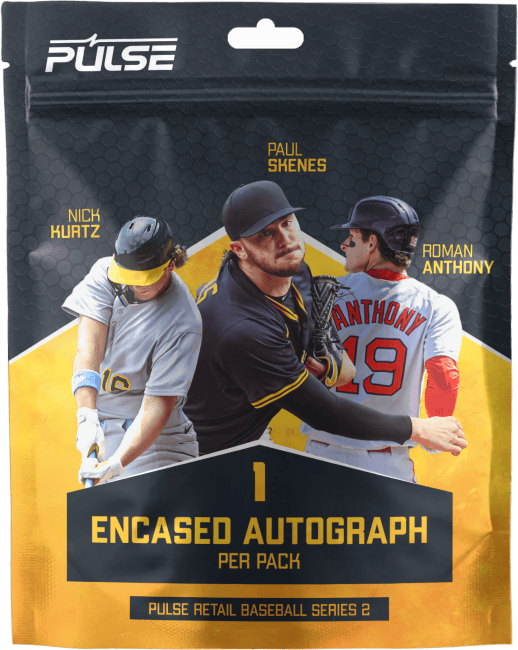
A standard 2024 Pulse Baseball Hobby Box contains three on-card autograph cards featuring top prospects. Later releases have expanded on this, with some boxes delivering four to six autographs per box depending on the product tier. The 2025 Pulse All-Star Edition delivers six encased on-card autographed cards per box, including four from 2024 Lumin Baseball and two All-Star or Futures Game autographed cards.
Base Cards and Inserts
While autographs are the headliners, Pulse boxes also contain non-autograph cards. Rare short-print inserts like Ablaze appear only once per case, giving collectors extra chase targets beyond the signed cards. The base card design in each product set serves as the foundation of the parallel chase, with every numbered version of a card sharing the same core look.
The Checklist
For a brand this young, the Pulse checklist reads impressively. Pulse has inked autograph deals with over 500 current and former athletes. That is a substantial signing program for a company that is only a couple of years into its existence.
The baseball checklist leans heavily into the prospect market, which makes sense given Pulse’s independence from the MLB Players’ Association. For baseball, Paul Skenes and top overall prospect Roman Anthony are two of the corner pieces for Pulse. Collectors can also find autographs of players like Spencer Jones, Jacob Misiorowski, and Rhett Lowder in Pulse Baseball products. These are exactly the kinds of names that prospect collectors get excited about – players who are on the verge of becoming household names at the big-league level.
Pulse gives real fans the chance to collect cards featuring rising talents before they become household names. That early-access angle is a genuine draw for collectors who love chasing prospects.
How Pulse Cards Are Distributed
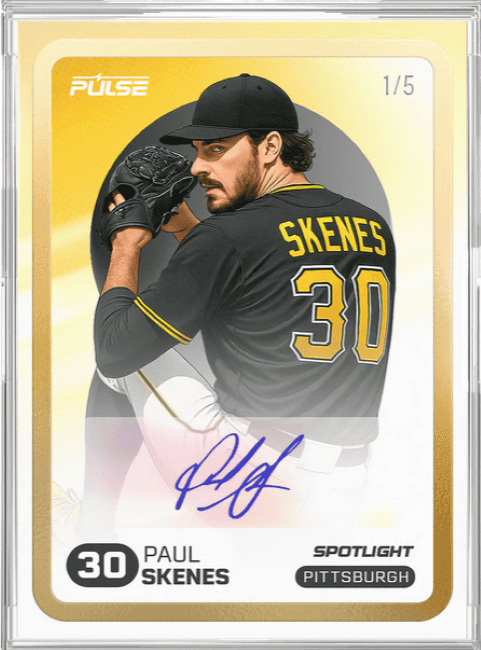
Pulse has pursued a dual-channel distribution strategy since its launch. Collectors can find Pulse products both in brick-and-mortar hobby shops and online.
Hobby Shops
Pulse Trading Cards are available in over 600 hobby shops across the country. That footprint gives the brand real shelf presence and lets collectors rip boxes in person at their local shop, which is still a core part of the hobby experience for many people.
Online and On Demand
Pulse also sells directly through its website, including a dedicated “On Demand” section where collectors can purchase special limited sets. The Pulse On Demand program offers limited-edition autographed sets that are serial-numbered and authenticated directly by Pulse Trading Cards. These tend to be event-specific or player-focused drops that are not available through hobby shops, giving online customers access to exclusive content.
Price Point: Where Pulse Fits in the Market
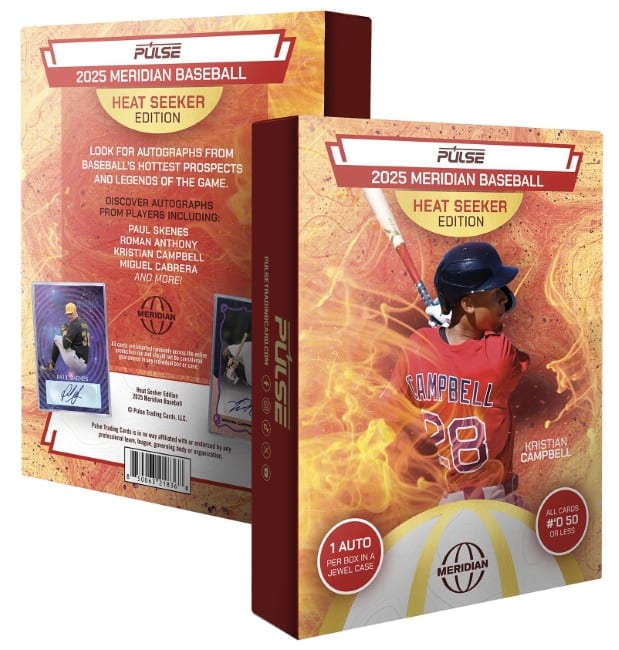
One of the strongest aspects of Pulse’s value proposition is price. The brand has been intentional about keeping its products accessible without skimping on the hit rate.
When Pulse released its first baseball product, a hobby box retailed at $85, and it contained four to six autographed cards and a couple of non-auto cards. For comparison, many comparable autograph-focused products from larger manufacturers can run significantly higher for similar or fewer hits.
Heat Seeker Boxes
Pulse also introduced a lower price tier called Heat Seeker boxes, which offer a single autograph per box at a much more accessible entry price. Zalta described Heat Seeker boxes as a great deal, noting that collectors can get an encased card numbered to 50 or less for around $7, with a one-in-twelve chance at an autograph. That kind of entry-level product opens the door for newer collectors or anyone who wants to participate in the brand without committing to a full hobby box.
Heat Seeker boxes from sets like Pulse Lumin and Pulse Stratos Baseball have been widely available on the secondary market at prices around $20 to $25 per box, making them easy to find and try.
Why Pulse Can Offer Competitive Pricing
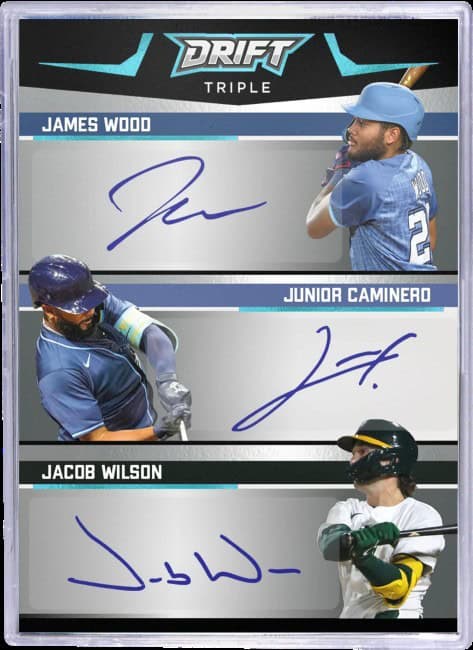
A big part of understanding Pulse’s value comes down to one structural difference from brands like Topps or Panini. Pulse does not hold team licenses or players’ association licenses, which are costs that major manufacturers have to absorb and ultimately pass along to collectors through higher box prices. By working directly with athletes through NIL and autograph agreements rather than going through the MLBPA, Pulse keeps its overhead lower and passes some of those savings on to the buyer.
Pulse Trading Cards are independent, player-signed collectibles – the company contracts directly with athletes for their Name, Image, and Likeness rights and autographs, and its products are not affiliated with, sponsored by, or licensed by any professional sports league, players’ association, or team. Collectors should know this going in. The cards will not feature official team logos or uniforms, but the autographs are real, the athletes are legitimate, and the production quality stands on its own.
Collector Reception
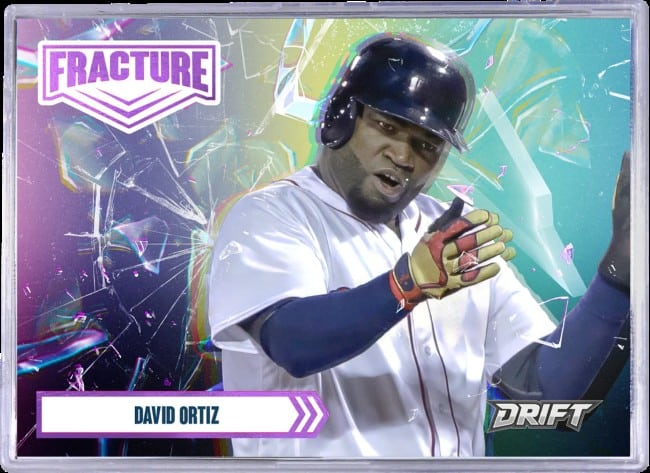
The collector community has responded to Pulse with genuine curiosity and growing enthusiasm. The brand is still relatively new, so conversations in hobby forums and social media groups tend to mix excitement about the autograph value with questions about long-term brand recognition and secondary market performance.
What seems clear is that collectors appreciate the on-card autograph commitment and the accessible price point. The Pulse checklist for baseball has drawn particular attention because of its prospect focus. Zalta has said Pulse plans to release between 10 and 12 more baseball and football products each year, covering releases like Meridian and Foundry, which suggests the brand is planning for longevity rather than a quick splash.
The jewel case presentation has also been a talking point. Encased cards straight out of the box feel premium and are ready to display without additional slabs or cases, which collectors seem to appreciate.
Conclusion
Pulse baseball cards represent one of the more interesting new arrivals in the hobby in recent years. A brand built by a genuine collector, focused on on-card autographs, and priced with accessibility in mind – that combination stands out in a market that can sometimes feel dominated by high-end products with steep buy-ins.
The prospect-heavy checklist is a natural fit for baseball collectors who love chasing the next big name before everyone else catches on. Whether you are picking up a Heat Seeker box for a quick rip or investing in a full hobby box loaded with six on-card autos, there is a Pulse product built for where you are in the hobby.
As the brand continues to grow its distribution, expand its athlete signings, and add new named product lines, now is a great time to get familiar with what Pulse is offering. The cards look sharp, the hits are real, and the prices make it easy to jump in.