
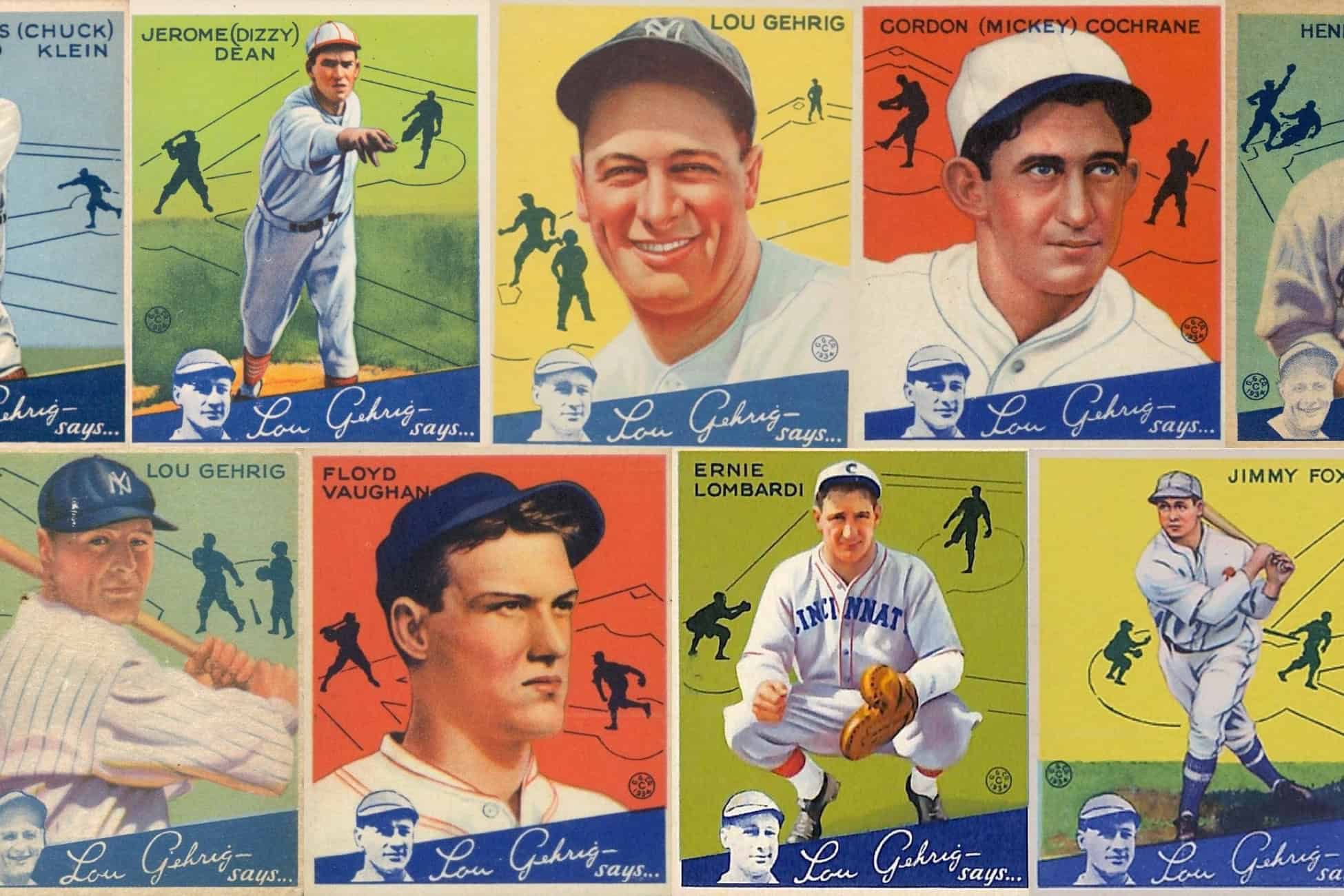

The year 1934 was not an easy one for America. The Great Depression had millions of families cutting corners, and luxuries were hard to come by. Yet somehow, a Boston candy company managed to produce one of the most beloved baseball card sets in the history of the hobby. The 1934 Goudey set did not just survive the Depression era – it thrived. The set gave kids across the country a reason to spend their precious pennies and gave collectors today a reason to open their wallets wide. These cards tell a story that goes far beyond the diamond. It touches on American culture, commerce, and the enduring power of the national pastime.
Understanding the 1934 Goudey set means understanding the moment it came from. Baseball was the dominant sport in America, and its stars carried a cultural weight that modern fans might find hard to imagine. Babe Ruth, Lou Gehrig, Dizzy Dean – these were household names in every corner of the country. Goudey Gum Company understood this perfectly, and they built a card set that captured the essence of an era. The cards are colorful and intimate in a way that collectors still appreciate nearly a century later.
For anyone serious about the pre-war hobby, the 1934 Goudey set is essential knowledge. Whether you are a seasoned collector hunting down high-grade examples or a newcomer trying to understand where baseball cards come from, this set rewards study. It combines sharp design, fascinating distribution history, and an all-star checklist that reads like a Who’s Who of baseball’s golden age. Pull up a chair, because there is a lot worth knowing here.
The Origins of Goudey Gum Company
The story of the 1934 set begins a few years earlier, in the offices of the Goudey Gum Company of Boston, Massachusetts. Founded by Enos Goudey, the company had been in the gum business since the early twentieth century. It competed in a crowded market against larger rivals. What Goudey needed was a hook – something that would make kids choose his brand over the competition.
He found that hook in baseball cards.
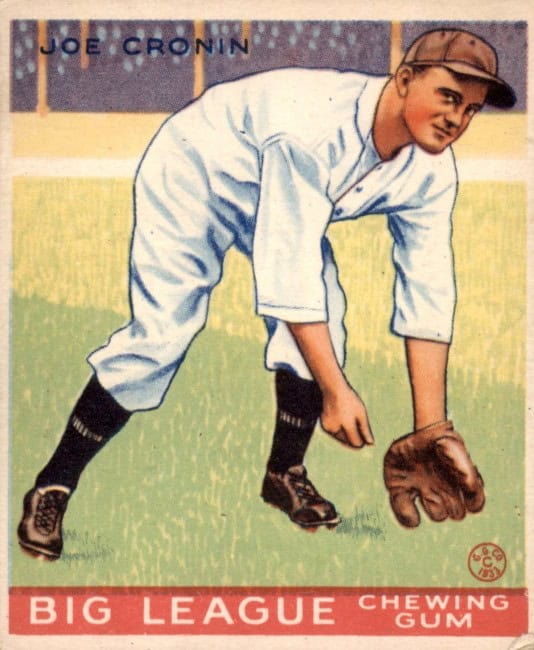
In 1933, Goudey released its first baseball card set, and it was an immediate sensation. The set included 240 cards packed one at a time inside penny wax packs of gum. Kids could not get enough of them. The cards featured bright painted artwork, player statistics, and short biographical blurbs on the back. More importantly, they included the biggest stars of the game – including four different cards of Babe Ruth. The 1933 set was a commercial triumph that established Goudey as the dominant force in the baseball card market.
What Led to the 1934 Goudey Set
Success in 1933 made the follow-up a natural business decision. Goudey had built an audience and a distribution network, and the company wasted no time returning to the market. The 1934 set arrived the following year with 96 cards – a smaller checklist than its predecessor but packed with star power. Goudey kept the same basic formula: colorful portrait artwork, biographical text on the reverse, and distribution through penny packs of gum. If it worked once, it would work again.
The timing also reflected a broader trend. By the mid-1930s, other gum and candy companies were taking notice of baseball cards as a marketing tool. Goudey needed to defend its turf. Releasing a strong follow-up set was the company’s way of signaling to the market that they were not a one-year novelty.
Design and Features of the 1934 Goudey Cards
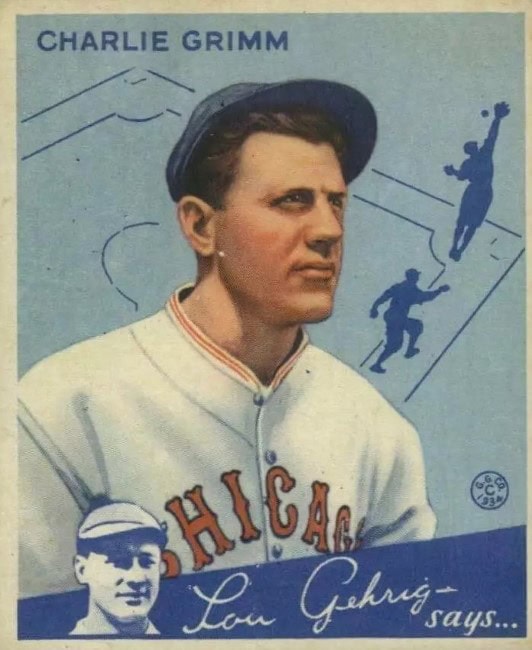
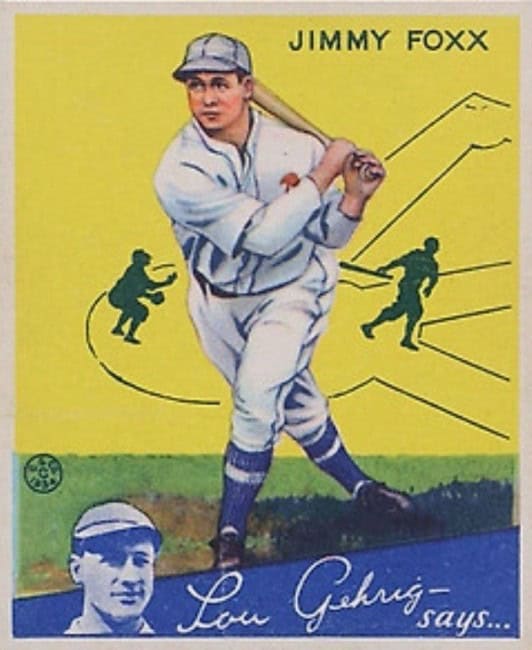
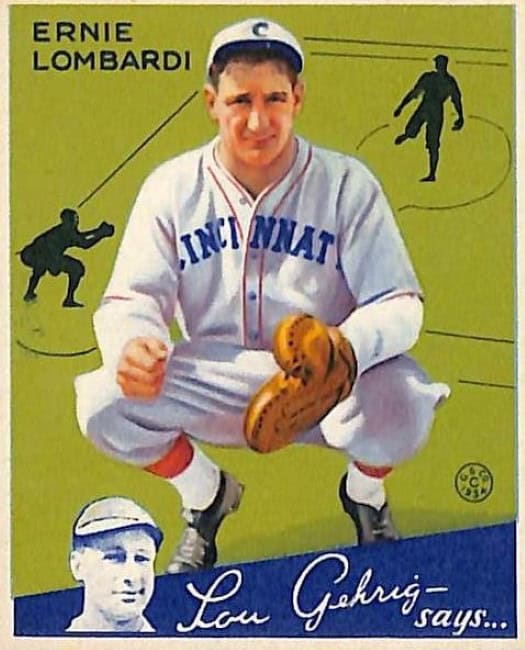
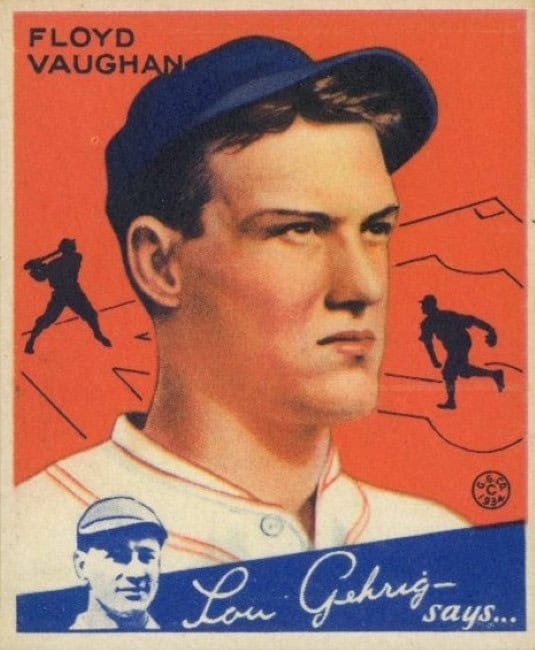
The visual design of the 1934 Goudey cards is one of their most appealing qualities. The front prominently features a blue section, headlined by “Lou Gehrig says,” which invites collectors to read his thoughts on each player, printed on the back of the card. The card fronts also feature hand-painted artwork rendered in vivid, saturated color. While primitive by today’s standards, at the time this was exceptional printing quality that made the cards highly sought after.
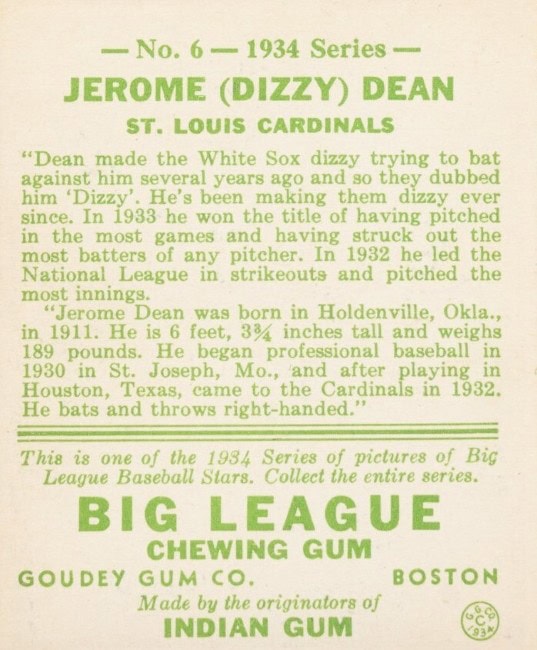
The backs of the 1934 cards are printed in black ink on white or cream-colored stock. Each back includes the player’s name, team, position, and a paragraph of biographical and statistical information. Goudey wrote these blurbs in an engaging, conversational style. The cards also include the card number and the Goudey branding. Compared to modern cards, the 1934 backs feel refreshingly simple.
How the Cards Were Distributed
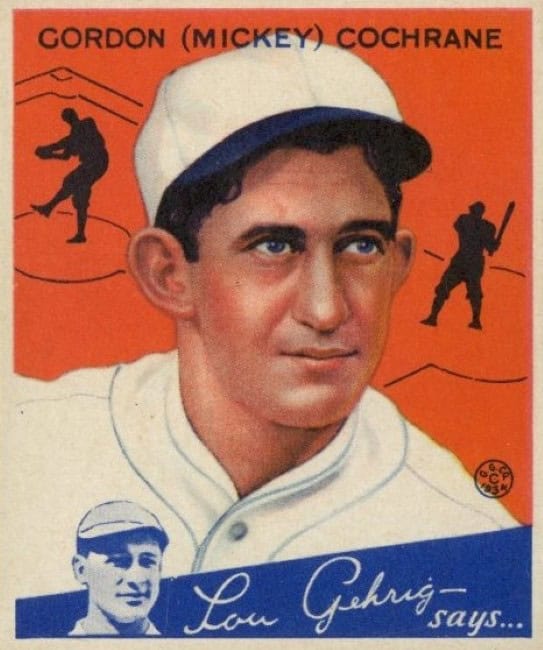
Goudey sold its cards through a system that feels almost quaint by modern standards. The company inserted one card into each penny pack of gum. A child with a penny could walk into a candy store, drugstore, or five-and-dime and walk out with a stick of gum and a baseball card. The randomness of the process was part of the appeal – you never knew which player you would get.
The Pack Experience
The packs themselves were small wax paper wrappers that barely protected the card inside. Condition-conscious modern collectors would be horrified by the casual way these cards changed hands. They were stuffed into pockets, traded in schoolyards, and stored in shoeboxes. The very scarcity of high-grade examples today is a direct result of the way the cards were treated by their original owners. These were toys first and collectibles second, at least in the eyes of the kids who originally bought them.
Retailers ordered Goudey packs through standard candy distribution networks. The cards reached virtually every corner of the country through this system, which is why regional variation in the set’s survival is minimal. Kids in New York had the same access as kids in Kansas City or rural Georgia.
Lou Gehrig’s Starring Role
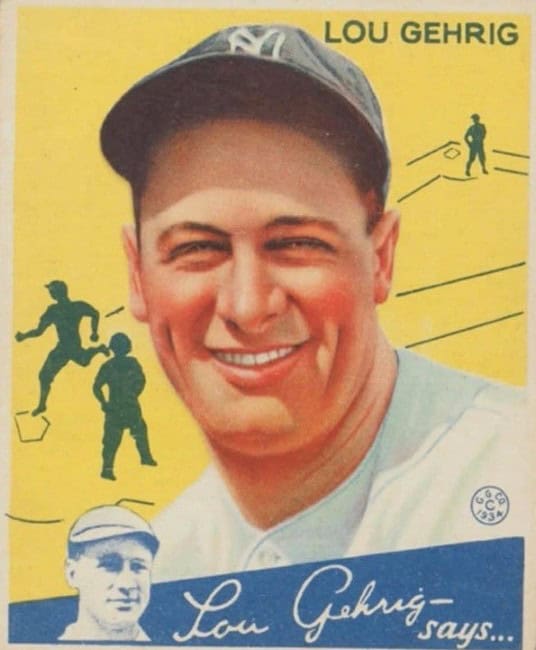
The single most distinctive feature of the 1934 Goudey set is something that appears on the back of every card: a personal endorsement from Lou Gehrig himself. Each card back includes a quote attributed to Gehrig – a brief commentary on the featured player written in first person. The format gave the entire set a warm, conversational quality that no other card issue of the era matched.
This was a genuine marketing masterstroke. Gehrig was one of the two or three most respected figures in the game – a man known as much for his quiet dignity and professionalism as for his extraordinary production. Having his name and voice on every single card lent the set an air of authority and intimacy. It was as if Gehrig himself was handing you the card and telling you something worth knowing about the man on the front. For a child buying penny packs in 1934, that connection must have felt remarkable.
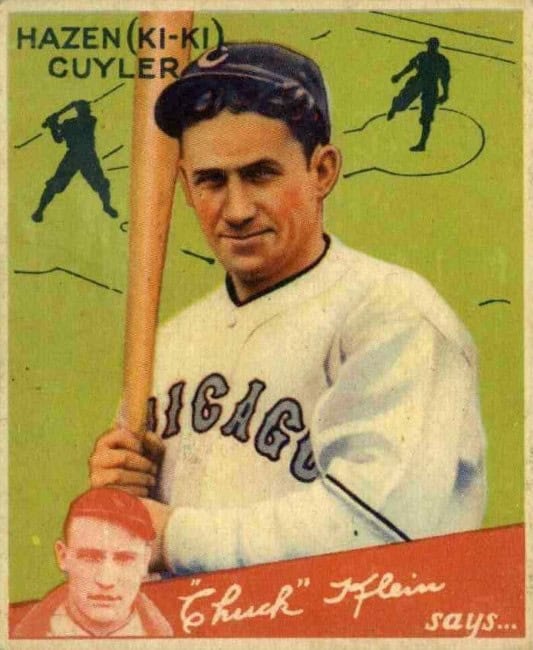
What most collectors do not realize is that Gehrig’s name does not actually appear on every card in the set. In the final series – cards 80 through 91 – the familiar “Lou Gehrig Says…” banner is quietly replaced by “Chuck Klein Says…”. Klein was a power-hitting outfielder for the Chicago Cubs. Like Gehrig, he was a client of agent Christy Walsh, one of the first and most aggressive sports agents. The most plausible explanation among hobby researchers is that Walsh negotiated Klein’s inclusion to raise his client’s profile. Perhaps that deal was not finalized until midseason, which is why Klein does not appear until the fourth and final series.
The Most Important Cards in the Set
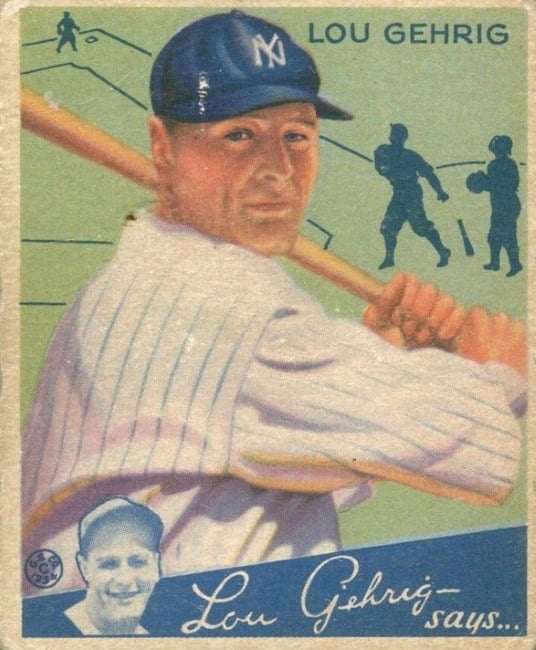
The 1934 Goudey set punches well above its weight for a 96-card issue. The checklist includes some of the most recognizable names in baseball history, and several cards have achieved landmark status in the hobby.
Here are the cards that command the most attention from serious collectors:
- Lou Gehrig (cards #37 and #61) – The Iron Horse at the peak of his powers, and among the most sought-after cards in all of pre-war collecting.
- Dizzy Dean (card #6) – The colorful Cardinals pitcher who won 30 games in 1934 appears twice in the set, and both cards are popular.
- Hank Greenberg (card #62) – Greenberg’s rookie card-era appearance makes this a key card for Tigers fans and pre-war collectors alike.
- Charlie Gehringer (card #23) – The Tigers second baseman was among the best players of his generation and appears twice.
The Gehrig cards are the crown jewels. Any example in excellent condition commands serious money, and high-grade copies graded by PSA or SGC regularly sell at auction for five figures or more.
Where is Babe Ruth?
The most obvious question any collector asks when first studying the 1934 checklist is a simple one: where is Babe Ruth? The 1933 set included four Ruth cards. The 1934 set includes none. Kids buying packs all season long had reason to keep hoping – sets were released in series, so Ruth might always show up in the next batch. He never did.
The leading theory among hobby historians points to Ruth’s agent, Christy Walsh. Walsh was one of the first sports agents in American history and a fierce negotiator on behalf of his clients. The most plausible explanation is that Walsh either withheld permission for Goudey to use Ruth’s likeness or priced the rights beyond what the company was willing to pay. No definitive documentation has settled the question, but Walsh’s fingerprints are all over the 1934 set in ways that make his role hard to ignore.
Rarity and Condition Challenges
One of the defining characteristics of the 1934 Goudey set is how difficult it is to find cards in strong condition. The distribution method – penny packs in candy stores – meant that most cards went directly into the hands of children. Rubber bands, bicycle spokes, and humid attic storage took a heavy toll over the decades.
Paper Quality
The paper stock Goudey used was not archival by any standard. Cards from this era are prone to toning, yellowing, and brittleness. The printed surfaces can show wear even on copies that were never seriously mishandled. Finding a card with sharp corners, clean surfaces, and bright colors is a genuine accomplishment.
Centering Issues
Printing technology in the 1930s did not offer the precision collectors expect today. Many 1934 Goudey cards show significant centering issues straight from the press – cards that were likely off-center the moment they were printed, not as a result of later handling. This is an important consideration for collectors using modern grading standards, because centering affects numeric grades significantly.
Value and Reputation Today
The 1934 Goudey set occupies a secure place near the top of the pre-war collecting hierarchy. Among serious hobbyists, it ranks just below the T206 tobacco cards and the 1933 Goudey set in terms of overall prestige, but it consistently attracts strong demand at auction and in the dealer market.
Graded Card Market
The professional grading market – led by PSA, SGC, and Beckett – has brought new transparency to 1934 Goudey pricing. A common card in PSA 4 (Very Good to Excellent) might trade for $50 to $150. The same card in PSA 7 (Near Mint) can jump to several hundred dollars. Star cards follow a steeper curve. A low-grade Lou Gehrig card will sell for several thousand dollars, while high-grade examples fetch six figures.
Why Collectors Still Care
Part of the 1934 Goudey set’s enduring appeal is simply the players it features. Gehrig and Dean were immortals. In total, 20 Hall of Famers are featured in the set. Since this was one of the nascent sets of the baseball card hobby, in many cases these are the earliest available cards of players like Jimmie Foxx, Kiki Cuyler and Hank Greenberg.
The design also plays a role – these cards are genuinely beautiful objects. The painted portraits have an artistic quality that many modern cards lack. Holding a 1934 Goudey card is holding a small piece of American art history.
The hobby has grown considerably more sophisticated since these cards were produced, with population reports and auction archives giving collectors more data than ever before. But the fundamentals have not changed: great players, great design, and genuine scarcity make the 1934 Goudey set as desirable today as it was when kids were tearing open penny packs ninety years ago.
Collecting the 1934 Set Today
For collectors who want to pursue the 1934 Goudey set, a few practical considerations are worth keeping in mind.
Building a complete set of all 96 cards is a realistic goal at the mid-grade level, though the Gehrig cards and the redemption card will require meaningful investment. Many collectors choose to focus on Hall of Famers only, or to pursue a single high-grade star card as a centerpiece rather than attempting completion. Both approaches have merit.
Raw, ungraded cards are still available through dealers, estate sales, and online platforms, often at prices well below graded examples. For collectors who are comfortable evaluating condition on their own, raw cards offer good value. For those who prefer certainty, graded examples from major services provide a clear record of condition and authenticity.
Fakes and altered cards do circulate in the pre-war market, though less commonly than in some other categories. Buying from reputable dealers and auction houses reduces this risk significantly. When spending serious money on a star card, a graded copy from a major service is the safest choice.
A Rememberance of Pre-War America
The 1934 Goudey Baseball Card set is more than a collector’s item – it is a document of a particular American moment. The country was struggling through hard economic times, yet baseball endured and thrived, and a Boston gum company turned that love of the game into something tangible and lasting. Nearly a century later, those small painted cards still capture something essential about the sport and the era that produced them.
Lou Gehrig’s quiet excellence and Dizzy Dean’s boisterous confidence both come through in the artwork, even across the distance of generations. The cards were made to sell gum to children, but they have outlasted the gum, the penny packs, and most of the candy stores that stocked them. That is a remarkable kind of survival, and it speaks to the genuine power of what Goudey created.
For the baseball card collector, the 1934 Goudey set represents one of the hobby’s foundational pillars. Understanding it means understanding where the hobby came from and what it has always valued – beautiful design, iconic players, and the simple pleasure of holding history in your hands. Whether you collect pre-war cards seriously or simply appreciate the artistry of an earlier age, this set deserves your attention and respect.