
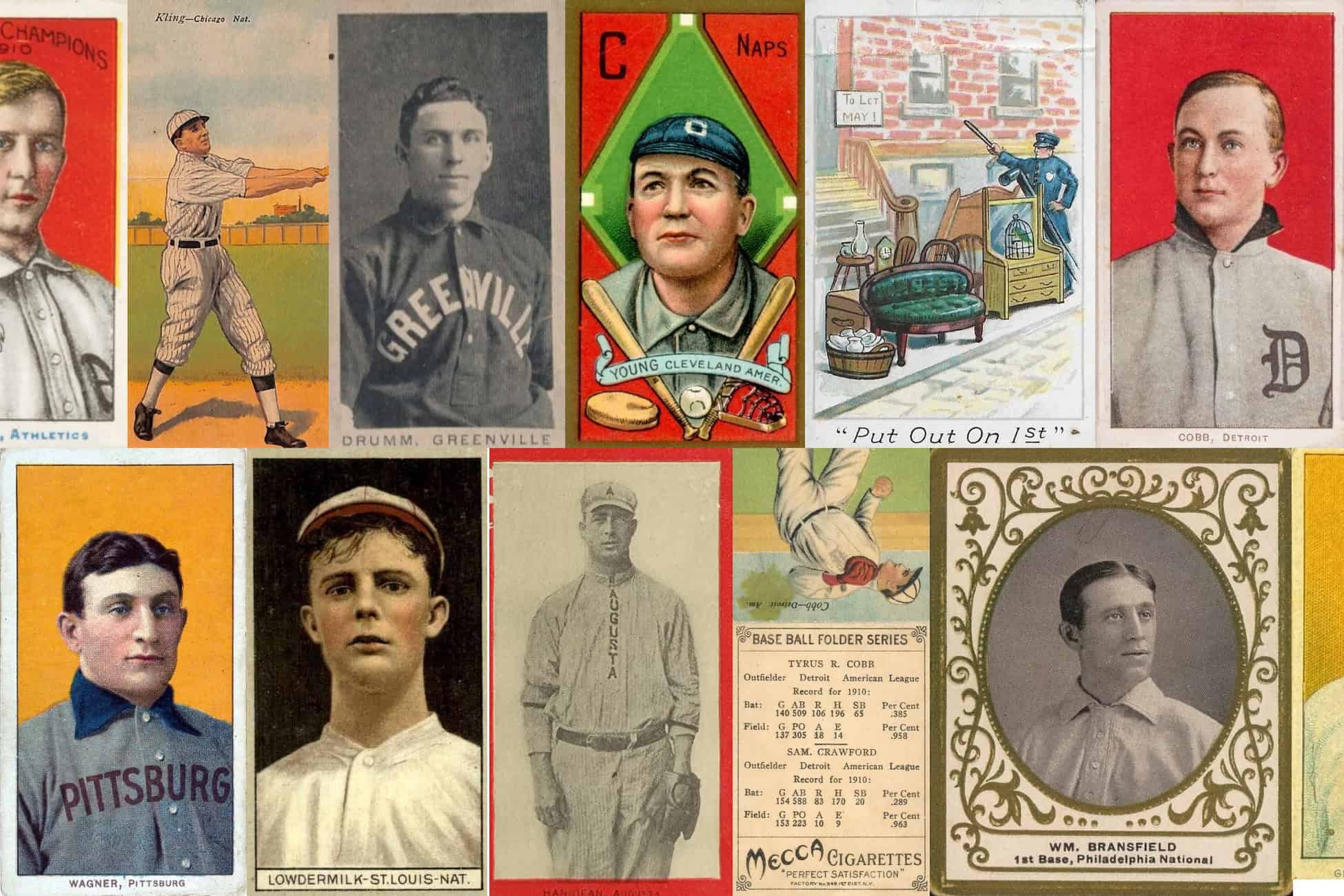

The T-card designation represents tobacco era cards from the 20th century, a classification system that remains fundamental to baseball card collecting more than 80 years after its creation. While most collectors fixate on the legendary T206 set, the broader T200-T210 sequence tells a fascinating story of innovation, diversity, and the golden age of tobacco card production. These sets span from 1900 to 1913 and range from team photographs to ornate individual portraits, each offering unique challenges and rewards for dedicated collectors.
The T200-T210 range captures a pivotal moment when tobacco companies experimented with different formats and distribution methods. From oversized team photos to intricate tri-fold designs, these sets showcase the creativity manufacturers employed to entice consumers. Understanding these sets provides crucial context for appreciating how the hobby evolved during baseball’s dead-ball era, when cards served as both marketing tools and collectible art.
This exploration of T200-T210 reveals both the famous centerpieces like T206 and overlooked treasures that deserve greater recognition. Each set reflects the economic realities, printing technologies, and baseball culture of its time.
The Burdick System and T-Card Numbering
Jefferson Burdick revolutionized card collecting by creating the American Card Catalog (ACC), first published in 1939. Burdick, a Syracuse electrician who suffered from crippling arthritis, devoted his life to cataloging over 300,000 cards that he eventually donated to the Metropolitan Museum of Art. His systematic approach brought order to a chaotic hobby by assigning letter codes based on distribution method – T for tobacco, E for candy/caramel, D for bakery products, and so forth.
The numbering within each letter category wasn’t chronological but rather sequential as Burdick encountered and cataloged each set. T1 was simply the first tobacco set he classified, T2 the second, and so on. This explains why T200 cards from 1913 appear later in the sequence than T206 cards from 1909-1911. Burdick was constantly discovering new sets, making chronological ordering impossible. His system persists because it provided the first comprehensive framework for organizing early cards, and collectors still use designations like T206 or E90 as shorthand today.
T-Card Anomalies
Missing Numbers in the Sequence
Within the T200-T210 range, only T203 represents a significant outlier. While sets T200, T201, T202, T204, T205, T206, T207, T208 and T209 all exist, the T203 designation refers to the 1900 Mayo’s Base Ball Comics set – cards from a different era that don’t share the production timeline or characteristics of the surrounding numbers. This anomaly reflects Burdick’s cataloging method rather than any intentional gap. As Burdick encountered sets, he assigned the next available number regardless of the card’s age or origin.
No true “missing” numbers exist in this range, but T203 stands apart as a humorous baseball-themed set from 1900 featuring non-sport imagery with baseball slogans. The remaining sets form a cohesive group from the 1909-1913 period, representing the height of tobacco card production before World War I and antitrust actions disrupted the industry.
T-Cards After T210
Beyond T210, the T-card series continues through T229, representing tobacco issues from the 1910s and early 1920s before the format largely disappeared. Notable sets include T211 Helmar (1910-1911), T213 Coupon Cigarettes (1914-1916), T214 Victory Tobacco (1914), T215 Red Cross Tobacco (1914-1915), and T220 Mecca Champions (1910). These later T-designations range from small regional issues to larger national releases, with some featuring boxing, racing, and other sports alongside baseball.
T210 Old Mill represents a transitional point in the sequence – while subsequent sets carry higher numbers, many were smaller in scope or featured different distribution patterns than the expansive T200-T210 range. Collectors pursuing complete tobacco-era runs must navigate these later sets, which often prove scarcer than their lower-numbered counterparts due to limited initial distribution and lower survival rates.
T200 – Fatima Team Cards (1913)
Visual Design and Format
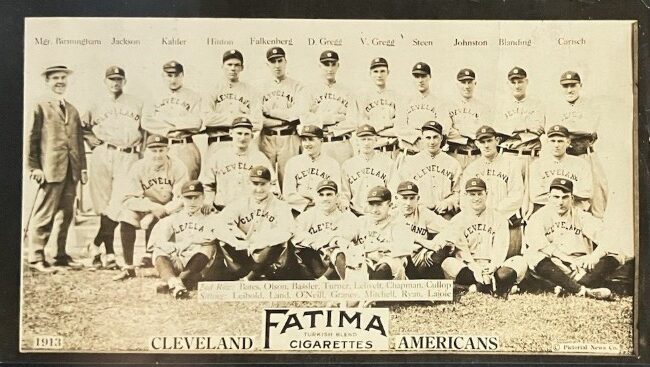
The T200 set showcases 16 panoramic team photographs measuring approximately 2-11/16 by 4-3/4 inches. The Liggett & Myers Tobacco Company distributed these cards in Fatima Turkish Blend Cigarette packages. Each card features a complete team posed outdoors in their ballpark, photographed by the Pictorial News Company. The gelatin silver prints represent a departure from illustrated cards, offering authentic documentary photography of all 16 major league teams from 1913.
The cards break from traditional portrait orientation, using horizontal layouts that capture the full roster. This format makes them particularly striking as display pieces, resembling miniature team posters more than conventional baseball cards.
Notable Players and Collector Appeal
Because these are team cards rather than individual player issues, the T200 set captures every significant player from the 1913 season on their respective teams. The Chicago Cubs, New York Giants, Philadelphia Phillies, and Boston Red Sox cards contain multiple Hall of Famers in single images. Collectors appreciate these cards for their historical documentation of complete rosters and the quality of early sports photography they represent.
The set holds special appeal for team collectors and those interested in photographic history. While less popular than individual player issues, T200 cards offer an affordable entry point into tobacco-era collecting. Common team cards in good condition typically sell for $200-$400, while cards featuring legendary franchises can reach $500-$800.
T201 – Mecca Double Folders (1911)
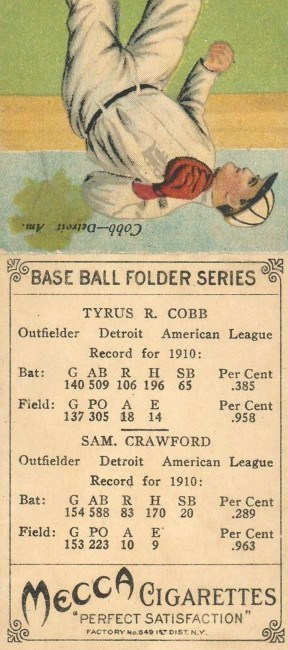
The Innovative Folding Mechanism
T201 cards introduced a clever dual-player design that captured collectors’ imaginations. Each card measures 2-3/16 by 4-3/4 inches and features one player’s full portrait on the front. The back shows another player’s upper half, which can be folded to align with the bottom half shown on the front. This creates two complete player images from a single card, demonstrating remarkable ingenuity in card design.
The folding mechanism means cards are commonly found creased or damaged from use. High-grade examples command significant premiums because the interactive nature encouraged handling. The American Tobacco Company issued 50 different cards in the set, creating 100 player appearances total.
Key Cards and Market Values
The Ty Cobb/Sam Crawford combination remains the most sought-after card in the set, as it pairs two Detroit Tigers legends. Other notable combinations include Christy Mathewson/Al Bridwell, Walter Johnson/Gabby Street, and the double Cubs pairing of Johnny Evers/Frank Chance. Each card features Hall of Fame talent, making the set particularly rich in star power.
Common T201 cards in good condition sell for $150-$300, while stars like Cobb or Mathewson can reach $800-$1,500 in mid-grades. The folding design’s fragility makes PSA 5 or better examples rare, with such cards commanding $2,000-$5,000 depending on the players featured. Complete sets rarely appear on the market.
T202 – Hassan Triple Folders (1912)
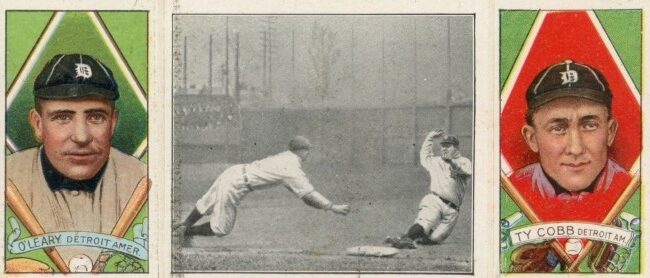
The Three-Panel Design
T202 cards represent the apex of tobacco card complexity, featuring three separate panels that fold together. The center panel displays a black-and-white action photograph measuring roughly 2-1/4 by 5-1/4 inches when fully extended. Two colorized player portraits from the T205 set appear on the end panels, which fold over the center image. This triptych design creates a booklet effect when closed.
Hassan Cigarettes distributed these cards as premiums. The 132-card count reflects different combinations of center panels and end panels – 76 unique action photos exist, but different player combinations on the ends create additional variations. The reuse of T205 artwork for the end panels demonstrates tobacco companies’ efficiency in maximizing their lithographic investments.
Top Players and Collecting Challenges
Ty Cobb appears on numerous T202 cards in various combinations, making him the set’s most prominent figure. Christy Mathewson and Walter Johnson also feature prominently across multiple cards. The action photographs provide rare glimpses of game situations from the dead-ball era, adding historical significance beyond player portraits.
Collectors face difficult decisions about condition – should they pursue intact examples or separated panels? Complete, unfolded cards command the highest prices, with commons selling for $400-$700 and star combinations reaching $1,500-$3,000 in good condition. Graded examples of Cobb cards can exceed $5,000 in PSA 6 or better.
T203 – Mayo’s Base Ball Comics (1900)
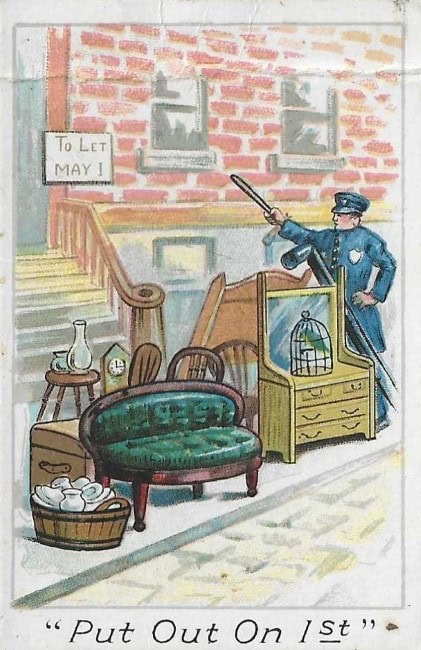
The T203 set occupies an unusual position in the sequence. Issued in 1900 – a full decade before the other sets in this range – these 25 cards feature humorous illustrations with baseball-themed slogans rather than player portraits. Cards like “Right over the Plate” show non-baseball scenes with punny captions relating to the game.
While technically cataloged in the T200-T210 range, T203 cards are more novelty items than true baseball cards. They were distributed in Mayo’s Cut Plug and Winner Cut Plug tobacco packages. The Winner Cut Plug backs are significantly scarcer. In good condition, these cards typically sell for $80-$150, appealing primarily to completists and those interested in early baseball humor.
T204 – Ramly (1909)
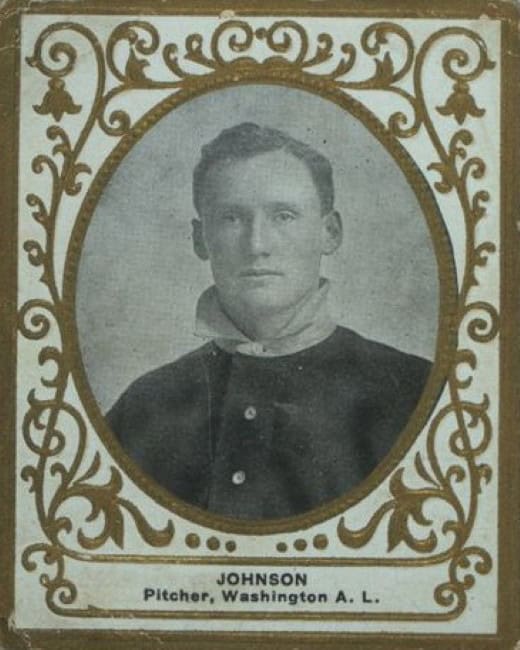
The Ornate Gold-Bordered Beauties
T204 cards stand out as some of the most visually distinctive tobacco-era cards. The 2-by-2-1/2-inch square format features black-and-white oval player portraits surrounded by elaborate embossed gold borders. The Mentor Company distributed these in Ramly and T.T.T. Turkish cigarette packages. The ornamental design gives each card the appearance of a miniature framed photograph.
The gold borders prove extremely fragile, chipping and flaking with age or handling. Finding high-grade examples challenges even advanced collectors. Six cards exist with square frame variations instead of ovals – these feature blank backs and sell at substantial premiums when they surface.
Walter Johnson and Set Scarcity
Walter Johnson’s T204 card represents his first widely recognized rookie card, making it the set’s crown jewel. Other Hall of Famers include Chief Bender, Roger Bresnahan, Mordecai Brown, Eddie Collins, Johnny Evers, Eddie Plank, Joe Tinker, and Bobby Wallace. However, the set lacks some era superstars, limiting its mainstream appeal.
Scarcity defines the T204 market. Low-grade commons start at $50-$100, but condition-sensitive collectors drive mid-grade prices to $200-$400. The Walter Johnson card commands $1,000-$2,500 in good condition, reaching $5,000+ in PSA 5 or better. T.T.T. back variations add 50-100% premiums over Ramly backs. Complete sets rarely trade hands, and fewer than 100 total T204 cards have been graded by major services combined.
T205 – Gold Borders (1911)
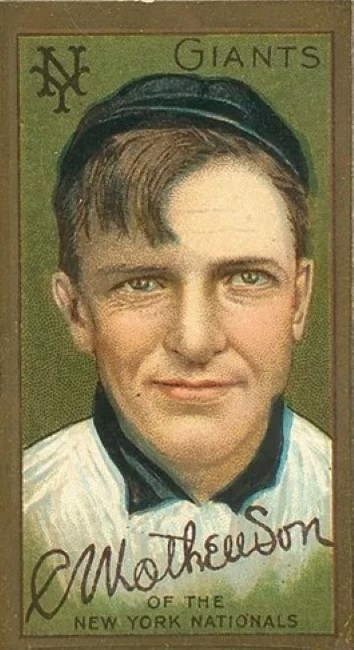
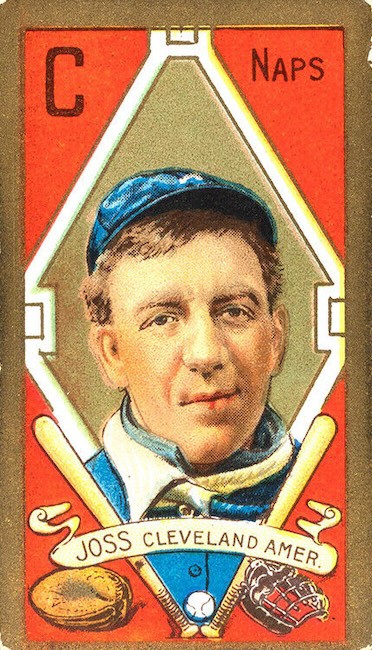
T205 represents the second-most popular tobacco set after T206, featuring 208 cards with distinctive gold-foil borders that give the set its nickname. The American Tobacco Company issued these cards in 11 different cigarette brands. National League players appear in shoulder-portrait poses while American League players are shown in diamond-shaped frames. The gold borders chip easily, making high-grade examples scarce and valuable.
The set includes 27 Hall of Famers including Ty Cobb, Walter Johnson, Christy Mathewson, Tris Speaker, and Cy Young. The Hoblitzell “no stats” variation and Mathewson Cycle Error are legendary rarities that can reach five figures. Common cards in good condition sell for $75-$150, while stars command $300-$800. Mid-grade complete sets trade in the $25,000-$40,000 range. T205 offers collectors the challenge of multiple back variations and the reward of beautiful, colorful artwork.
T206 – White Borders (1909-1911)
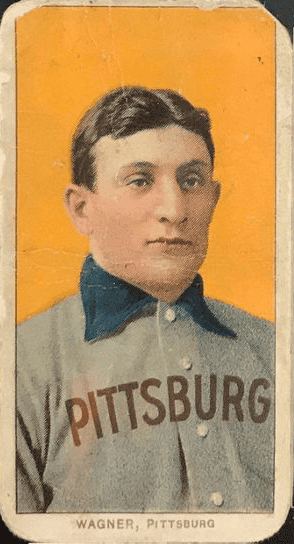
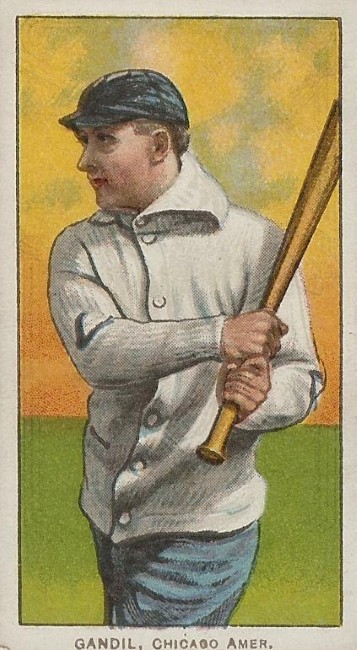
The T206 set needs little introduction as “The Monster” of tobacco card collecting. With 524 different cards issued across three years in 16 cigarette brands, it represents the most significant release of the tobacco era. The cards measure 1-7/16 by 2-5/8 inches and feature full-color lithographs with white borders. The set includes 38 Hall of Famers and features the most famous baseball card ever printed – the T206 Honus Wagner.
Ty Cobb appears in four different poses. Walter Johnson, Cy Young, and Christy Mathewson anchor a roster of dead-ball era legends. The combination of player variations and advertising backs creates thousands of possible card variations. Commons with Piedmont or Sweet Caporal backs sell for $100-$200 in good condition, while rare backs multiply values by 5-20 times. The Wagner card sold for $6.6 million in 2021, while Eddie Plank cards also command significant premiums due to scarcity.
T207 – Brown Background (1912)
The Dark and Mysterious Set
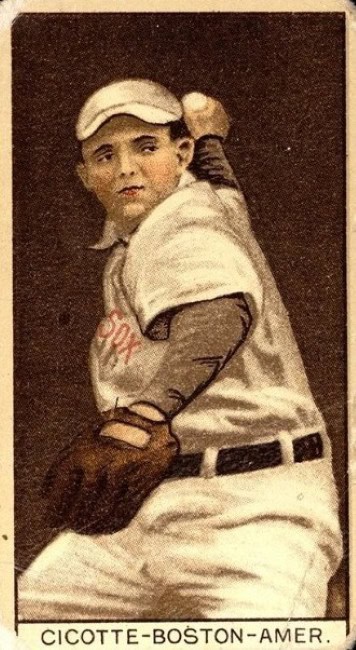
T207 cards feature sepia-toned player illustrations against brown backgrounds, creating an eerie, somber aesthetic that divides collectors. The American Tobacco Company issued 200 cards measuring 1-7/16 by 2-5/8 inches. Players appear in crude drawings that lack the artistic refinement of T205 or T206. The cards represent American Tobacco’s final baseball release before antitrust actions forced the company’s breakup.
Eight different tobacco brand backs exist, including rare Red Cross and anonymous factory variations. The set was released in two waves – early and late season – with late-release cards proving substantially scarcer. One horizontal card (Jack Barry) breaks the standard vertical format.
Missing Stars and Scarce Commons
T207’s reputation suffers from notable omissions. Ty Cobb, Christy Mathewson, Eddie Collins, Honus Wagner, and Shoeless Joe Jackson don’t appear in the set. However, Walter Johnson, Tris Speaker, John McGraw, Smoky Joe Wood, Joe Tinker, and future Black Sox conspirators Eddie Cicotte and Buck Weaver provide Hall of Fame representation.
Irving Lewis and Louis Lowdermilk cards are extraordinarily rare, with the Lewis sleeve emblem variation being among the toughest tobacco-era finds. Common T207 cards sell for $40-$80, but scarce players command $500-$1,500. The brown aesthetic and missing superstars keep T207 prices lower than contemporary sets, making it an interesting collecting opportunity for those who appreciate its unique character. Complete sets trade for $15,000-$25,000.
T208 – Fireside (1911)
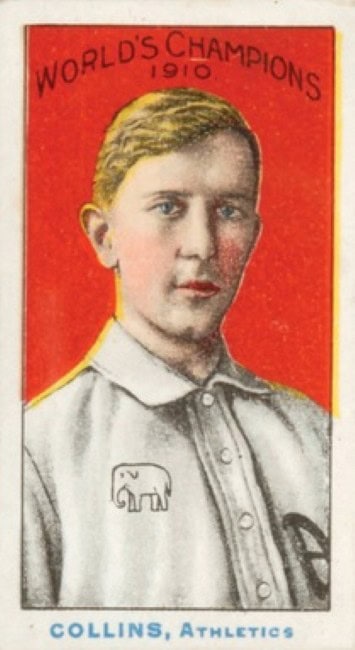
The T208 set celebrates the 1910 World Champion Philadelphia Athletics with just 18 cards. Thomas Cullivan Company of Syracuse distributed these in Fireside tobacco packages. The cards measure 1-1/2 by 2-5/8 inches and feature the Athletics elephant logo. “World’s Champions 1910” appears above each player, with blue ink used for names – unusual for the era.
The Syracuse distribution area was limited, making these among the scarcest mainstream tobacco cards. Hall of Famers Chief Bender, Eddie Collins, and Frank Baker appear in the set. The same images were used in E104-1 and D359 sets, which are more readily available. Common T208 cards in low grades sell for $2,000-$3,000, while key players reach $5,000-$8,000. Fewer than 100 T208 cards total have been graded across all services, reflecting extreme scarcity.
T209 – Contentnea (1910)
Two Distinct Series
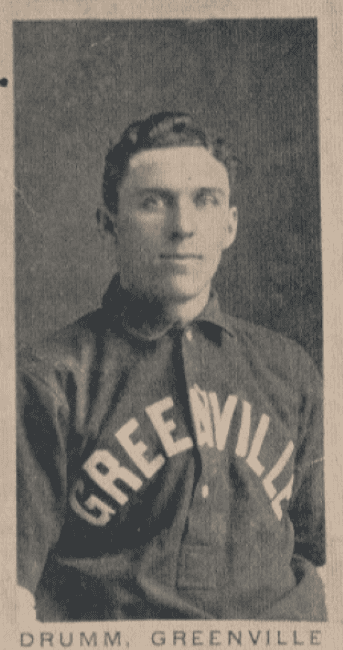
The T209 designation encompasses two dramatically different series distributed by the American Tobacco Company in Contentnea Cigarette packages. Series One features 16 color lithograph cards of Virginia League and Carolina Association players, resembling the T206 format. Series Two contains over 220 black-and-white photographic cards featuring players from southern minor leagues.
The dual nature creates confusion – the sets share little beyond the T209 designation and Contentnea brand. Series One cards are colorful and attractive, while Series Two offers documentary photography of obscure players. Both series focus on regional minor league talent, limiting their appeal compared to major league sets.
Regional Appeal and Values
The T209 sets appeal primarily to collectors interested in southern baseball history and minor league cards. Series One cards in good condition sell for $150-$300, while Series Two cards command $100-$250 depending on scarcity. Neither series contains major league stars, but they document an important period in regional baseball development.
Complete sets rarely surface due to the large Series Two checklist and regional distribution. These remain among the more obscure tobacco issues, valued more by specialists than mainstream collectors.
T210 – Old Mill (1910)
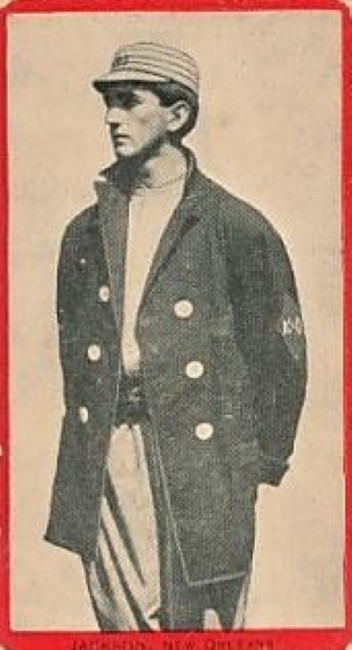
The T210 set represents the largest tobacco-era release with approximately 640 cards distributed across eight different minor league series. The American Tobacco Company issued these in Old Mill Cigarette packages. Each series represents a different minor league – Southern Association, Eastern League, Pacific Coast League, and others. Cards feature distinctive red borders that sometimes appear orange or yellow due to printing variations.
The set includes two legendary minor league cards – Shoeless Joe Jackson and Casey Stengel. These cards from their pre-major league days command substantial premiums. Common players sell for $100-$200 in good condition, while Jackson cards reach $3,000-$8,000 depending on grade. The sheer size makes complete sets nearly impossible to assemble, with most collectors focusing on single series or key players.
Collector Perceptions of T200-T210 as a Group
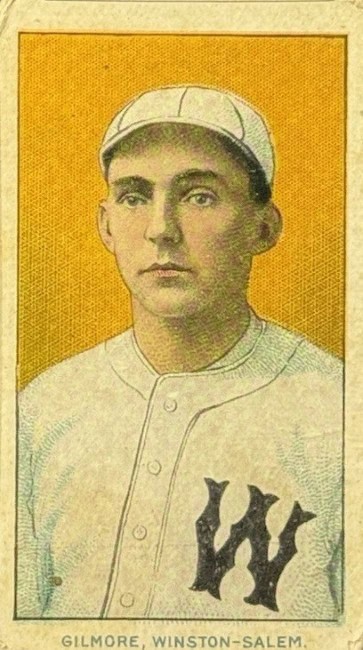
The T200-T210 range represents tobacco card collecting at its most diverse. Collectors view this sequence as the heart of the hobby’s golden age, capturing the period when manufacturers experimented with formats and distribution methods. T206 dominates the conversation, but serious collectors appreciate how sets like T201, T202, and T204 pushed creative boundaries.
The range also reveals collecting’s economic realities. While T206 commands headlines with million-dollar cards, sets like T207 and T209 offer entry points for collectors who want tobacco-era cards without T206 prices. The variation in scarcity, player selection, and visual appeal means collectors can build complete or partial sets based on budget and interest.
The missing superstars in some sets (T207’s lack of Cobb, T209’s minor league focus) create opportunities for player collectors to find affordable examples of lesser-known players. Meanwhile, the innovative designs of T201 and T202 appeal to those who value creative card engineering over star power.
Conclusion
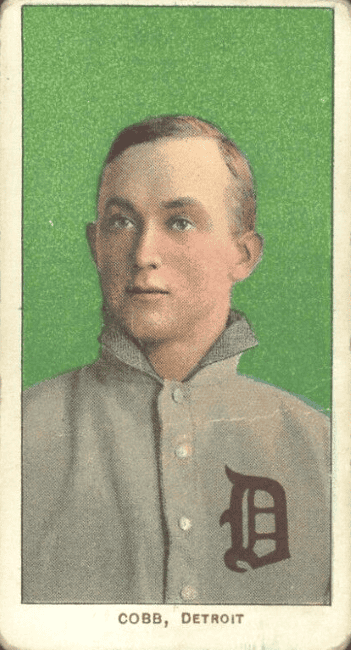
The T200-T210 range encapsulates everything that makes tobacco-era cards fascinating – innovation, scarcity, beautiful lithography, and historical significance. From the team photographs of T200 to the massive minor league documentation of T210, these sets demonstrate how tobacco companies used baseball to sell products while inadvertently creating lasting artifacts of America’s pastime.
Jefferson Burdick’s numbering system, arbitrary in assignment but logical in execution, provides the framework collectors still use today. Understanding how these sets fit together – chronologically, artistically, and within the marketplace – enhances appreciation for the entire tobacco card era. Whether pursuing the impossible dream of a T206 Wagner or building a T207 set on a budget, collectors engage with the same cards that captured imaginations over a century ago.
The T200-T210 sequence reminds us that baseball card collecting extends far beyond the most famous cards. Each set tells its own story about baseball history, printing technology, marketing strategies, and the collectors who preserve these pieces of cardboard for future generations. These cards aren’t just valuable collectibles – they’re time capsules from baseball’s formative era.