
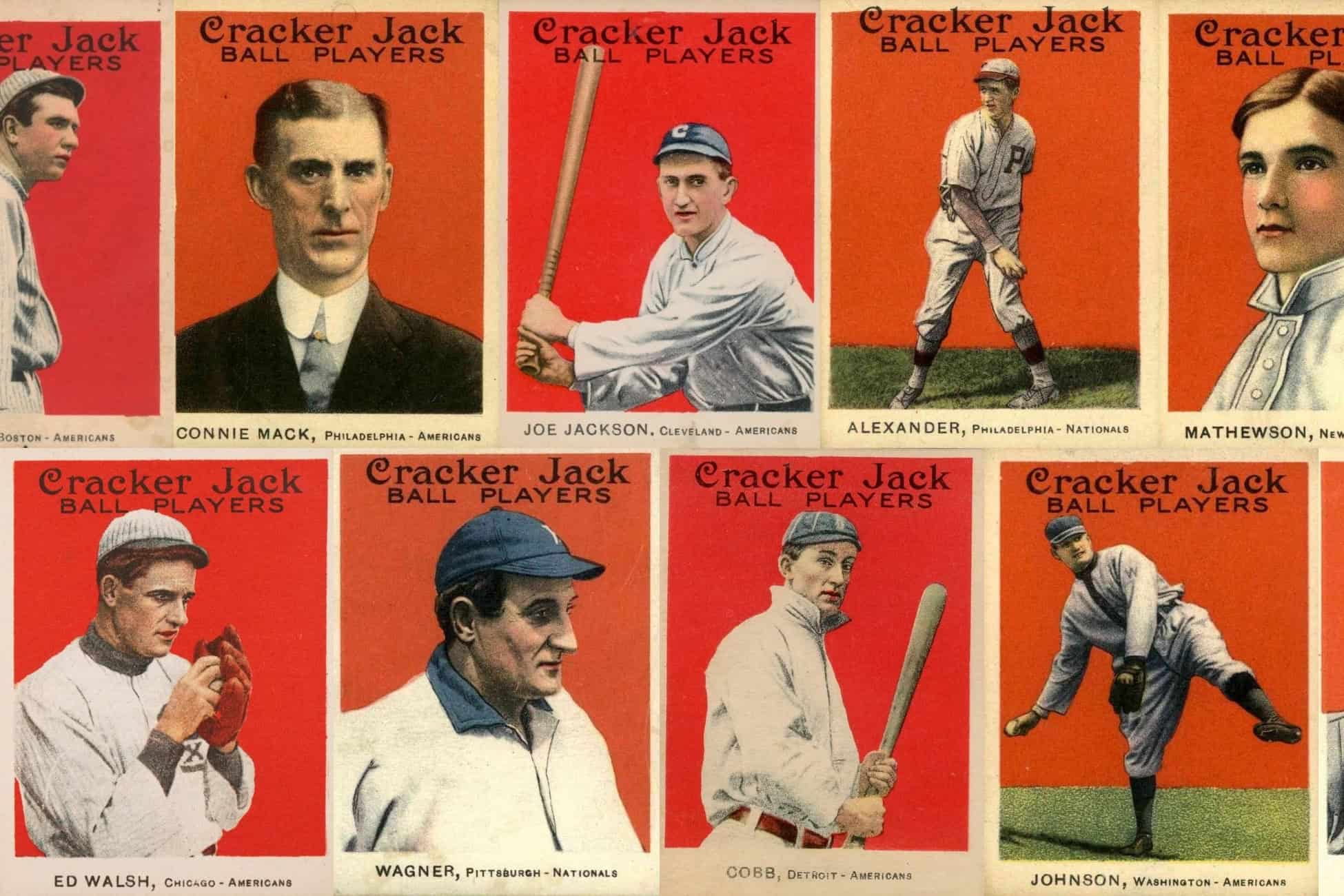

In the world of sports memorabilia, few items command the same hushed reverence as the red-backed beauties of the 1914-1915 Cracker Jack sets. To a modern observer, these cards look like a bold artistic statement. However, in the early 20th century, they represented a high-stakes gamble for a snack company. While most competitors relied on tobacco sales, the Rueckheim Bros. & Eckstein company decided to pair their caramel-coated popcorn with the most vibrant baseball cards ever produced.
These cards were born during the Deadball Era, a period defined by low-scoring games and a tactical style of play. They captured the titans of the game just as baseball was cementing its status as the national pastime. Unlike the tiny, often muted tobacco cards that preceded them, Cracker Jack cards offered a larger canvas and a level of color saturation that felt futuristic for the time. They provided a visual bridge between the 19th-century trade cards and the modern, condition-sensitive hobby we know today.
The story of the Cracker Jack set is not just about the players it immortalized, but also about the technical and social shifts it triggered. From the messy, caramel-stained survivors of 1914 to the pristine, mail-order factory sets of 1915, these cards reflect an evolving understanding of the consumer. This article looks into the history, the technology, and the legendary status of the 1914-15 Cracker Jack series, offering a perspective on how they permanently changed the landscape of baseball collectibles.
The Birth of the Confectionery Era
By 1914, the Golden Age of tobacco cards, headlined by the legendary T206 set, was beginning to wane. The American Tobacco Company had dominated the market, but social pressures against marketing cigarettes to children mounted. This shift opened the door for a new kind of partnership. The Rueckheim Bros. & Eckstein company, manufacturers of Cracker Jack, recognized a golden opportunity. Their product was already immortalized in the 1908 anthem Take Me Out to the Ball Game, and adding baseball cards was the logical next step.
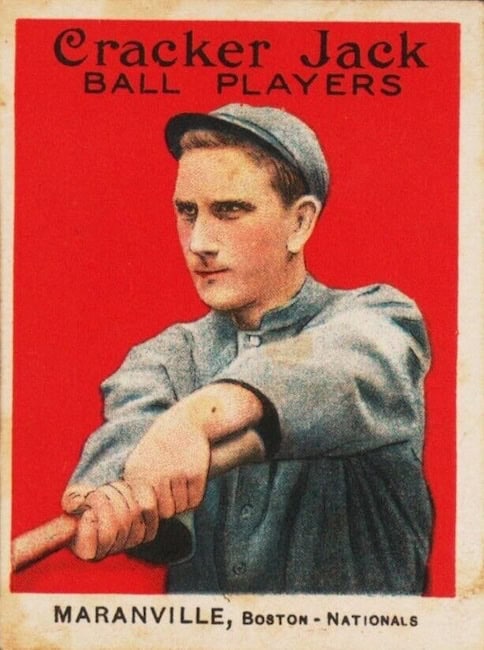
The 1914 set, cataloged by modern hobbyists as E145, was a bold experiment. Unlike the tiny T-series tobacco cards that measured roughly 1-7/16 by 2-5/8 inches, Cracker Jack cards were a more substantial 2-1/4 by 3 inches. They were printed on thin paper stock and featured a color-tinted player photo set against a solid, brilliant red background. This aesthetic was a far cry from the cluttered, text-heavy advertisements of the competition.
While competitors like the T213 Coupon Cigarettes or the various strip cards of the era felt like afterthoughts, Cracker Jack treated the cards as the main event. They included detailed player biographies and card numbers on the back, encouraging fans to assemble the entire 144-card set. This focus on set building was a social science masterstroke. It tapped into the human desire for completion and organization that still drives the hobby today.
Technical Evolution from 1914 to 1915
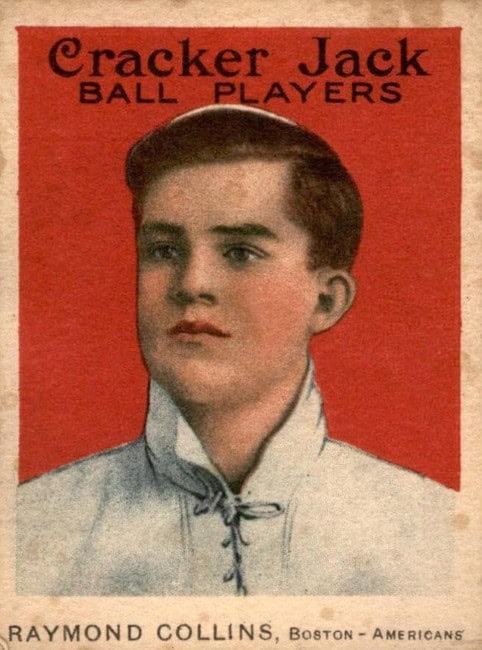
The primary challenge for the 1914 issue was its distribution. Every card was tucked directly into a box of Cracker Jack. This exposed it to the oils and sugars of the caramel corn. Consequently, 1914 cards are notorious for caramel staining, and high-grade specimens are virtually nonexistent. Recognizing that collectors wanted pristine cards, the company made a significant pivot for the 1915 release. While the 1914 cards could only be found in boxes, the 1915 cards were available through a mail-in offer.
For just one coupon and 25 cents, a fan could receive the entire 176-card set, along with a custom album. This shift changed the preservation of the cards entirely. The 1915 issue used a slightly thicker paper stock and, most notably, featured a flipped back. If you hold a 1915 card and turn it over, the biography on the reverse is printed upside down relative to the front. This design choice was intended to make the cards readable when mounted in the official album.
Printing technology in this period relied heavily on lithography, where images were etched onto stones or metal plates. The Cracker Jack set used a process that combined photographic realism with artistic tinting. This resulted in images that were far more lifelike than the hand-drawn illustrations found in earlier sets. The company claimed to have printed 15 million cards in 1914 alone. However, the harsh reality of sticky distribution and paper drives of the World Wars meant only a tiny fraction survived.
Significant Cards and Market Values
The Cracker Jack sets are a who’s who of the Hall of Fame, containing more than 30 Cooperstown inductees. A handful of cards stand out for their historical importance and astronomical market value. Because of the condition issues mentioned earlier, 1914 versions almost always command a premium over their 1915 counterparts.
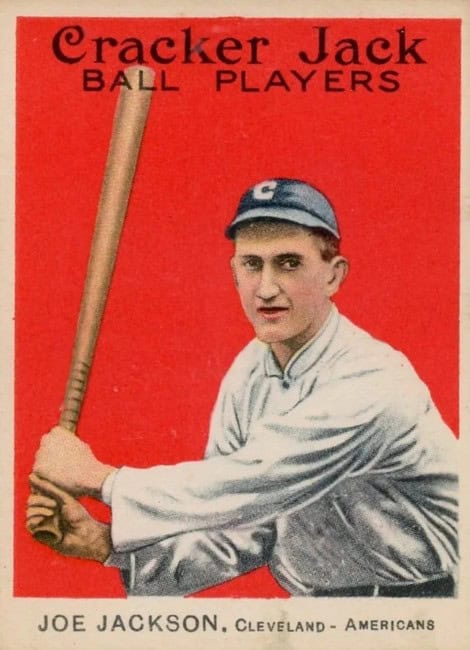
- Shoeless Joe Jackson (#103): This is the crown jewel of the set. Because Jackson was later banned for his role in the 1919 Black Sox Scandal, he appears in very few mainstream sets. A mid-grade 1914 Jackson can fetch $150,000 to $250,000, while a high-grade 1915 example has been known to top $500,000.
- Ty Cobb (#30): The Georgia Peach is captured in a classic, intense pose. His card is a staple for any serious pre-war collector. A 1914 Cobb in decent condition often sells for $40,000 to $60,000. Even the more common 1915 version might bring $15,000 to $25,000.
- Christy Mathewson (#88): Matty is unique because his pose changed between the two years. The 1914 card shows him in a horizontal pitching motion, while the 1915 card is a traditional vertical portrait. The 1914 horizontal version is much rarer and highly coveted, with values for low-grade copies starting around $15,000.
Shifting the Market from Tobacco to Gum
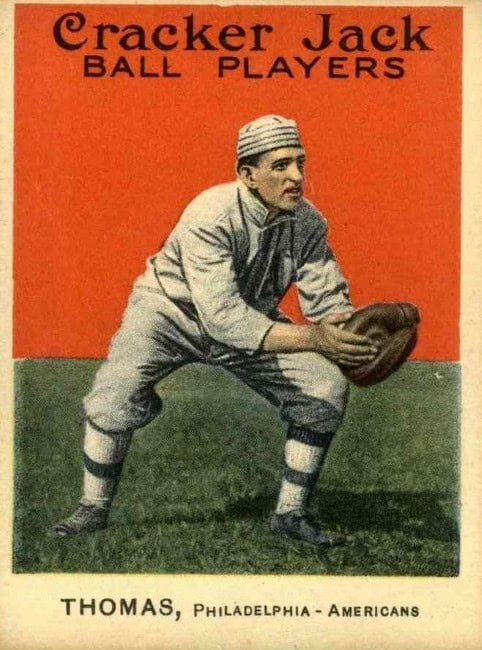
The legacy of the 1914-15 Cracker Jack set is that it essentially broke the tobacco industry monopoly on baseball cards. By proving that cards could sell food products to families, Cracker Jack paved the way for the Caramel Era of the 1920s. Companies like American Caramel, DeLong, and eventually the powerhouse gum manufacturers like Goudey and Play Ball, all followed the blueprint laid out by the red-backed beauties.
This shift was significant from a social perspective. Baseball cards moved from being an adult-oriented premium found in cigarette packs to a child-friendly collectible. This expanded the fan base of Major League Baseball and created the concept of the youth collector. The move toward confectionery-based distribution also led to advancements in card durability. As the 1930s approached, manufacturers realized that cards needed to be printed on heavy cardboard to survive the pockets of school children.
Without the success of Cracker Jack’s surprise inside, the 1933 Goudey set or the 1952 Topps set might never have existed. Cracker Jack demonstrated that a card value was not just in its scarcity, but in its aesthetic appeal and the narrative it provided about the player. The inclusion of statistics and biographies on the back turned the cards into educational tools for fans who could not attend every game.
Navigating Reprints and Counterfeits
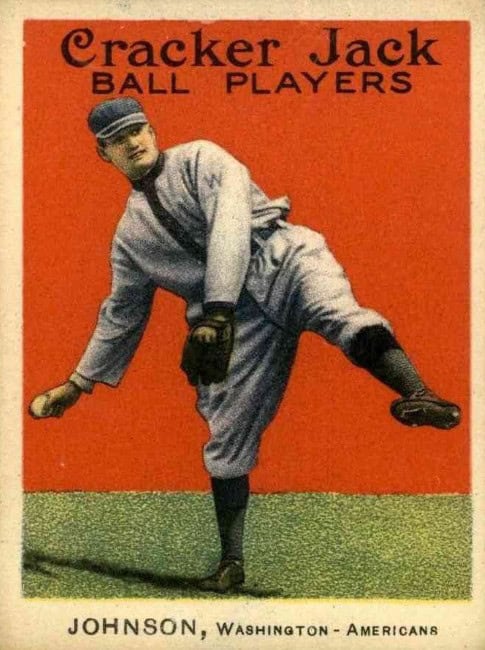
Because of their immense value and simple color scheme, 1914-1915 Cracker Jack cards are among the most frequently faked items in the hobby. Modern technology allows scammers to replicate the deep red backgrounds with disturbing accuracy. The first thing a collector should check is the paper stock. Original 1914 cards were printed on very thin, almost translucent paper. If a 1914 card feels as thick as a modern Topps card, it is almost certainly a reprint.
- Check for halftone dots: Authentic Cracker Jack cards were made using lithography, which produces solid areas of color. Use a jeweler loupe to inspect the red background. If you see tiny dots of cyan, magenta, and yellow, you are looking at a modern digital print.
- Examine the ink bleed: On original cards, the red ink often shows a slight overlap or bleed into the white borders. Modern reprints are usually too clean and lack this organic manufacturing artifact.
- Smell the card: While it sounds unscientific, paper from 1914 has a distinct, musty odor that modern chemical-treated paper cannot replicate. Avoid cards that smell like fresh ink or laser toner.
- Verify the back orientation: Remember that 1915 cards must have the back text printed upside down relative to the front portrait. Many low-quality counterfeits fail to replicate this specific detail.
Authentic Caramel Staining
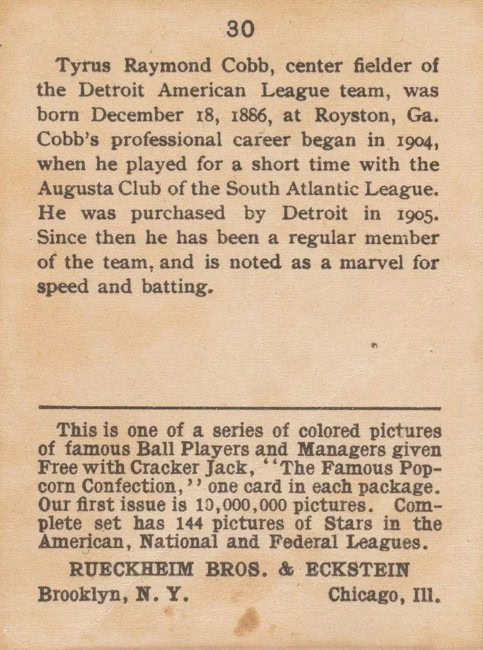
For the 1914 set, the presence of caramel staining is actually a primary indicator of authenticity. While a clean card is more desirable for the grade, a card that looks too perfect should trigger immediate suspicion. The stains on a 1914 card are usually irregular and show a slight greasy texture when viewed under a light. Counterfeiters often try to simulate these stains using coffee or tea, but these dyes tend to sit on top of the paper rather than soaking through it.
Another key area for authentication is the player name and team text at the bottom. On original cards, this text was part of the lithographic process and should appear crisp. On many counterfeits, the text looks slightly fuzzy or pixelated. Professional grading services like PSA or SGC are highly recommended for any Cracker Jack purchase. The cost of the grading fee is a small price to pay for the security of knowing your investment is genuine.
Collectors should also be wary of cards that have been bleached or cleaned. In the past, some unscrupulous owners tried to remove caramel stains with chemicals to improve the card appearance. This process usually leaves the paper feeling brittle and can cause the red ink to look faded or chalky. An original, untouched card with a few honest stains can be more valuable to a serious collector than a cleaned card with altered chemistry.
Where’s Babe Ruth?
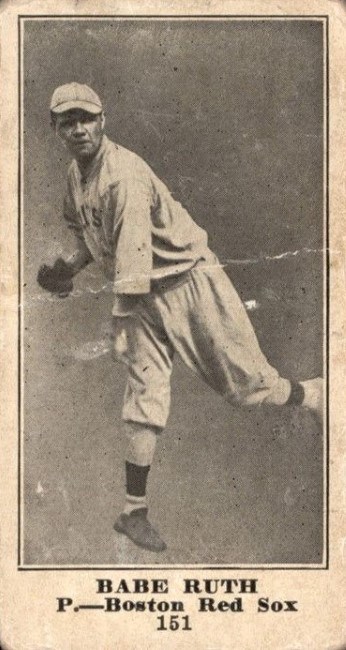
Every legendary set has its what-if stories, and for Cracker Jack, it involves Babe Ruth. In 1914, Ruth was a 19-year-old rookie pitcher for the Boston Red Sox. While he was a rising star, he had not yet become truly famous. Cracker Jack passed on including him in both the 1914 and 1915 sets. This decision likely cost modern collectors millions in potential value. Had a 1914-1915 Cracker Jack Babe Ruth card been printed, it may have been one of his most valuable cards.
Another interesting bit of trivia involves the Federal League. In 1914, a third major league attempted to compete with the American and National Leagues. Cracker Jack was one of the few national sets to include Federal League players, such as those from the Chicago Whales and the Baltimore Terrapins. This makes the set a vital historical record of a league that folded after only two seasons. If you find a card with a team name like Indianapolis Feds, you are looking at a piece of a forgotten era in baseball history.
Finally, the 1915 set includes 32 cards that were not in the 1914 set. These high numbers include some major stars like Branch Rickey and Tris Speaker. For many years, these cards were considered much harder to find than the lower numbers. This created a secondary market within the set itself. Modern research has shown that the mail-in factory sets actually made these more available than previously thought, yet the high number allure persists among old-school collectors.
Conclusion
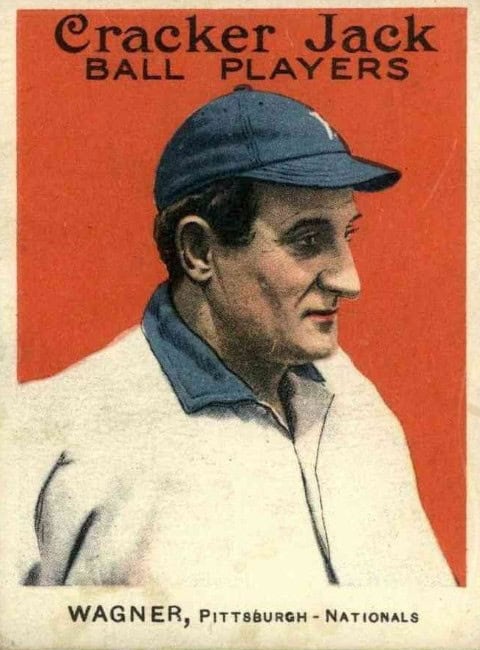
The 1914-15 Cracker Jack sets are a testament to the power of simple design and the timeless appeal of baseball. Moving cards out of tobacco shops and into the hands of children at the ballpark democratized the hobby. They created a visual language for baseball cards that would persist for decades. This emphasized player portraits and biographical data over corporate advertising.
While the 1914 set remains one of the most difficult challenges in the hobby due to its sticky history, the 1915 set offers a more attainable entry point for those looking to own a piece of history. Both sets capture a moment in time when baseball was truly the national pastime and the surprise inside was enough to make a kid’s summer. They are, and likely always will be, the most recognizable and revered cards of the early 20th century.
Whether you are a seasoned investor or a casual fan of the game’s history, the 1914-15 Cracker Jack cards deserve your respect. They survived wars, paper drives, and a century of humidity to remind us of the legends who built the game. As long as people still sing about peanuts and Cracker Jack, these cards will remain the gold standard for what a baseball card can and should be.
